Possession (1981)

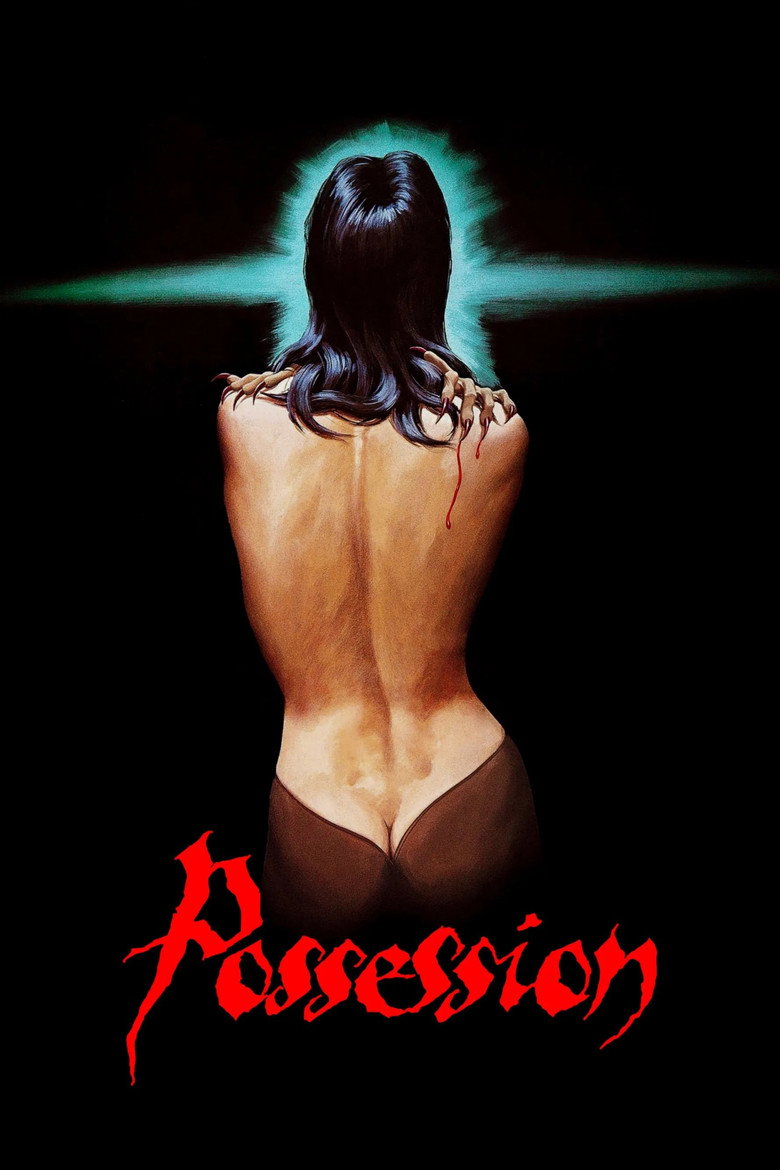
There is a particular strain of European art-horror that flourished in the late 1970s and early 1980s, one that took the raw materials of genre filmmaking and put them through a kind of expressionist wringer until what came out the other side was barely recognisable. Possession, released in 1981 and co-produced by French studio Gaumont alongside a cluster of smaller European production companies, sits near the top of that tradition. Shot largely on location in a divided Berlin, the film uses the city's Cold War atmosphere, its checkpoints, its grey corridors, its sense of a place under permanent surveillance, as a pressure cooker for a story about a marriage in freefall. What begins as a domestic drama about separation and jealousy mutates, steadily and without apology, into something that occupies a space most films would not dare approach. For a companion piece on a European film of roughly the same era that uses domestic intimacy to different but equally unsettling ends, see also Deep End (1970), and I also covered the similarly paranoid textures of Journey to Italy (1954), which handles marital dissolution with rather more restraint, if you want a point of contrast.
The film was written and directed by Andrzej Żuławski, the Polish filmmaker whose work had already attracted controversy in his home country before he was effectively forced into exile. Possession was, by most accounts, born out of his own painful divorce, and that biographical rawness is visible in almost every frame. Żuławski's approach to direction was famously physical and confrontational: he was known for pushing his actors toward a kind of controlled hysteria, demanding performances that lived at the very edge of what a human being could plausibly sustain on camera. The score is by his long-term collaborator Andrzej Korzyński, whose music here works as something between a classical suite and an industrial assault, strings and dissonance in a combination that signals distress before any single image has earned it. Cinematographer Bruno Nuytten, who would go on to direct Camille Claudel later in the decade, shoots the film in a palette of cold greys and institutional whites, with handheld movement that feels less like a stylistic choice and more like the camera itself is trying to keep up with something it cannot quite contain. The editing, handled by Suzanne Lang-Willar and Marie-Sophie Dubus, keeps the rhythm deliberately off-kilter, cutting in ways that disorient time and space just enough to sustain the film's atmosphere of unreality.
The cast is led by Isabelle Adjani and Sam Neill, and it is worth pausing on that pairing. Neill, at this point in his career several years before the wider recognition that films like Jurassic Park (1993) would bring, plays the husband with a coiled, reactive energy, a man watching his world come apart and reaching for explanations that keep sliding away from him. Adjani, by contrast, was already one of the most celebrated actresses in French cinema, and her performance here is the kind that gets discussed in hushed, slightly awed tones by people who have seen it. She won the César Award for Best Actress for this role, which is notable in itself given how far the film travels from conventional dramatic territory. In support, Margit Carstensen and Heinz Bennent bring their own unsettling qualities to roles that the film places just slightly out of alignment with ordinary human behaviour, which is, in context, entirely appropriate. Johanna Hofer rounds out the principal cast in a film where even the peripheral figures carry a faint sense of wrongness.
You simply do not get films like Possession anymore. This is one of those abstract, nightmarish, am-I-losing-my-mind horror films that the 1980s seemed to throw up and almost nobody attempts now.
On the surface it is the story of a single family coming apart, Isabelle Adjani and Sam Neill as a couple whose marriage is disintegrating, but there is something deeply, deeply wrong humming away beneath that domestic breakdown.
And it gets stranger the longer it runs. There is a thread about Neill's character being some kind of spy, or perhaps the subject of an experiment; Adjani's character is being followed; and it all gradually devolves into something involving a grotesque tentacled creature that feeds on the victims she brings to it, and doppelgangers of the people we have met. I will admit I lost track more than once of what exactly was going on. But the film is so committed to its own delirium that the confusion becomes part of the experience rather than a failing.
What holds it together through all that madness is Isabelle Adjani, who is extraordinary. Her performance is unhinged in the most committed, fearless way imaginable, and she carries scenes that would have sunk a lesser actor outright. The body horror is handled well, too, and the effects on the creature are impressive for their age, tactile and repulsive in exactly the right measure.
If I had to place it, I would call it part The Thing and part Invasion of the Body Snatchers, the paranoid body-horror of the one meeting the who-is-really-who dread of the other, filtered through something far stranger and more operatic than either. Four stars. A bewildering, unsettling, utterly singular film that I did not always follow but could not look away from, and exactly the kind of swing cinema rarely takes anymore.
Possession is the kind of film that resists tidy summary, and that resistance is arguably the point. It arrived in 1981 to a deeply mixed critical reception, was cut significantly for some international releases (including a severely truncated American version that stripped out much of what makes the film what it is), and has spent the decades since accumulating a reputation that the original theatrical run never quite granted it. Żuławski made something that is, in equal measure, a raw psychological portrait and a visceral horror film, and it refuses to let either mode give the other much comfort. Some films earn their cult status by being ahead of their time. Others earn it simply by being unrepeatable. This is one of the latter.
Rating: ★★★★ | Year: 1981 | Watched: 2026-10-28
Trailer
▶ Watch the official trailer for Possession (1981) on YouTube
Where to watch
Watch in the UK
Stream: Amazon Prime Video · Shudder · Amazon Prime Video with Ads
Rent: Apple TV Store · Amazon Video
Buy: Apple TV Store · Amazon Video
Physical: Amazon UK · Zavvi
Watch in the US
Stream: Philo · AMC+ Amazon Channel · Shudder · Shudder Amazon Channel
Rent: Amazon Video · Apple TV Store · Google Play Movies · YouTube
Buy: Amazon Video · Apple TV Store · Google Play Movies · YouTube
Physical: Amazon US
Affiliate disclosure: Movies With Macca may earn a small commission on purchases or subscriptions started via these links. It costs you nothing extra.