Oasis: Don't Look Back in Anger (2026)

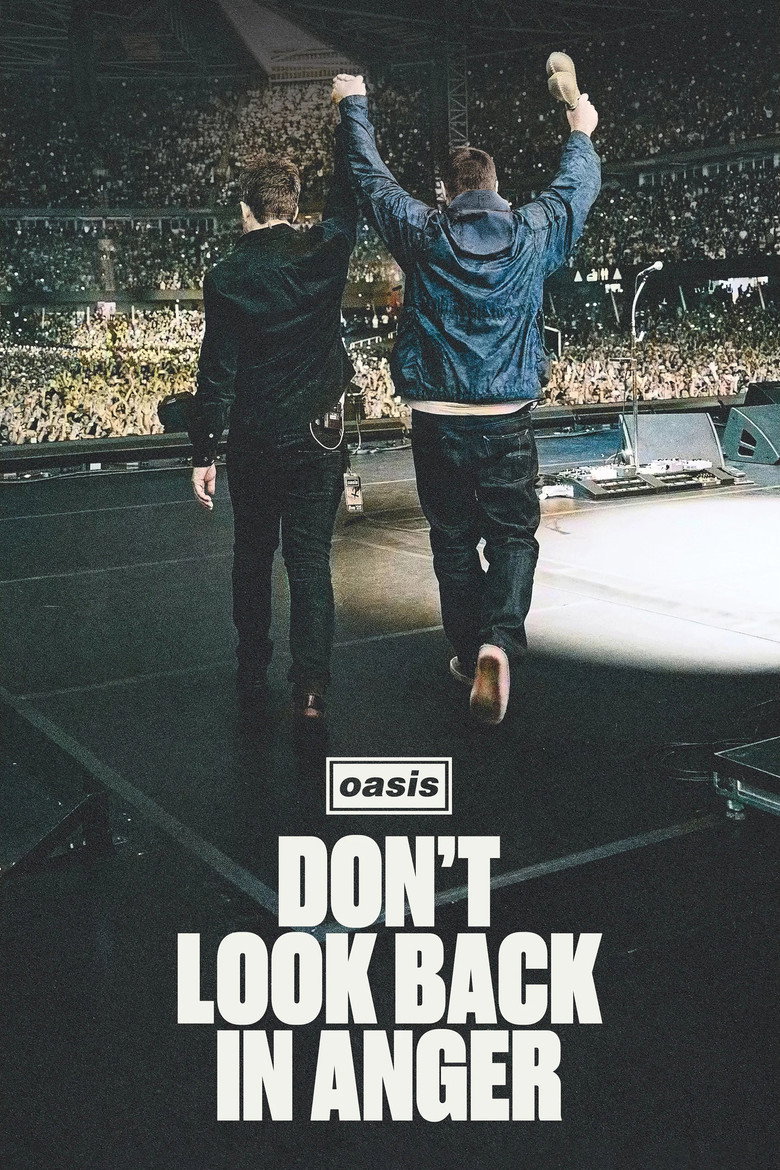
Few British bands have generated as much noise, mythology, and tabloid column inches as Oasis. From their formation in Manchester in the early 1990s through the Britpop wars, the Knebworth shows, the acrimonious split in 2009, and the decade-and-a-half of will-they-won't-they reunion speculation that followed, Liam and Noel Gallagher have never quite left the cultural conversation. When the reunion was finally confirmed and the Oasis Live '25 tour announced, it felt less like a music industry event and more like a national moment, the kind that gets discussed in workplaces and pub gardens by people who haven't bought an album in years. Oasis: Don't Look Back in Anger arrives in 2026 to document both that reunion and the full arc of the band's story, from the streets of Burnage to the biggest stages on the planet.
The film is directed by Dylan Southern and Will Lovelace, the pairing behind We Need to Talk About Kevin editor Lynne Ramsay's preferred... (actually, to be precise about their own credentials) the duo who previously made LCD Soundsystem: Shut Up and Play the Hits (2012), a concert film widely admired for treating its subject with something close to journalistic rigour rather than simple hagiography. That background matters here. Southern and Lovelace have a track record of finding the human texture inside a music story rather than just stringing together the greatest hits. The screenplay is credited to Steven Knight, the Birmingham-born writer behind Peaky Blinders and Locke, which is an unusual credit for a documentary and signals that the shape and storytelling of the piece have been given serious structural thought. Magna Studios and Sony Music Vision co-produced, with Sony Music Entertainment UK also involved, so the institutional weight is considerable, though the film doesn't carry the slick, sanitised feel that corporate backing can sometimes impose on this kind of project.
The principal figures on screen are, of course, the Gallagher brothers themselves, Liam and Noel, alongside long-serving band members Paul Arthurs (better known as Bonehead), Gem Archer, and Andy Bell. Between them they cover the full history of the group across its various line-up configurations, and the presence of Arthurs in particular, a founding member who left in 1999 and was largely absent from the public story for years, gives the archive material and talking-head sections a weight they might otherwise lack. These are people who actually lived the thing, and the film leans on that authenticity. For a companion piece on a documentary that similarly builds its power from direct, unmediated testimony, see also Searching for Sugar Man, which pulls off a comparable trick of letting an extraordinary story do most of the heavy lifting. I also covered Queen: Live at the Rainbow '74, a very different kind of music film, one that is essentially a pure concert document rather than a biographical narrative, and the contrast between the two approaches is worth keeping in mind.
Behind the camera, cinematographer Haris Zambarloukos brings a visual sensibility more commonly associated with prestige drama than rock documentaries. Zambarloukos has shot films for Kenneth Branagh across multiple productions, and his eye tends toward clarity and a certain formal composure, qualities that give the archive footage something purposeful to sit against when the material cuts between eras. The images of the contemporary reunion shows are handled with a scale appropriate to the occasion, wide and slightly overwhelming in the way that stadium rock genuinely is when it works, while the earlier, grainier material from Manchester and the mid-nineties is allowed to retain its roughness rather than being smoothed out in post. The composer is uncredited, and the sound design around the music itself carries the film's emotional temperature in ways that are easier to feel than to describe. Editor George Cragg keeps 123 minutes moving at a pace that rarely feels padded, a genuine challenge when the subject matter spans three decades and includes both a rise, a collapse, and a second act.
I have sat through enough music documentaries now to have formed a theory about them, and this one only confirms it: more often than not, your enjoyment comes down to a single question, are you a fan of the music?
I found exactly that with the likes of Depeche Mode: M and the Queen concert film, and Oasis: Don't Look Back in Anger falls into the same bracket. I would not call myself a big Oasis fan, though here in the UK their songs are such an institution that you know every one of them by about the age of ten whether you want to or not.
To its credit, this goes a fair bit further than a straight celebration of the hits. It digs into the band's roots, their history, the turmoil and the famous feuding, and their eventual, long-awaited reunion, and that gives it more to offer than a simple singalong. Even as a relative outsider, I found the story of how they rose and fell and came back around interesting, which is more than I can say for some music docs built purely for the faithful.
Still, I cannot pretend it is for everyone. If Oasis and their music do nothing for you, there is a decent chance this will not either, because for all the extra context, it is a film made first and foremost for people who already care about the band. Three and a half stars. A good, well-told documentary that reaches a touch beyond the usual fan-service, and the rare music film of this kind that gave even a lukewarm listener like me a fair amount to enjoy.
Oasis: Don't Look Back in Anger sits in that interesting middle ground occupied by the better music documentaries: polished but unremarkable in its formal ambitions, yet honest enough in its storytelling to earn the attention of people who didn't arrive as true believers. The Gallagher mythology is large enough to sustain a film of this length, and Southern and Lovelace, with Knight's structural hand on the wheel, have made something that functions as a genuine account rather than a two-hour advertisement. Whether it converts the indifferent is another matter entirely, but it at least tries to make the case. Sometimes that's enough.
Rating: ★★★½ | Year: 2026 | Watched: 2026-10-29
Trailer
▶ Watch the official trailer for Oasis: Don't Look Back in Anger (2026) on YouTube
Where to watch
Watch in the UK
Stream: Disney Plus
Physical: Amazon UK · Zavvi
Watch in the US
Stream: Disney Plus · Hulu
Physical: Amazon US
Affiliate disclosure: Movies With Macca may earn a small commission on purchases or subscriptions started via these links. It costs you nothing extra.