Peter Pan (1953)

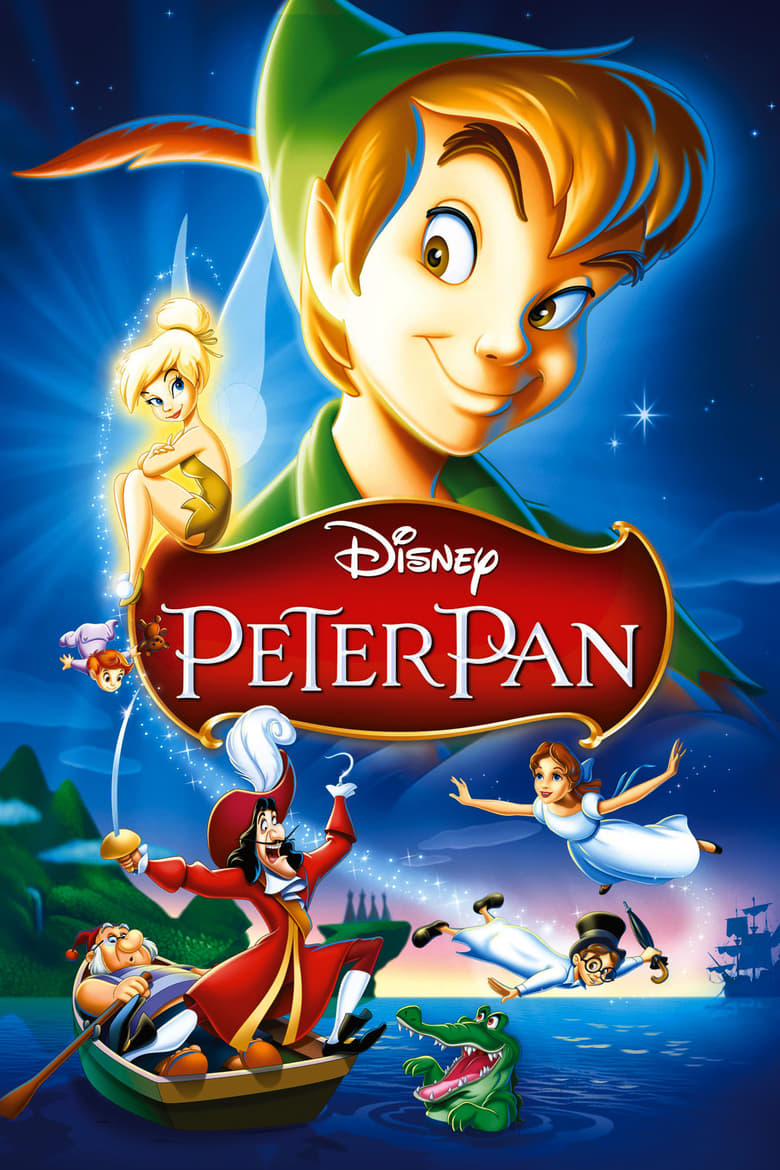
J. M. Barrie's Peter Pan had been a fixture of the British theatrical imagination for the best part of half a century before Walt Disney's animators got their hands on it. First performed in London in 1904, the story of the boy who wouldn't grow up had already been adapted for the silent screen and had become one of those cultural properties so thoroughly embedded in public consciousness that everyone arrives with their own version already formed. Disney had actually acquired the rights as far back as 1939, which makes the fourteen-year gap between option and release one of the longer gestations in the studio's history, interrupted by wartime economics and a production slate that kept shuffling. When it finally arrived in February 1953, it came as part of a busy run of animated features that also included Cinderella (1950) and Alice in Wonderland (1951), both of which I've written about elsewhere on the site. That context matters, because Peter Pan sits squarely in that same post-war Disney phase: polished but unremarkable, commercially safe, and working from source material beloved enough to carry some of the weight.
The film was directed by the trio of Clyde Geronimi, Wilfred Jackson, and Hamilton Luske, the same arrangement Walt Disney used across several features of the period (Geronimi and Jackson had both been on Alice in Wonderland, which the author notes in his review below). The screenplay was worked up by Milt Banta, William Cottrell, and Bill Peet, with Peet in particular becoming an increasingly significant creative voice at the studio through the 1950s. Walt Disney Productions had by this point developed a reliable pipeline for adapting classic stories, and the production has the confidence, and perhaps the slight complacency, that comes with a well-oiled machine. The premise is faithful to Barrie in its broad strokes: three London children leave their nursery for Neverland, a place where growing up is optional and a flamboyant pirate captain nurses his grudge against the boy who humiliated him.
The voice cast brings a certain warmth and character to the material. Bobby Driscoll, who had already worked with Disney on So Dear to My Heart and Treasure Island, supplies Peter's voice with a breeziness that suits the character's self-satisfaction. Kathryn Beaumont, who had voiced Alice the year before, brings a sensible, grounded quality to Wendy that keeps the more fanciful elements anchored. The real entertainment in the cast, though, comes from Hans Conried, who voices Captain Hook with a theatrical relish that tips pleasingly toward pantomime, and Bill Thompson, whose Smee is warm and bumbling in equal measure. The editing, handled by Donald Halliday, keeps the picture moving at a clip; at seventy-seven minutes it's a lean piece of work that doesn't linger when it needn't. The score comes from Oliver Wallace, a Disney regular whose work here leans into the adventure and whimsy of the setting, mixing jaunty pirate-ish brass with softer, more wistful passages for the moments of wonder. The visual style, without a named cinematographer to attribute it to, is what you'd expect from Disney at this point in the studio's development: vivid, carefully designed backgrounds, particularly in the rendering of the night-time London roofscapes and the luminous greens of Neverland, with a colour palette that is bright without being garish.
For all its charm, Peter Pan struck me as middle-of-the-road Disney, a cut below the studio's golden-age best. It is the familiar tale: Wendy and her brothers spirited off to Neverland by the boy who refuses to grow up, into a world of pirates and fairies and the ever-scheming Captain Hook. All the ingredients are present and correct, and yet it never quite soared for me the way the finest Disney of the era does.
In its favour, it is nice and short, and it does not outstay its welcome, which is more than you can say for a lot of films. It moves briskly, Hook is good value, and there is colour and invention enough to keep it ticking along. But set beside what Disney was producing around the same time, it feels like a lesser effort. I had much the same reaction to Alice in Wonderland, which shares two of this film's directors and came out just a couple of years earlier: handsome and pleasant on the surface, yet somehow never quite magical underneath.
And that, more or less, is Peter Pan for me: pleasant, breezy, perfectly watchable, but not one of the greats. Two and a half stars. A nice enough way to spend an hour and a quarter, and the brevity is a mercy, but a middling turn from a studio that, at this point in its history, was capable of so much more.
Peter Pan occupies an interesting and slightly awkward place in the Disney canon. It's neither the raw ambition of Snow White and the Seven Dwarfs nor the confident sophistication that would follow with Sleeping Beauty later in the decade. It represents a studio working well within its own established formula, serving up something agreeable and well-crafted for an audience that largely knew what it was coming to see. Whether that's enough rather depends on what you ask of your Disney, and on how far a certain pleasantness of surface can carry a film when the magic underneath feels thinner than it should. Neverland, it turns out, is easier to visit than to truly believe in.
Rating: ★★½ | Year: 1953 | Watched: 2026-10-30
Trailer
▶ Watch the official trailer for Peter Pan (1953) on YouTube
Where to watch
Watch in the UK
Stream: Disney Plus
Rent: Apple TV Store · Rakuten TV · Amazon Video · Sky Store
Buy: Apple TV Store · Rakuten TV · Amazon Video · Sky Store
Physical: Amazon UK · Zavvi
Watch in the US
Stream: Disney Plus
Rent: Amazon Video · Apple TV Store · Google Play Movies · YouTube
Buy: Amazon Video · Apple TV Store · Google Play Movies · YouTube
Physical: Amazon US
Affiliate disclosure: Movies With Macca may earn a small commission on purchases or subscriptions started via these links. It costs you nothing extra.