Phone Booth (2002)

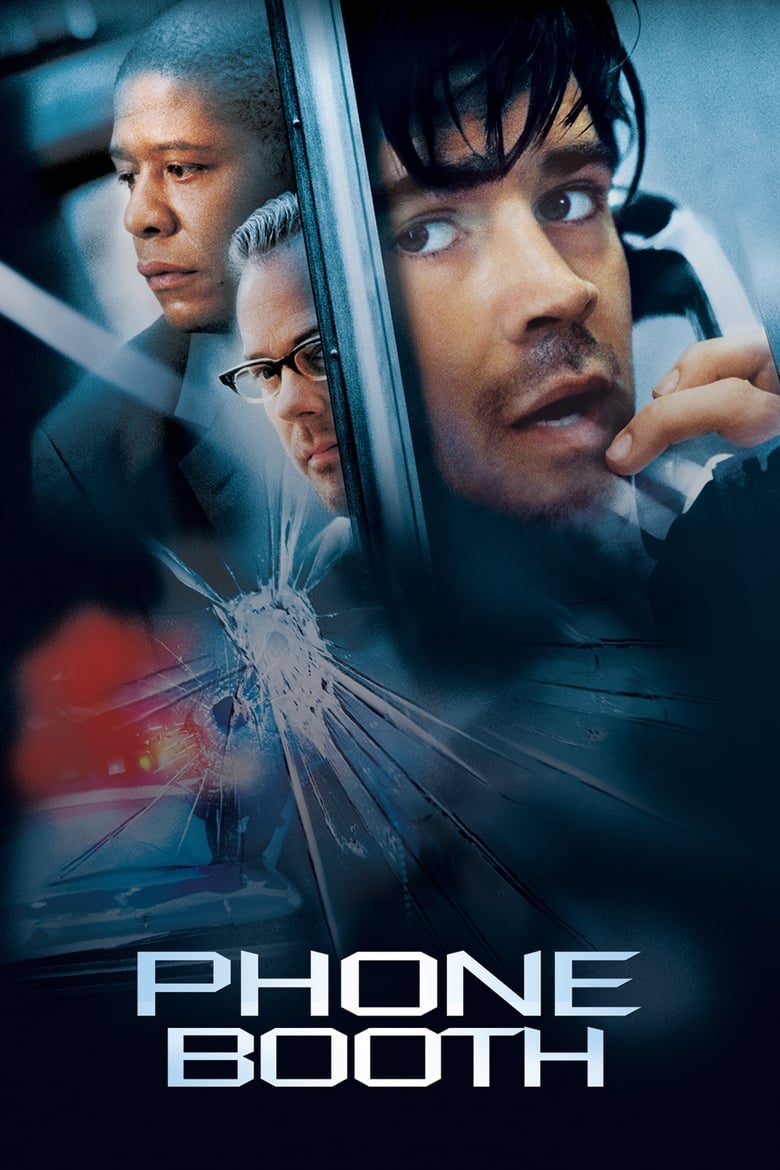
There's something almost perverse about a film that traps its audience in a phone booth for eighty-odd minutes and somehow makes it work. Phone Booth shouldn't hold together. On paper it sounds like a gimmick, a pitch you'd scribble on a napkin, and apparently that's more or less what happened, because the script was doing the rounds decades before Joel Schumacher got his hands on it, reportedly landing on Alfred Hitchcock's desk at one point. We'll never know what the Master of Suspense would have done with it, but there's something fitting about that lineage. The whole setup, an ordinary man pinned under extraordinary pressure by an unseen, omnipotent threat, is textbook Hitchcock DNA. The difference is that Phone Booth arrived in 2002, soaked in post-millennial anxiety, all split screens and hyper-connectivity jitters, and it wears its era on its sleeve in a way that's both its strength and its limitation.
The premise is ruthlessly simple. A slick Manhattan PR man picks up a ringing phone booth and finds himself in conversation with a sniper who knows everything about him and won't let him leave. That's it. And for a while, it's genuinely gripping.
It lives or dies on performance, and thankfully the casting holds up. Colin Farrell anchors the whole thing, and he's good, really good, pivoting from fast-talking arrogance to something rawer and more desperate as the screws tighten. It's the kind of role that could tip into hamminess very easily, but he keeps it believable. Kiefer Sutherland, meanwhile, is only ever a voice on the line, and he's brilliantly deployed. Cold, methodical, almost intimate, he dominates scenes he's not even physically in. That's no small trick. Forest Whitaker rounds things out as the police captain trying to manage the chaos outside the booth, bringing a grounded, quietly authoritative presence that stops the whole thing from flying off into pure theatrics. The three of them together make this considerably more than a one-man show.
The film's biggest asset is its runtime. Eighty-one minutes, in and out, no fat. Contained thrillers often fall apart when they can't resist padding, adding subplots or supporting characters to relieve the claustrophobia. Phone Booth doesn't do that. It commits to the premise, keeps the tension reasonably taut, and lands a resolution that's satisfying without overcomplicating what came before it. Joel Schumacher, who I'll be honest I've not always been kind to (if you've read my thoughts on Batman & Robin (1997) you'll know exactly what I mean), shows here that when he's working with a lean, disciplined script, he's a capable craftsman. There's no flab. The pacing does the job.
But here's the thing: I'm not sure I'd go back to it. And that's the central tension with Phone Booth as a film. It thrills in the moment, but the moment passes. The novelty of the concept is doing heavy lifting in the first act, and once you know how the siege plays out, that novelty is gone. The tension arc is linear, almost mechanical, and the resolution, while earned, is familiar enough that it doesn't surprise on a second watch. It's a one-shot adrenaline hit rather than something that rewards revisiting. Compare it to a film like Arrival (2016), which also builds a high-concept premise around a single encounter and a ticking clock, but layers in meaning that only deepens the more you think about it. Phone Booth doesn't have that depth. What you see is what you get.
That's not really a criticism so much as an honest assessment. Not every thriller needs to be a slow-burn masterwork you carry around for weeks. Sometimes a film just needs to do its job, deliver the goods, and get out. Phone Booth does exactly that. It's sharp, it's well-acted, it's efficiently made, and it's a genuinely interesting slice of early-2000s genre filmmaking. Above average, but not great. Worth your time once, especially if you haven't seen it, but don't expect it to haunt you.
Three stars.
Rating: ★★★ | Year: 2002 | Watched: 2026-05-24
Where to watch
Watch in the UK
Stream: Disney Plus
Rent: Apple TV Store · Rakuten TV · Amazon Video · Google Play Movies
Buy: Apple TV Store · Rakuten TV · Amazon Video · Google Play Movies
Physical: Amazon UK · Zavvi
Watch in the US
Stream: Amazon Prime Video · Amazon Prime Video with Ads
Rent: Amazon Video · Apple TV Store · Google Play Movies · YouTube
Buy: Amazon Video · Apple TV Store · Google Play Movies · YouTube
Physical: Amazon US
Affiliate disclosure: Movies With Macca may earn a small commission on purchases or subscriptions started via these links. It costs you nothing extra.