
Cinderella (1950)

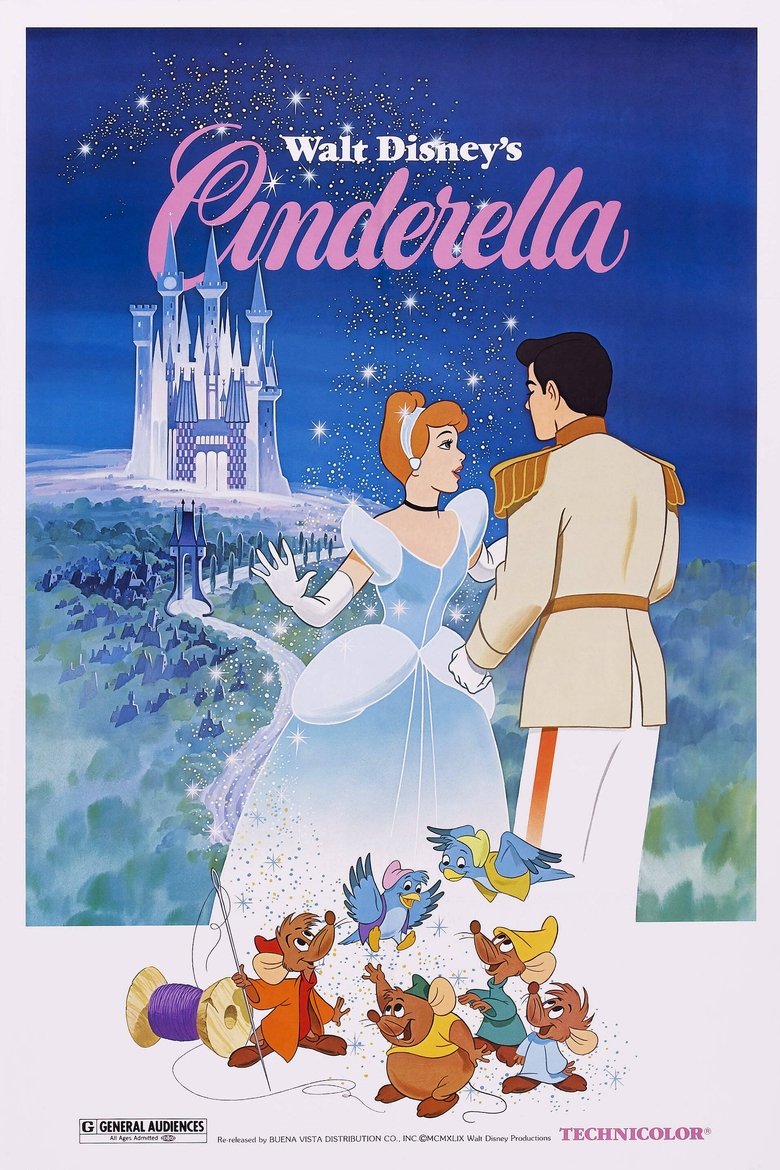
There are some films you feel like you already know before you've even sat down to watch them, and Disney's Cinderella is the textbook example of that. The rags-to-riches fairy tale, the glass slipper, the pumpkin carriage, the wicked stepmother, and that Fairy Godmother waving her wand with a cheerful "Bibbidi-Bobbidi-Boo" — it's all so thoroughly embedded in the cultural fabric that going in feels less like discovering a story and more like revisiting a memory. And there's something genuinely lovely about that. This is a film that doesn't need to announce itself. It just quietly exists, and has done for well over seventy years.
Directed by Hamilton Luske and Clyde Geronimi, this is foundational Disney, the kind of film the studio built its entire reputation on. And watching it now, with fresh eyes as an adult, I found myself with a feeling that's equal parts admiration and mild reservation. Because Cinderella is good. Genuinely good. But it isn't quite the stone-cold masterpiece I half-expected it to be.
Let's start with what works, because quite a lot does. The hand-drawn animation has a soft, storybook warmth that I find completely disarming. Yes, it looks dated by today's standards — we've been conditioned by decades of high-gloss CGI — but honestly, that almost adds to the charm rather than subtracting from it. There's a patience and a gentleness to the artwork, a sense of real craft in every painted background and every frame of movement, that modern productions rarely bother with. You can feel the human effort in it. It breathes. I felt something similar watching Snow White and the Seven Dwarfs, that same quiet appreciation for what it took to make something like this feel alive without any of the digital shortcuts we take for granted now.
The music is more of a mixed bag, if I'm honest. "Bibbidi-Bobbidi-Boo" is an absolute classic, no argument from me there. But a handful of the other songs float past without leaving much of a mark. They're pleasant enough in the moment and then gone the second the scene moves on. Compare that to some of the studio's later work and the songs here feel a touch lightweight. Not bad, just not as sticky as you'd hope.
My bigger gripe, though, is with the characters surrounding Cinderella herself. She's sweet and she's resilient, and I've got no real complaints about her as a protagonist. But the supporting cast — the mice, the stepfamily, the Prince who barely registers as a person — don't quite spark the way the great Disney sidekicks do. They serve the story fine. They do the job. But I wouldn't say any of them linger in the mind the way some of the studio's more memorable creations do. I've always thought One Hundred and One Dalmatians gives you a villain worth truly hating in Cruella de Vil, and that kind of vivid characterisation makes a real difference. Here, the stepmother is menacing in a functional sense, but she never quite reaches those heights.
None of this is a fatal flaw. Cinderella knows exactly what it is and what it's trying to do, and on those terms it succeeds. It's a gentle, beautifully illustrated, and thoroughly enjoyable way to spend an hour and a quarter. It's comfort viewing in the truest sense: warm, familiar, and uncomplicated. Three stars from me, and I mean that honestly rather than as a backhanded compliment. Not every film needs to rewrite the rulebook. Sometimes a fairy tale just needs to be a fairy tale, and this one does that with a quiet, handcrafted grace that's hard not to appreciate.
It doesn't cast the most unforgettable spell. But it's a spell worth watching all the same.
Rating: ★★★ | Year: 1950 | Watched: 2026-06-23
Where to watch
Watch in the UK
Stream: Disney Plus
Rent: Apple TV Store · Rakuten TV · Amazon Video · Google Play Movies
Buy: Apple TV Store · Rakuten TV · Amazon Video · Google Play Movies
Physical: Amazon UK · Zavvi
Watch in the US
Stream: Disney Plus
Rent: Amazon Video · Apple TV Store · Google Play Movies · YouTube
Buy: Amazon Video · Apple TV Store · Google Play Movies · YouTube
Physical: Amazon US
Affiliate disclosure: Movies With Macca may earn a small commission on purchases or subscriptions started via these links. It costs you nothing extra.



