
Nahal - From the Hives of Oman (2021)
★★½ — Nahal - From the Hives of Oman (2021)

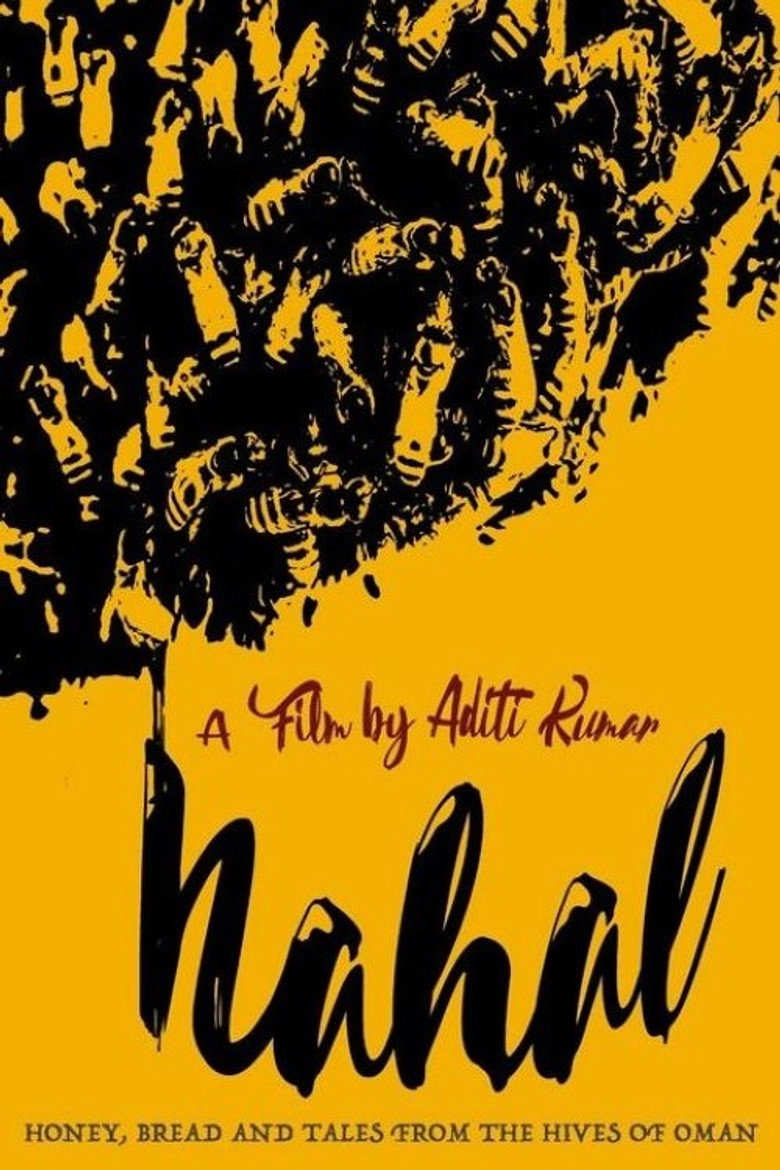
Nahal: From the Hives of Oman is a 2021 documentary short, running just eighteen minutes, that takes its audience into a corner of the natural world that rarely attracts a camera crew. Co-produced between Oman and the United States, the film profiles four Omani beekeepers, with a tour company owner providing the connective tissue of a narrating voice. The approach is personal rather than encyclopaedic: each beekeeper brings their own story of family, inherited knowledge, and a quietly fierce attachment to their craft, and the film frames those stories against the broader picture of a small but developing industry operating under conditions that are, to put it mildly, demanding. Oman itself sits at the south-eastern tip of the Arabian Peninsula, and its beekeeping traditions, particularly in the mountainous interior and the coastal fringes, stretch back generations. That context gives the film a grounding in place and culture that a less specific documentary might have skipped past. For companion pieces from Oman on this site, see also She and Sea and The Hour of Liberation Has Arrived, both of which give a sense of how differently the same country can present itself on screen depending on who is looking and why.
The film was directed by Aditi Kumar, who also took on the editing herself. That combination of roles, director and editor working as one, is common enough in short documentary filmmaking, where budgets are tight and creative control can matter more than division of labour. It tends to produce a certain coherence of vision: the choices made in the field and the choices made in the cutting room come from the same sensibility. The writers are uncredited, which is standard for a film of this scale and format, where the shape of the story tends to emerge in the edit as much as on the page. The production credits, including studio and composer, are not publicly detailed, which places it firmly in the tradition of the independently made, passion-driven short documentary. I have covered other films in that tradition, ranging from the formally rigorous to the distinctly scrappy, including Titicut Follies, Frederick Wiseman's confrontational institutional portrait from 1967, and Under a Jarvis Moon, which takes a niche historical subject and finds genuine character within it.
On a craft level, the film's visual approach is its most immediately noticeable quality. The cinematographer is uncredited, but the images that result have a clean, considered look: the light of the Omani landscape, whether the bleached rock of the mountains or the warmer tones of cultivated ground, is used with obvious intention rather than simply pointed at. There is a patience to the framing, a willingness to let a hive sit in the frame and breathe, that suits the rhythm of the subject matter. The editing, as noted Kumar's own work, keeps things moving without feeling rushed, though at eighteen minutes the film does not have much room to linger. The score, like the cinematographer, goes uncredited, and the sonic texture of the film leans on the ambient sounds of the landscape and the hives themselves, which is a reasonable choice for this kind of observational documentary. The overall effect is polished but modest, the look of a short film that was made with care and a clear eye, even if the resources behind it were limited.
So. Bees. Specifically, bees in Oman. If that sentence just made your eyes glaze over, I get it, and honestly this film might not be for you. But if you've got even a passing curiosity about the natural world and the people who dedicate their lives to it, there's something quietly watchable here. It's not going to set your world on fire, but it held my attention well enough.
The thing that genuinely surprised me, and I wasn't expecting to be surprised by anything, is that Oman has both domesticated honey bees and wild dwarf bees. I didn't know dwarf bees were a thing. I had to sit with that for a moment. Two distinct species, two entirely different relationships with the beekeepers who tend to them or simply coexist with them. That's actually a decent hook for a documentary, and the film uses it reasonably well to show the contrast between traditional, inherited beekeeping practices and something wilder and less controllable.
The beekeepers themselves come across as people who genuinely love what they do, and there's something meditative about watching them work. The landscape helps. Oman looks striking on camera, and whoever shot this knew what they were doing. The cinematography is clean and considered, making good use of the terrain and the light. It gives the whole thing a kind of quiet dignity that a scrappier production might have lacked.
My issue, and it's not a massive one, is that the film doesn't quite push far enough into anything. It gestures at the cultural significance of beekeeping in Oman, at the tradition being passed down through generations, at the ecological stakes, but it never really commits to exploring any of those threads in depth. It's a brief film, and you feel that brevity. Just when something interesting starts to surface, you're sort of nudged along to the next shot of a hive.
I've seen documentaries take a similarly niche subject and turn it into something genuinely gripping. Werner Herzog did it repeatedly, including with Lessons of Darkness (1992), which finds apocalyptic grandeur in burning oil fields. Obviously that's a different beast entirely, but it's a reminder that a narrow focus doesn't have to mean a narrow film. Nahal is content to stay surface level, and there are moments where you wish it had more ambition.
That said, I don't want to be too hard on it. It's a well-made short documentary about a corner of the world that rarely gets much screen time, covering a subject that most people would never think to look into. On that level it does its job. I came away knowing more about Omani beekeeping than I did going in, which was knowing absolutely nothing, and the visuals are pleasant enough that it never feels like homework.
Two and a half stars. Decent enough if you give a shit about bees, or if, like me, you're on a world tour and Oman's come up. Won't be losing sleep over it either way.
I think that verdict is fair. There is something genuinely pleasing about a film that simply points a camera at something you had never thought to think about, and does so with a steady hand. The dwarf bee detail alone is the kind of thing that sticks with you in a low-key way, the sort of fact you file away and then wheel out at a dinner party months later with misplaced confidence. The frustration, as I felt watching it, is that eighteen minutes is both the film's alibi and its limitation: you can always excuse a short documentary for not going further, but that does not mean you stop wishing it had. Still, for what it is, a neat, well-shot window into a world most of us will never encounter, it earns its runtime. Sometimes that is genuinely enough.
Rating: ★★½ | Year: 2021 | Watched: 2025-08-08
Related on Movies With Macca
More from Oman: The Hour of Liberation Has Arrived (1974)
More from the 2020s: Mononoke the Movie: The Phantom in the Rain (2024) · Mononoke the Movie: Chapter II - The Ashes of Rage (2025) · The Long Walk (2025) · Americana (2023)
More documentary: Letter from Siberia (1957) · Lessons of Darkness (1992) · Style Wars (1983) · Here and Elsewhere (1976)



