Little by Little (1970)

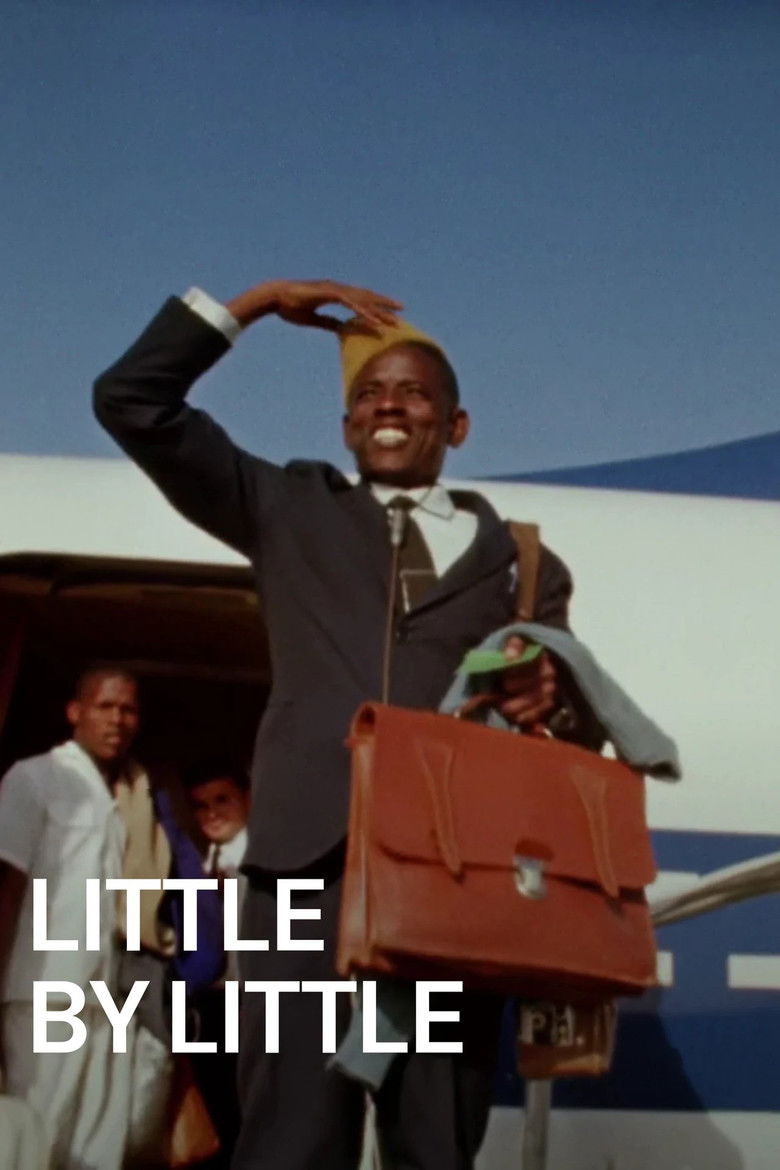
There's a peculiar pleasure in watching a film that you can tell has quietly influenced dozens of things you love, even when the film itself won't quite let you fully love it. That's the honest truth of my experience with Little by Little. Jean Rouch's 1970 ethnofiction follows a young man from Niger navigating Parisian life, offering deadpan observations on cultural difference, bureaucracy, and the general absurdity of what the Western world calls civilisation. It's a fascinating watch. It's also, I'll be straight with you, a fairly demanding one.
If you've seen Rouch's earlier work, and I'd point you towards The Mad Masters (1955) as a companion piece well worth your time, you'll already know what you're getting into. He operates in this beautifully awkward space between documentary and fiction, letting his non-professional cast improvise around real experiences, building scenes out of genuine encounters rather than scripted set pieces. The result has a loose, spontaneous energy that feels alive even when it's also frustrating. Rouch coined the term "ethnofiction" for a reason: this isn't documentary, but it isn't drama either. It's something stranger and more interesting than both.
What strikes me most is how clearly you can see the DNA of later satirical comedy running through it. The outsider deployed to expose the absurdities of the supposedly civilised world, the camera as an anthropological tool turned on the anthropologists themselves, the dry wit of someone simply describing what they see without performing shock at it. For anyone who's watched Borat or What We Do in the Shadows and wondered where that particular mode came from, here's a significant part of the answer. When the humour lands, and it does land, it's quietly sharp and surprisingly timeless.
But I'd be doing you a disservice if I glossed over the very real barriers to enjoying this film. The cinematography is handheld, often poorly lit, frequently unfocused in ways that feel less like a stylistic choice and more like the limits of the shoot. The pacing meanders in ways that can feel closer to archival footage than crafted storytelling. And I'll admit an extra layer of difficulty on my end: the version I watched had faulty auto-captions rather than proper subtitles, which almost certainly cost me wordplay, cultural nuance, and context that would have enriched the whole thing considerably. It's a film that relies heavily on language and subtlety, so watching it in those conditions is like listening to music through a wall. You can hear the shape of it, but you're missing texture. Accessibility matters, and it matters especially for films like this.
What I can say with confidence is that Little by Little earns genuine respect for its ambition and its place in the history of genre-bending filmmaking. It's a sketchpad rather than a finished canvas, a proof of concept for ideas that later artists would develop into something more polished and more widely seen. If you're working through the roots of mockumentary, if you're studying cross-cultural satire, or if you're already a Rouch devotee with Candomblé in Togo (1972) on your watchlist, this will reward your patience and your contextual knowledge. For casual audiences, though, I'd hesitate to call it essential.
Three stars. A decent film, a historically significant one, and one I'm glad exists. But it's a respectful nod from a distance rather than a warm embrace. Approach it as a curious artefact from a pioneering filmmaker rather than expecting it to grip you the way its more polished descendants do, and you'll leave satisfied enough.
Rating: ★★★ | Year: 1970 | Watched: 2026-06-07
Where to watch
Watch in the US
Stream: OVID
Physical: Amazon US
Affiliate disclosure: Movies With Macca may earn a small commission on purchases or subscriptions started via these links. It costs you nothing extra.