Kikuyu Land: Bea Wangondu, Andrew H. Brown and Mr Mungai in Conversation

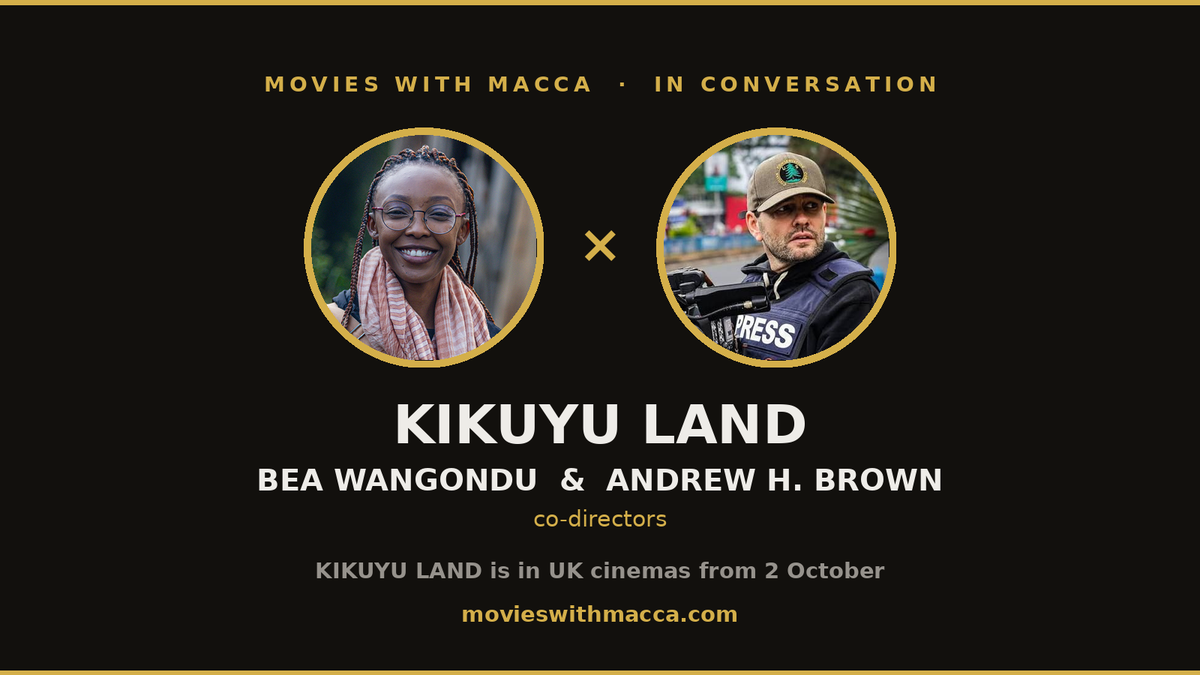
Kikuyu Land was, for me, one of the best documentaries of the year, a furious, beautiful and deeply personal film that traces an unbroken line from colonial land seizures in Kenya to the multinational tea estates still profiting from that soil today. You can read my full review here. It is not an easy watch, nor is it meant to be, and it stayed with me long after the credits.
I was privileged to put some questions to the people who made it and who live inside its story: director and on-screen investigator Bea Wangondu, her fellow film-maker and cinematographer Andrew H. Brown, and Mr Mungai, whose fight to reclaim his family's stolen land is the human heart of the film. Their answers, which I have kept largely in their own words below, are as searching and as unflinching as the documentary itself.
As both a journalist and the film's on-screen investigator and narrator, you're telling this story and living inside it at once. How did carrying those two roles at the same time shape the film, and you?
Bea Wangondu: It hurt. The truth of my family's history, juxtaposed with the daily reality of Kenya's painful colonial history, bore a new identity in me.
Mr Mungai's story is the human heart of the film. That letter demanding his family leave their land is devastating. How did you first come to his story, and how did you build the trust needed to tell something so personal?
Bea Wangondu: One of our producers, Njenga, brought Mr Mungai to us alongside the detail of his research over the years. I was immediately mind-blown by his conviction of reparations and his attention to detail. Some things in this life are meant to be, and my connection with Mr Mungai is one of them. He is baba to me to this day. His struggle is mine also.
The film draws a clear, unbroken line from colonial land seizures to the multinational tea estates operating today. Why was it so important to you that audiences feel this as a present-day injustice rather than a historical one?
Bea Wangondu: Because not much has changed for ordinary Kenyans, and their side of the story needed to be told in the way we have on Kikuyu Land. Profiteering as it were with colonialism gave birth to neo-colonialism in the way locals are living it today within many local tea multinationals. Kenyans working in these plantations are considered cheap labour, treated like objects, mere means to an end. It is unsustainable, and this is why we are using our voices to open the door for a conversation that is long overdue.
There's a striking sequence where you travel to the UK to try to meet the companies involved, and are simply refused. What did that wall of corporate silence tell you, and what do you most want British audiences in particular to take from the film?
Bea Wangondu: That told me that the conversation I was trying to have is unwanted. It was undignifying. What I want British audiences to take from the film is that the experience of the colonised is still missing in the larger conversation around Britain's imperial past and the aftermath of it. By centring memory, I would hope for an open conversation around the taught idea that British imperialism ended, versus our lived experience, and allow the two histories to meet in the present.
The investigation turns genuinely frightening, from a kidnapped journalist to the allegations the film lays out about those in power. Did you ever fear for your own safety in making this, and how did you weigh that risk against the need to tell the story?
Bea Wangondu: Yes, I feared for my life, we all did, but we had an understanding of the risks involved as citizens of Kenya and took the necessary precautions. We also had incredible access, so we carefully and respectfully maximised on it.
The film is as beautiful as it is furious, the landscapes and the score by Nyokabi Kariuki and Keir Vine giving it real emotional weight. How did you approach making something so visually rich out of such difficult subject matter, without letting the beauty soften the anger?
Andrew H. Brown: I don't know how we could possibly tell this community's story while separating the beauty of the land from the anger of the injustices that have happened there. If I'd shot this as an issue-driven film, it would be easy for an audience to file it away as "someone else's problem happening somewhere else." Instead, with the approach of capturing the land in all its scale, light and intimate beauty, you make the loss more tangible for viewers far away. We wanted audiences to care about this hillside, this tree, this ditch, so we just tried to film the land through the eyes of people that cared intimately for it.
Bea and I weren't focused on offering audiences a clean, tidy resolution, because the community's story isn't resolved. We wanted to be deliberate and focused on the story you weren't told. The beauty of Kikuyu Land isn't a consolation. It's the evidence that something precious was stolen. Nyokabi and Keir's score took the same approach. It never underlines the tragedy the way a more conventional documentary score would. Instead, it stays close to the emotional register of the people on screen, so the grief and the anger come from them without always being heavy-handed.
Documentaries can raise awareness, but you clearly want this one to change something. Now that it's reaching cinemas, what would meaningful impact look like to you, for Mr Mungai, and more widely?
Bea Wangondu: The meaningful impact would be when we get a substantial reaction from government and the people that matter in the chain of justice. We want to elicit the will to act in relation to the demands raised by the film. My desire is for the immediate return of our stolen ancestral land.
Trusting a film crew with your family's story, and putting your fight on a global stage, is a big step. What made you decide to take part, and what do you hope the film achieves for you and your community?
Mr Mungai: The decision to take part in this film came from the realisation of the extent to which media offers, so it became a meaningful platform for drawing attention to the global actors. For me, my community, and for all globally who got caught up in the scourge of colonialism, my hope is that they all get their land back and due justice.
My thanks to Bea Wangondu, Andrew H. Brown and Mr Mungai for their time and their candour, and to Honor at AR PR. Kikuyu Land is in UK cinemas from 2 October. You can read my review here, and find out more about the film at kikuyulandfilm.com.
Related on Movies With Macca
More from Country Kenya: The Last Tourist (2021), The Constant Gardener (2005), Nairobi Half Life (2012)
More from the 2020s: Look Back (2024), The Whale (2022), All That's Left of You (2025)
More documentary: The Mad World of Harvey Kurtzman (2026), Fabric (2026), Roberto Rossellini, Living Without a Script (2025)