Dementia (1955)
★★½ — Dementia (1955)

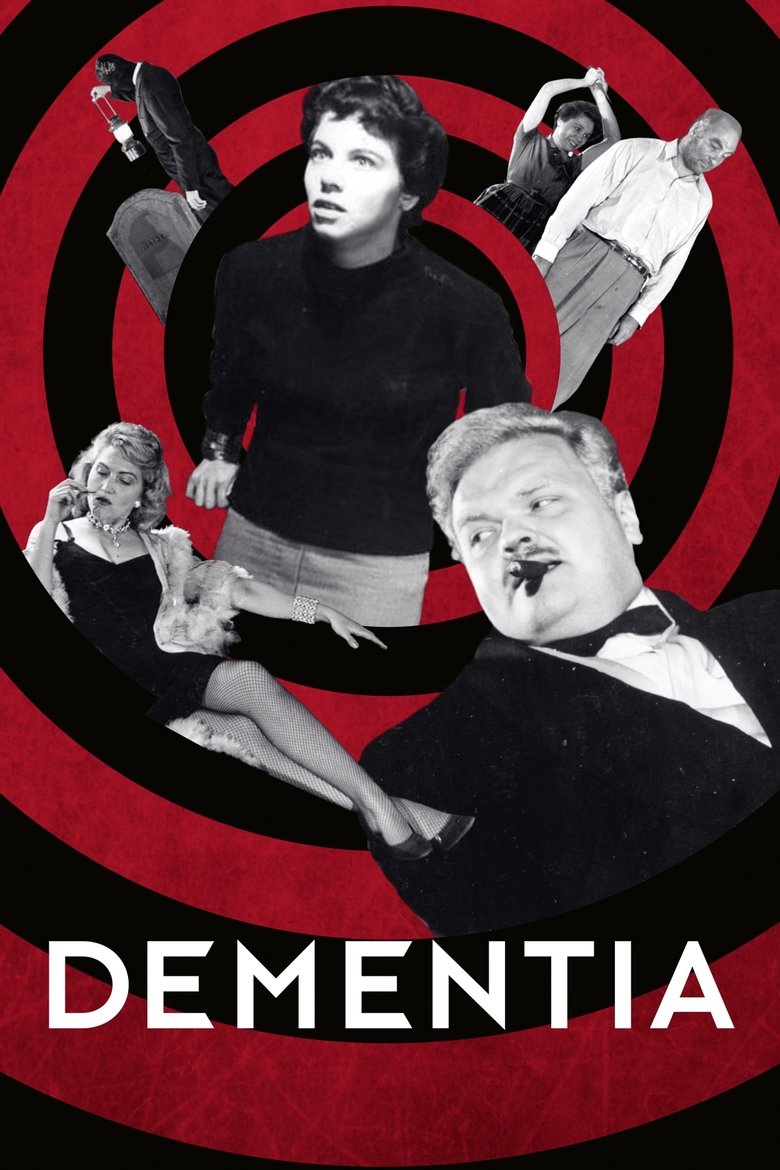
There's a version of Dementia that exists purely in theory, one I can admire on paper without particularly enjoying on screen. It's a 1955 American underground film that strips away dialogue entirely and drops us into a woman's psychological nightmare as she wanders a predatory, expressionistic city. No words. No conventional narrative. Just shadow, dread, and George Antheil's dissonant score curling around images that feel borrowed from the darkest corners of German Expressionism. Bold? Absolutely. An easy watch? Not even close.
The ambition is real and worth acknowledging upfront. At a time when Hollywood was churning out polished genre fare (I've a soft spot for that era's more mainstream paranoia pictures, like Invasion of the Body Snatchers (1956)), someone was making this: a microbudget fever dream with no interest in reassuring its audience or even orienting them. The decision to use no spoken dialogue isn't a gimmick. It's a structural commitment to rendering psychological torment as pure sensation. You're meant to feel unmoored, and in that narrow sense, it works.
But here's where I have to be honest. Admiring a film's intentions and actually being held by it are two very different things, and Dementia kept losing me. Without dialogue or any narrative anchors to grab onto, the film drifts quickly into abstraction, and what the filmmakers might have intended as hypnotic instead tips over into inert. There's a difference between a film that unsettles you into stillness and one that simply stalls, and too often this one does the latter. The pacing drags in a way that feels less like deliberate unease and more like a film running out of ideas for what to do next.
The symbolism isn't subtle, either. Men as predators and monsters, urban spaces as sites of sexual threat and alienation, the city itself as a kind of psychological prison. These are worthwhile ideas, and in 1955 putting them on screen at all in this form was genuinely transgressive. But viewed now, the imagery hammers its points rather than letting them breathe, and the bluntness undercuts the surreal atmosphere the film is clearly straining towards. Surrealism at its best has a logic beneath the strangeness, a subconscious coherence that keeps you leaning forward. Compare something like Alice in Wonderland (1951), which for all its lightness manages to sustain a queasy dream logic far more consistently than this darker, more self-serious effort manages.
Then there's the question of which version you're actually watching. Some cuts of the film include an added narration that frankly undermines the whole project. Putting words to images that were designed to exist without them is a bit like explaining a joke: the moment you do it, whatever power the original idea had is gone. If you seek this one out, find the dialogue-free version and give it the best possible chance.
The technical roughness, born of a genuinely tiny budget, is a trickier thing to assess. Sometimes grainy, imperfect filmmaking reads as raw and urgent, as part of the vision. Here it more often feels like a limitation that the film is working against rather than with. The stark black and white photography has genuine moments of expressionist beauty, angular shadows and stark compositions that suggest what a more controlled hand might have fully realised. But those moments are scattered across stretches that feel technically compromised rather than artfully rough.
I don't want to be entirely dismissive. Dementia sits within a tradition of genuinely daring outsider cinema, and it earned its cult reputation by doing something almost no one else was doing at the time. For film historians, for those drawn to the edges of American underground art, there's real value in tracking it down and spending time with it. It's a document of what was possible when you simply ignored the rules entirely.
But respect and enjoyment aren't the same currency, and I can only deal in honesty here. If you need story, character, or even a basic thread of coherence to stay engaged, this will test your patience severely. It tested mine. Two and a half stars feels right: generous enough to honour the audacity, honest enough to acknowledge that audacity alone doesn't make a film work.
Rating: ★★½ | Year: 1955 | Watched: 2026-03-17
Where to watch
Watch in the UK
Stream: BFI Player · BFI Player Amazon Channel · BFI Player Apple TV Channel · Bloodstream
Rent: Apple TV Store · Amazon Video
Buy: Apple TV Store · Amazon Video
Physical: Amazon UK · Zavvi
Watch in the US
Stream: Cohen Media Amazon Channel · Bloodstream
Rent: Amazon Video · Apple TV Store · Google Play Movies · YouTube
Buy: Amazon Video · Apple TV Store · Google Play Movies · YouTube
Physical: Amazon US
Affiliate disclosure: Movies With Macca may earn a small commission on purchases or subscriptions started via these links. It costs you nothing extra.
Related on Movies With Macca
More from the 1950s: Invasion of the Body Snatchers (1956) · Alice in Wonderland (1951) · Letter from Siberia (1957) · Invaders from Mars (1953)
More horror: Invasion of the Body Snatchers (1956) · Viy (1967) · Nightmare City (1980) · Angst (1983)
More drama: Viy (1967) · Wonder (2017) · A Better Tomorrow (1986) · Beautiful Boy (2018)