City Lights (1931)

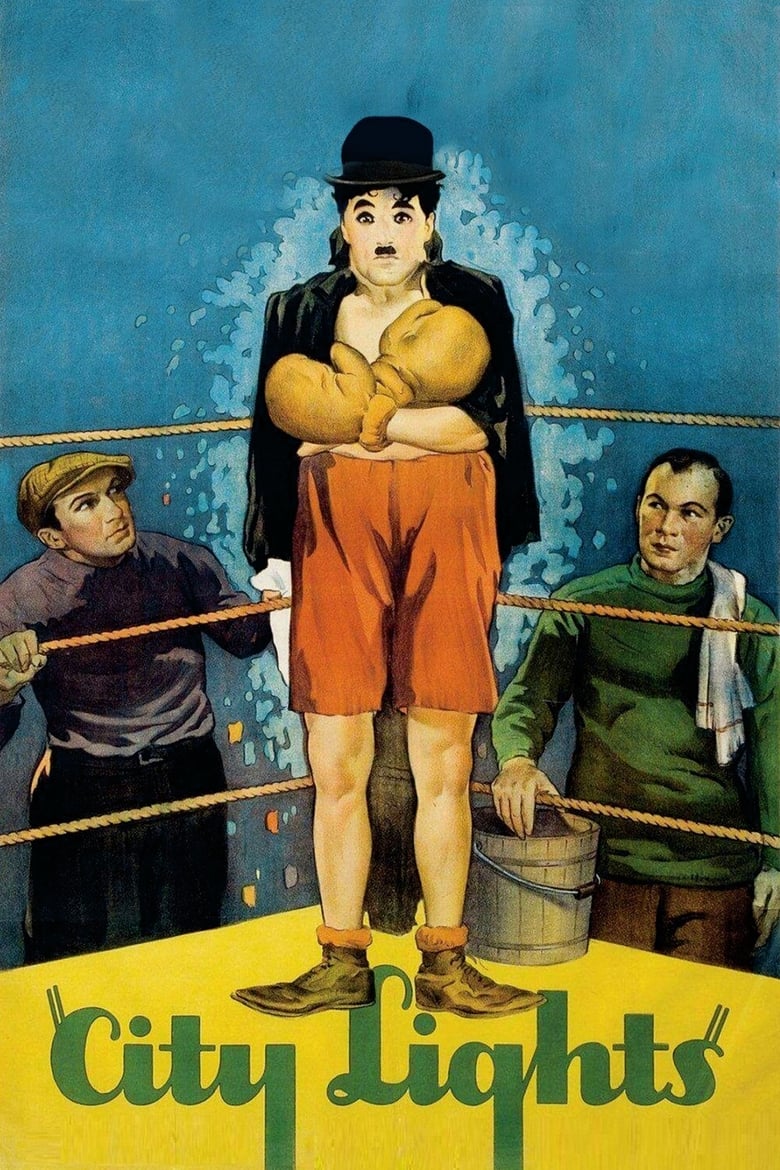
City Lights arrived in cinemas in January 1931 under circumstances that made it something of a calculated act of defiance. Sound had swept through Hollywood with the force of a freight train following The Jazz Singer in 1927, and by the time Charlie Chaplin's film reached audiences, the silent picture was widely considered a dead form. Chaplin, who had built his entire screen identity around physical performance and pantomime, refused to yield. City Lights is not quite a silent film in the strictest technical sense (it carries a synchronised score and a handful of comic sound effects), but it was released without dialogue at a moment when every other major studio had committed wholesale to the talkies. The gamble paid off commercially and critically, though the question of how the film holds up across the intervening decades is a rather more complicated one.
The film was produced entirely through Charles Chaplin Productions, with Chaplin exercising control over almost every aspect of the picture. He co-wrote the screenplay alongside Harry Crocker and Harry Carr, directed, composed the score, and shared editorial duties with Willard Nico. That level of consolidation was unusual even by the standards of the era, and it gives City Lights a singular, somewhat obsessive coherence. The story centres on the Little Tramp, Chaplin's beloved recurring character, and his tender, quixotic attachment to a blind flower girl (Virginia Cherrill), whose sight he hopes to restore by raising money through a series of increasingly chaotic misadventures, including a volatile friendship with a wealthy drunk played by Harry Myers. Florence Lee and Al Ernest Garcia round out the supporting cast in smaller but functional roles. Virginia Cherrill, it is worth noting, was essentially a non-professional when Chaplin cast her, and the production was famously troubled; Chaplin reportedly came close to replacing her on multiple occasions before the film was completed. For context on where City Lights sits within Chaplin's broader output at this period, I also reviewed The Circus (1928) and The Gold Rush (1925), both of which give a useful sense of what Chaplin was doing in the years immediately before and after sound changed the landscape.
The visual grammar of City Lights was the work of two cinematographers, Gordon Pollock and Roland Totheroh, the latter of whom had been Chaplin's near-constant collaborator since the early years of his career at Mutual and First National. The photography is clean and functional rather than flamboyant, the frame organised around faces and bodies rather than elaborate compositional flourishes, which suits a film that lives or dies on performed gesture. Chaplin's own score, which he conducted and arranged to synchronise precisely with the action, is the film's most technically ambitious element. It draws on popular song forms, vaudeville idioms and occasional sentimental strings, shifting register quickly between comedy and pathos, sometimes within a single sequence. It is worth noting that Chaplin composed the score without formal musical training, a fact that adds a particular texture to the way the music occasionally sidesteps conventional harmonic expectations. Among the early sound-era pictures I have looked at on this site, Cavalcade (1933) makes for an interesting companion piece in terms of how films of this period were managing the transition to sound in entirely different ways.
Let me say up front that I understand the importance of Charlie Chaplin. The man is an undisputed screen icon, and he paved the way for countless actors and film-makers who followed. None of that is in question. But I have to be straight about my own experience of City Lights, and the truth is that, at ninety-odd years old, it shows its age, and it shows it badly.
The fairest way I can put it is this. Measured purely against other silent films of its era, it is a five-star picture without question, inventive, graceful, streets ahead of most of its contemporaries. But set it beside the hundreds of films that came after, the ones with sound and colour and everything the medium has learned since, and it simply cannot stand up in the same way. I felt that gap keenly for much of the running time.
It is funny in places, and it has a lovely sweetness to it; it made me smile more than once, and the famous closing scene still lands. But it is, when all is said, a silent, black-and-white film, and I will be straight with you: coming to it cold in 2026, as a first-time watch, I struggled to find the appeal everyone promises. Three stars. A landmark, without question, and I would never argue otherwise, but not one I would rush to press on a newcomer today.
City Lights occupies a peculiar position in the canon, one that criticism has not always handled with complete honesty. It is regularly cited among the greatest films ever made, and the weight of that consensus can make it difficult to write about plainly. What remains genuinely inarguable is the craft on display, the precision of the physical comedy, the structural confidence of a filmmaker who understood his own medium with rare clarity. Whether that craft translates across ninety-plus years into an experience that rewards a modern first-time viewer is a different question, and one worth asking out loud rather than assuming the answer. Some landmarks are worth the visit mainly because of what was built on the land afterwards.
Rating: ★★★ | Year: 1931 | Watched: 2026-10-21
Trailer
▶ Watch the official trailer for City Lights (1931) on YouTube
Where to watch
Watch in the UK
Stream: Amazon Prime Video · Amazon Prime Video with Ads
Rent: Amazon Video
Buy: Apple TV Store · Amazon Video
Physical: Amazon UK · Zavvi
Watch in the US
Stream: Amazon Prime Video · HBO Max Amazon Channel · HBO Max · Amazon Prime Video with Ads
Rent: Amazon Video · Apple TV Store · Google Play Movies · YouTube
Buy: Amazon Video · Apple TV Store · Google Play Movies · YouTube
Physical: Amazon US
Affiliate disclosure: Movies With Macca may earn a small commission on purchases or subscriptions started via these links. It costs you nothing extra.