Between Us and the World (2026)

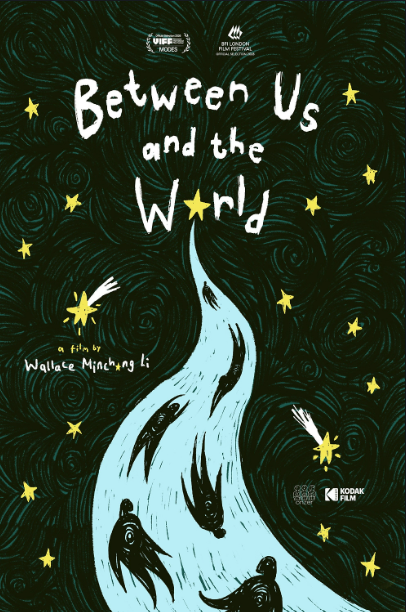
I have a real soft spot for films from Western Sahara, one of the rarest and most politically charged corners of world cinema, so I came to Wallace Minchong Li's Between Us and the World keen to like it. And there is a good deal to admire here, chiefly the sheer thrill of the archive, even if the finished piece never quite rises above the level of an interesting curio. Two and a half stars.
The film builds itself from European archival footage shot in the 1950s, documenting the lives of indigenous, nomadic Sahrawi children and young people in what is now the contested territory of Western Sahara. Seventy years on, young people from Laayoune revisit the places that footage may have captured, moving from ocean to desert to oasis, and under a trembling, star-heavy sky they talk about their lives, their dreams and their ideas of utopia as they search for something uncertain upstream. It is a lovely conceit on paper, the past and present of a single place laid gently over one another.
For me the real pleasure was simply the chance to see this place on screen at all. Western Sahara is the last non-self-governing territory left on Earth, a people whose story is largely lived in exile and refugee camps, and the 1950s material is genuinely remarkable: a window onto a nomadic world most of us will never otherwise glimpse. On that level alone the film feels valuable, a small act of preservation and attention aimed at somewhere the rest of the world mostly ignores.
The frustration is in the execution. There is no real dialogue to speak of, with the contemporary voices and ideas conveyed largely through text on screen, and while that is a perfectly legitimate choice, it does leave the whole thing feeling a touch basic, more slideshow than cinema in its quieter stretches. It also asks a lot of the viewer. If you do not already carry an interest in Western Sahara and its plight through the door with you, I can genuinely see the film losing you, because it does relatively little to pull a newcomer in or to build the emotional momentum that might carry them. I could not help comparing it to Life is Waiting, which covers the same territory with far more urgency and narrative grip, and which is the stronger film by some distance.
Two and a half stars. Between Us and the World is a thoughtful, well-intentioned piece built around some truly precious footage, and for anyone already invested in the region it is well worth seeking out. But its reticence, all those on-screen texts and that deliberately hushed, hands-off approach, keeps it at the level of the interesting rather than the essential. I am glad I watched it, and gladder still that the archive exists, but it is a film I admired more than I was gripped by.
Between Us and the World screens at the BFI London Film Festival as part of the Experimenta strand.
Related on Movies With Macca
More from Country Western Sahara: Life is waiting: referendum and resistance in Western Sahara (2015), Battalion to My Beat (2016)
More from the 2020s: All That's Left of You (2025), The Whale (2022), Look Back (2024)
More documentary: Mon Taxi (2026), Kikuyu Land (2026), Bel (2026)