Amazing Grace (2018)

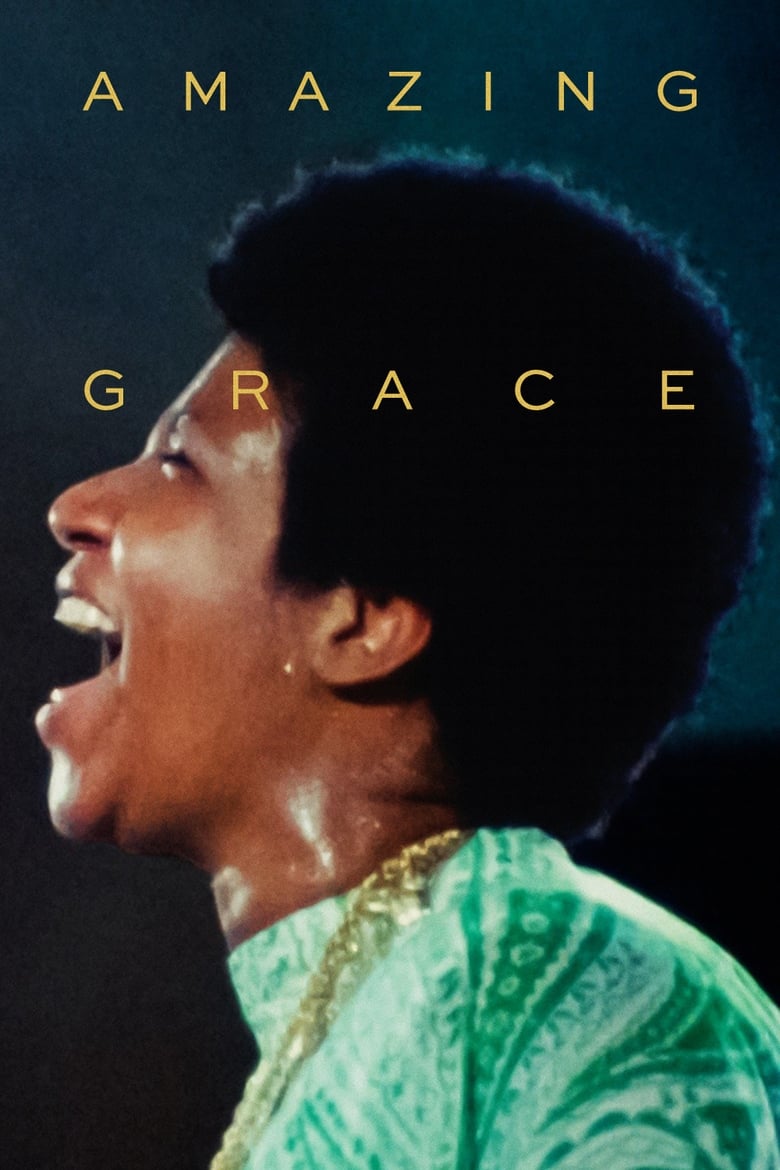
There is a moment in Amazing Grace where Aretha Franklin closes her eyes, draws a breath, and does something that no amount of studio polish could ever fully capture. The room holds with her. You hold with her. And then she opens her mouth and reminds you exactly why the word "greatness" exists. That moment alone is worth the price of admission, and the film is full of them.
What Alan Elliott has assembled here is less a documentary in the traditional sense and more a time capsule, a pristine window into two recording sessions at a Los Angeles church in 1972. Franklin was there to record what would become one of the best-selling gospel albums ever made, surrounded by a full choir, a congregation, and a spiritual energy that the cameras captured but couldn't quite contain. The footage sat unreleased for decades, the reasons for that delay complicated and long-running. But it's here now, restored and finally out in the world, and it is extraordinary.
Make no mistake about what you're watching, though. This is a concert film, pure and simple. There are no talking heads, no contextual narration, no archival interviews cutting away to explain the significance of what you're seeing. The camera just watches. It watches the choir sway, the congregation weep, the musicians lock in, and Aretha herself move through these songs with a combination of technical command and raw spiritual abandon that is genuinely difficult to describe. Every run, every note held a beat longer than you expect, every moment of call-and-response with the room, it all crackles with something that feels less like performance and more like testimony. You don't feel like a spectator. You feel like a participant.
For anyone already tuned in to this music, or to Franklin's legacy, the film is a revelation. It sits in the tradition of great live performance films, the kind that understand a great artist in their element is its own complete argument. If you've ever been moved by Rockers (1978) for the way it captures a music scene alive and breathing in real time, you'll recognise something similar at work here. The intimacy is the point. The lack of mediation is the point.
But that's also where the film's limitations live, and I'd rather be honest about them than pretend they don't exist. If gospel music isn't your world, if you're coming in cold with no particular connection to the tradition or to Franklin herself, there is very little here to guide you in. No narrative arc, almost no behind-the-scenes texture despite the documentary framing, nothing to create dramatic stakes beyond the performances themselves. The runtime, which isn't excessive by any measure, can start to feel static if you're not already emotionally invested. It's niche by design, and it knows it.
That's not a criticism so much as a description. Amazing Grace isn't trying to convert anyone. It's a document, a record, a piece of music history preserved on film. It is beautiful and historically invaluable and, for the right audience, completely overwhelming in the best possible way. Aretha Franklin here is arguably as good as any vocalist has ever been captured on screen. The voice, the presence, the faith she brings to every line, it's something you feel in your chest rather than just hear through speakers.
Watch it for the voice. Stay for the spirit. Just know going in that the film asks you to meet it where it lives, and if gospel and soul aren't somewhere in your bones already, it may not quite reach you. For those of us for whom it does, Amazing Grace is essential, the sort of thing you watch and then sit quietly with for a while afterwards.
Rating: — | Year: 2018 | Watched: 2026-05-24
Where to watch
Watch in the UK
Stream: Studiocanal Presents Amazon Channel
Rent: Apple TV Store · Rakuten TV · Amazon Video · Google Play Movies
Buy: Apple TV Store · Rakuten TV · Amazon Video · Google Play Movies
Physical: Amazon UK · Zavvi
Watch in the US
Rent: Amazon Video · Google Play Movies · YouTube
Buy: Amazon Video · Google Play Movies · YouTube
Physical: Amazon US
Affiliate disclosure: Movies With Macca may earn a small commission on purchases or subscriptions started via these links. It costs you nothing extra.