A Chinese Ghost Story (1987)

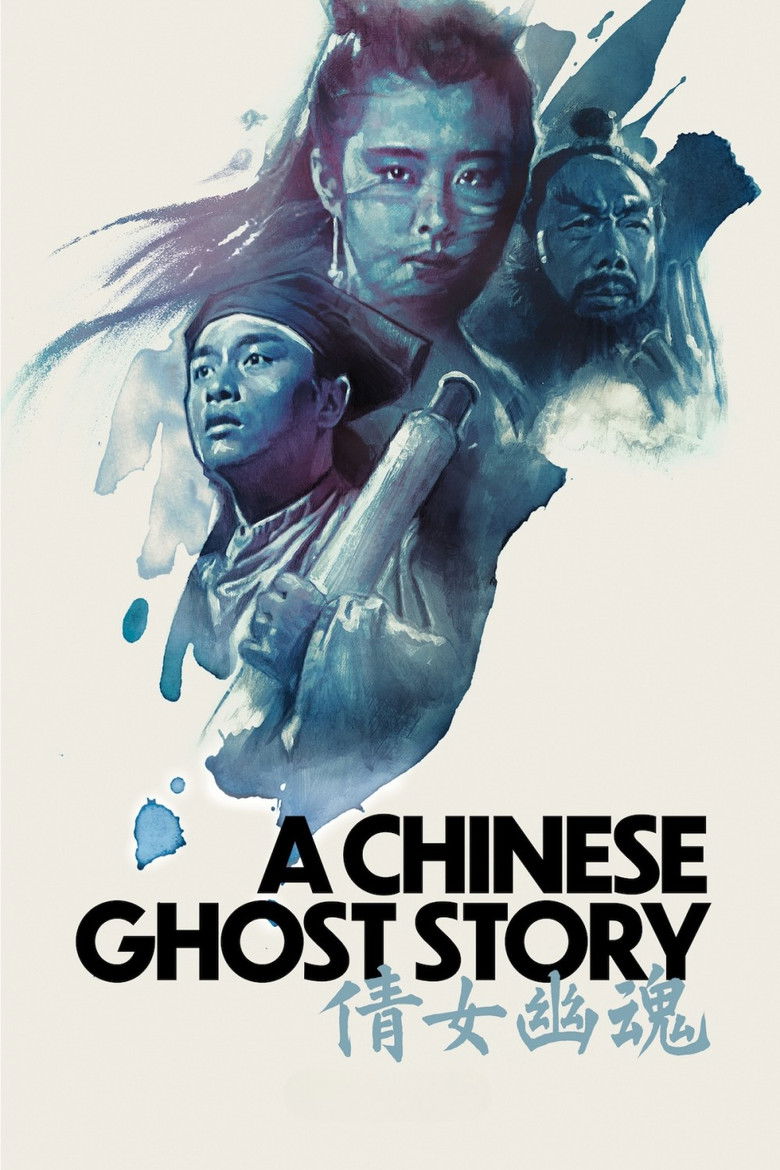
There's a moment in A Chinese Ghost Story where you sit back, squint at the screen and think, "What the hell am I actually watching?" And then you grin. Because whatever it is, it's brilliant.
Tony Ching Siu-Tung's 1987 cult classic is one of those films that defies easy categorisation. It's part wuxia, part xianxia, part horror, part slapstick comedy, part swooning romance, and somehow all of those things at once without ever feeling like it has a clue where it's going next. That chaos, that glorious, reckless energy, is precisely what makes it so magnetic. This is a film that throws everything into a blender, hits the highest setting, and just... hopes for the best. And remarkably, more often than not, it works.
When it comes to its DNA, A Chinese Ghost Story is a fascinating melting pot of Eastern and Western influences. There's a manic, possession-heavy energy here that feels like it must owe something to the Evil Dead franchise, and there's a knowing, supernatural action-comedy spirit that puts me in mind of Big Trouble in Little China. Both of those films wear their genre-blending ambitions on their sleeves, and so does this one. It never takes itself too seriously, but it never fully winks at the audience either. It genuinely believes in its own bonkers world, and that conviction is infectious.
What's also striking is how much of what comes later you can see being invented here in real time. I wrote in my review of Crouching Tiger, Hidden Dragon about the jaw-dropping wire work that made that film feel so extraordinary, but watching A Chinese Ghost Story, you can see where so much of that gravity-defying ambition was first being tested and pushed. The choreography is wild and inventive and, for its time, genuinely daring.
Now, I'll be honest with you. This is a rough film in some real, undeniable ways. The picture quality looks significantly older than 1987, as if it had been dug out of a vault from a decade earlier. And the stop-motion effects used for the undead monsters? They are, by any modern measure, pretty terrible. We're talking rough even by the standards of the era.
But here's the thing: that roughness is inseparable from the charm. A Chinese Ghost Story wears its limitations like a badge of honour. You're never going to convince me that a slicker version of this film would be a better one. Part of what makes it so endearing is that sense of filmmakers throwing everything they had at the screen with total, unashamed enthusiasm. And when Leslie Cheung is on screen, carrying the emotional heart of the story on his shoulders with that easy, natural warmth he had, the technical hiccups fade into the background entirely. You just go with it.
The romance at the centre of the film, tangled up as it is in all the supernatural madness, lands with more genuine feeling than you might expect given the surrounding chaos. That balance, horror and humour and real emotion all jostling for space, is hard to pull off, and it doesn't always land cleanly. But when it does, there's something genuinely special happening.
Hong Kong cinema of the 1980s had an incredible appetite for ambition and genre experimentation, something I've loved exploring through films like A Better Tomorrow, and A Chinese Ghost Story slots right into that era as one of its more gloriously unhinged examples. It's oozing with character and a kind of swaggering originality that you just don't see very often.
Is it a perfect film? Not even close. But is it an absolute one-of-a-kind experience that leaves you grinning at the sheer audacity of it all? Absolutely. I'll be getting to the sequels soon enough, and on this evidence I can't say I'm dreading them.
Three and a half stars. Beautifully flawed, wildly entertaining, and well worth your Friday night.
Rating: ★★★½ | Year: 1987 | Watched: 2026-07-02
Where to watch
Watch in the UK
Stream: Shudder Amazon Channel
Physical: Amazon UK · Zavvi
Watch in the US
Stream: Amazon Prime Video · Philo · AMC Plus Apple TV channel · AMC+ Amazon Channel
Rent: Amazon Video · Apple TV Store · Google Play Movies · YouTube
Buy: Amazon Video · Apple TV Store · Google Play Movies · YouTube
Physical: Amazon US
Affiliate disclosure: Movies With Macca may earn a small commission on purchases or subscriptions started via these links. It costs you nothing extra.