American Beauty (1999)

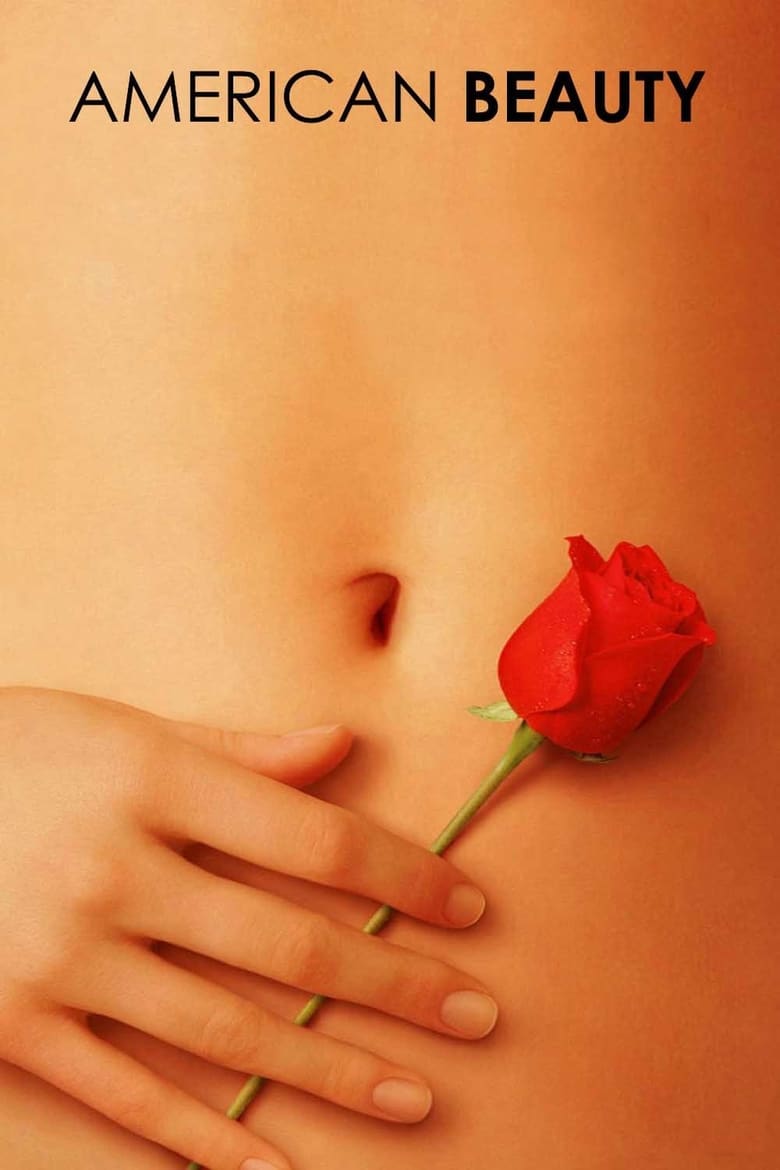
By the close of the 1990s, Hollywood had developed a particular appetite for a certain kind of film: the suburban discontentment drama, polished and wry, wearing its cynicism about the American dream like a badge of sophistication. American Beauty, released in September 1999, arrived near the peak of that wave and promptly swept most of the competition aside. Written by Alan Ball (who would go on to create Six Feet Under for HBO, though this was his feature debut) and produced by DreamWorks Pictures alongside Jinks/Cohen Company, the film centres on Lester Burnham, a middle-aged man in the grip of a mid-life crisis who begins dismantling the comfortable, stifling life he has built around himself. The tagline, "look closer", is the kind of instruction that sounds like a promise of profundity, and the film was received in exactly that spirit, collecting five Academy Awards including Best Picture, Best Director, and Best Original Screenplay. Whether that reception has aged as well as the cinematography is, you might say, the central question.
Sam Mendes came to the project as a theatre director of considerable reputation (his work at the Donmar Warehouse in London had made him one of the most sought-after stage talents of his generation) but with no feature film credits to his name. That he was handed a prestige DreamWorks production as his first go is remarkable in hindsight, and the industry's gamble was vindicated on the night of the Oscars. Mendes has since made films across very different registers, including 1917, his technically audacious First World War film, and the Bond entries Skyfall and Spectre, but American Beauty remains the founding document of his cinema career, and its DNA is visible in nearly everything he made afterwards: a precise visual intelligence, a taste for surfaces that crack open to reveal something stranger underneath.
The cast assembled around the premise is, on paper, formidable. Kevin Spacey plays Lester Burnham with the kind of loose, slightly dangerous charm he had been building toward through the mid-nineties; Annette Bening matches him precisely as his wound-tight wife Carolyn, a woman whose own quiet desperation the film treats with considerably less sympathy than it perhaps deserves. Thora Birch plays their teenage daughter Jane, sardonic and watchful, while Wes Bentley is the peculiar, philosophically inclined boy next door who introduces the film's recurring motif of the beauty lurking in unexpected places. Mena Suvari completes the central cluster as Jane's friend Angela, whose role in the story sits at the film's most troubling pressure point. It is a company of performers working, broadly, at the top of their registers, and the film allows each of them a scene or a moment that genuinely sticks. Ghost World, which I reviewed separately, covers some of the same suburban alienation from a teenage perspective and makes an interesting companion piece if you find yourself drawn to this corner of late-nineties American cinema.
Craftwise, the film is hard to argue with on its own terms. Conrad Hall's cinematography is the work of a veteran (he had been shooting major Hollywood pictures since the 1960s) operating at full stretch: the images are warm, carefully composed, and occasionally unsettling in the way they frame domestic spaces as slightly too large, too empty, too symmetrical. Hall won his third Academy Award for Best Cinematography here, a specific, concrete marker of how the industry received the work. Christopher Greenbury and Tariq Anwar's editing keeps a film of 122 minutes feeling controlled and purposeful, calibrating the rhythm between Lester's sardonic narration and the quieter, odder scenes that surround it. Thomas Newman's score is a thing unto itself: delicate, glass-like, built around repetitive piano figures and light percussion that gives the film a curiously detached emotional texture, closer to curiosity than sentiment. It was nominated for the Oscar as well, and it has since become one of the more recognisable sounds of its era.
American Beauty is a difficult one to weigh up, because almost everything about the way it is made is excellent, and almost everything about what it is actually saying leaves a sour taste.
At its centre is a middle-aged man's infatuation with his teenage daughter's school friend, and the film asks you to find something liberating, even beautiful, in that. I could not, and watching it now, with everything we have since learned about Kevin Spacey, that discomfort only deepens. The message at its heart is, to put it plainly, an ugly one.
And yet, as a piece of film-making, it is hard to deny. This was Sam Mendes's debut, a world away from the Bond films and the war epic he would go on to make, and he announces himself with striking control. The rose-petal fantasy is justly iconic, the footage shot on the neighbour boy's camcorder gives the film a strange, watchful beauty, the ending lands hard, and Thomas Newman's score is wonderful. Scene for scene, it is beautifully put together.
So I am left with the split verdict I started with. As a piece of craft, as a handsome American drama carrying a handful of unforgettable images, it is a very good film. As a story, and above all as a message, I think it is an awful one, and no amount of gorgeous film-making quite redeems that for me.
Three and a half stars, then, and that rating is doing a lot of work to hold two very different reactions in the one hand: admiration for how it is made, and deep unease at what it is in service of.
American Beauty occupies an unusual place in the cultural memory now: a film you can find in virtually any list of the great works of its decade, and yet one that generates a notably uneasy conversation whenever it comes up. The craft is real, the performances are real, and the production brought together a set of collaborators who were each working at something close to their best. What the craft is in service of is, as you will have gathered, a more complicated matter. Films that ask you to hold two contradictory responses at once are not necessarily lesser for it, but they do require a certain honesty about what you are actually watching. L.A. Confidential, which I covered here, offers another angle on the same era's tendency to use gorgeous filmmaking as a vehicle for morally murky material, and the comparison is instructive. Some films are beautiful in ways that matter. Some are beautiful in ways that complicate everything.
Rating: ★★★½ | Year: 1999 | Watched: 2026-10-05
Trailer
▶ Watch the official trailer for American Beauty (1999) on YouTube
Where to watch
Watch in the UK
Stream: Amazon Prime Video · Paramount Plus · Paramount+ Amazon Channel · Amazon Prime Video with Ads
Rent: JustWatch TV · Apple TV Store · Rakuten TV · Amazon Video
Buy: Apple TV Store · Rakuten TV · Amazon Video · Google Play Movies
Physical: Amazon UK · Zavvi
Watch in the US
Rent: JustWatch TV · Amazon Video · Apple TV Store · Google Play Movies
Buy: Amazon Video · Apple TV Store · Google Play Movies · YouTube
Physical: Amazon US
Affiliate disclosure: Movies With Macca may earn a small commission on purchases or subscriptions started via these links. It costs you nothing extra.