The Babadook (2014)

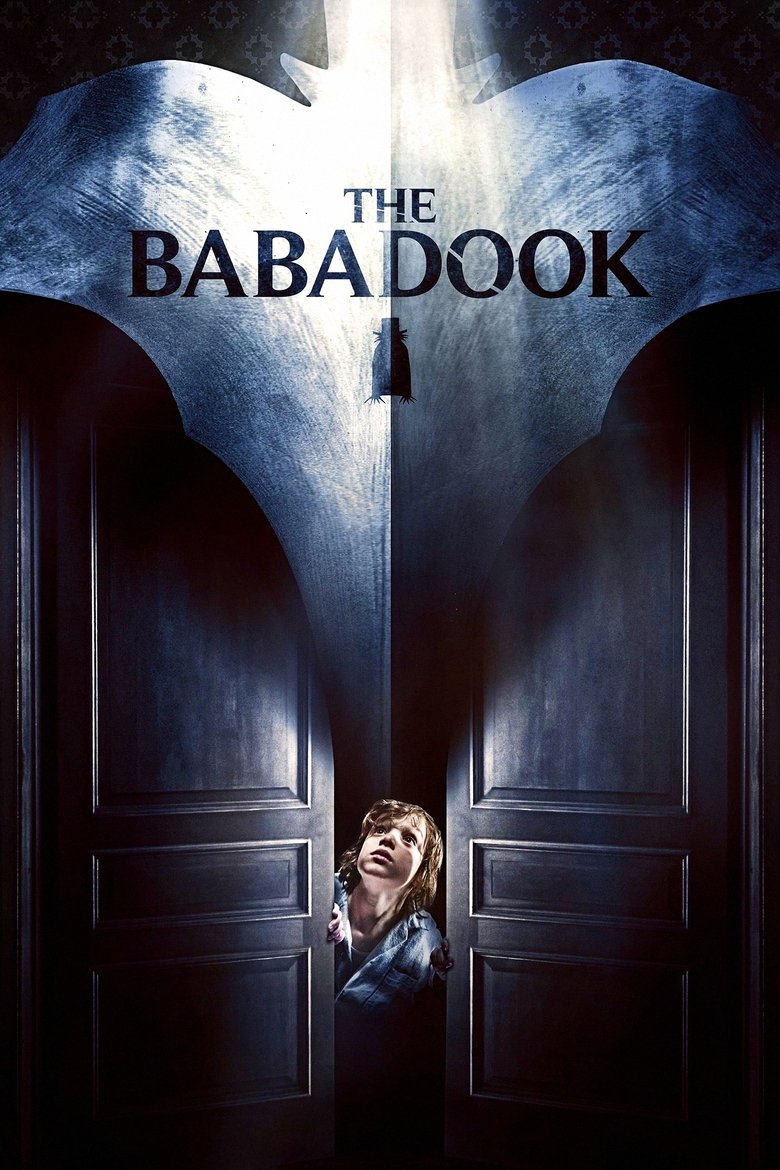
Horror cinema has always been a useful vehicle for anxieties that polite conversation tends to avoid, and The Babadook arrived in 2014 wearing that tradition proudly. Written and directed by Jennifer Kent, it is an Australian production brought together through a collaboration between Causeway Films, Screen Australia, the South Australian Film Corporation, Smoking Gun Productions, and Entertainment One. The premise is stripped to its bones: a widowed mother, still raw with grief years after losing her husband in a car accident on the night she went into labour, finds a sinister pop-up picture book on her son's shelf. What follows is the kind of horror that wears its psychological subtext on its sleeve, positioning the shambling, top-hatted creature of the title as something more than a monster under the bed. Kent had previously made a short film called Monster in 2005, which covered similar emotional territory, and The Babadook represents the expansion of that earlier work into a full feature. It was her debut at that length, and it arrived with considerable critical fanfare, including a strong reception at the Sundance Film Festival, where it played in the Midnight section and generated the kind of word-of-mouth that genre films rarely sustain beyond their first few screenings.
The film rests almost entirely on the performance of Essie Davis, one of Australia's most respected stage and screen actors, perhaps best known internationally for her television work on Miss Fisher's Murder Mysteries. Here she is required to carry something considerably heavier: a woman simultaneously grieving, sleep-deprived, socially isolated, and unravelling in ways she cannot quite articulate. It is a physically and emotionally demanding role, played with a kind of frayed intensity that keeps the film grounded in recognisable human experience rather than genre abstraction. Opposite her is young Noah Wiseman as her son Samuel, whose performance the film's entire emotional logic depends upon. The supporting cast includes Hayley McElhinney, Daniel Henshall, and Barbara West, though the film keeps its world deliberately small, the better to heighten the claustrophobic pressure building between mother and child.
On a craft level, the film is polished but restrained. Cinematographer Radek Ładczuk shoots in a palette that drains colour gradually from the frame, pushing the domestic spaces of the family home toward grey and shadow without ever tipping into the kind of excessive stylisation that signals horror from ten miles off. There is a tactile, almost photochemical quality to the image, lending the film a texture that feels slightly off without being obviously artificial. Jed Kurzel's score operates in a similarly understated register, built on low strings and unsettling ambient tones rather than conventional horror stings, though it can swell when the film asks it to. Editor Simon Njoo's work keeps the pacing tight across the 94-minute runtime, particularly in the sequences where Kent deliberately refuses to distinguish between what is happening and what the mother fears might be happening. Australian horror has a long tradition of using landscape and environment as psychological pressure, something I wrote about in my review of Picnic at Hanging Rock (1975), and The Babadook applies a similar logic to interior, domestic space. For a companion piece in contemporary Australian horror, see also Talk to Me (2022), which I also covered here and which represents a very different approach to the genre from the same national cinema.
I came away from The Babadook rather underwhelmed, which I suspect puts me in a minority, because this one has a devoted following. I can see why, too.
I understand perfectly well what it is doing: the monster as a metaphor for grief, the portrait of a mother buckling under the strain of raising a difficult child alone, the horror bleeding out of raw, recognisable exhaustion. On paper it is a smart, sombre piece of work.
In practice, though, it did not land for me. The jump scares and the horror elements are decent enough, nicely staged, but I found the whole thing surprisingly predictable, telegraphing its beats well before they arrived. And, I am sorry to say, the child grated on me terribly. I know the part calls for him to be trying and difficult, that is rather the point, but it tipped over into something I simply found grating to sit with, and it pulled me out of the film every time he was on screen.
I do not think it is a bad film. The craft is there, the central idea is a strong one, and I can see why it struck such a chord with so many people. It simply did not get under my skin the way a horror film needs to, and between the predictability and the performance that kept niggling at me, I spent more of it checking out than leaning in. Two and a half stars, well made and well meant, but not one that worked on me the way it clearly has on others.
The Babadook occupies an interesting position in recent horror history, a film that critics and scholars have written about with genuine enthusiasm, frequently cited in discussions about grief, motherhood, and the genre's capacity for emotional seriousness. Whether that reputation holds up in the watching is, as ever, a more personal matter. Genre films live or die by whether they get under the skin of a particular viewer on a particular evening, and that is not always something craft or intention can guarantee. For a sense of how another tightly wound genre piece handles the gap between concept and execution, my thoughts on Pontypool (2008) are worth a look, and I also reviewed Candyman (2021), another horror film built explicitly around metaphor, with similarly mixed results for some viewers. The Babadook is the kind of film that will find exactly the audience it deserves; the trouble is, that audience is not always you.
Rating: ★★½ | Year: 2014 | Watched: 2026-10-06
Trailer
▶ Watch the official trailer for The Babadook (2014) on YouTube
Where to watch
Watch in the UK
Stream: Amazon Prime Video · Icon Film Amazon Channel · Amazon Prime Video with Ads · ITVX Premium
Rent: Apple TV Store · Rakuten TV · Amazon Video · Google Play Movies
Buy: Apple TV Store · Rakuten TV · Amazon Video · Google Play Movies
Physical: Amazon UK · Zavvi
Watch in the US
Stream: Philo · AMC Plus Apple TV channel · AMC+ Amazon Channel · AMC+
Rent: Amazon Video · Apple TV Store · Google Play Movies · YouTube
Buy: Amazon Video · Apple TV Store · Fandango At Home
Physical: Amazon US
Affiliate disclosure: Movies With Macca may earn a small commission on purchases or subscriptions started via these links. It costs you nothing extra.