Zorns Lemma (1970)

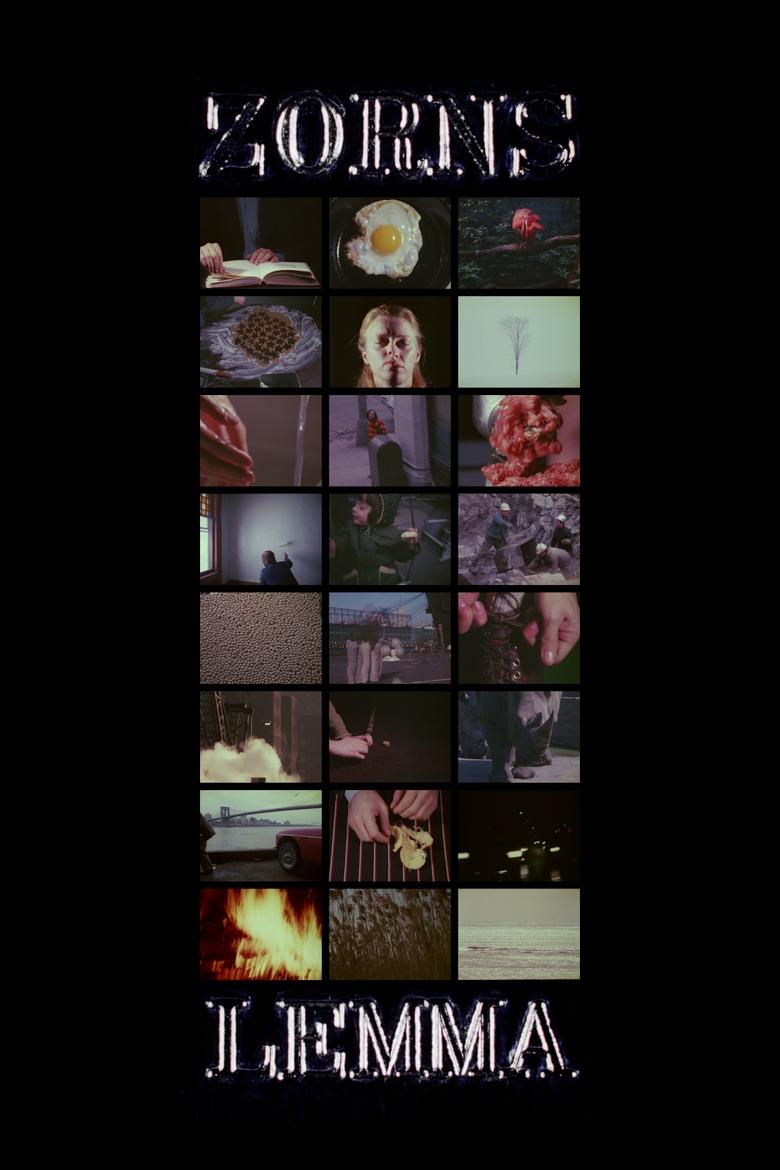
A film named after a theorem in set theory ought, you would think, to have something clever up its sleeve. It ought to justify that title with ideas that crackle, that reward patience, that make the brain do something interesting. Zorns Lemma, Hollis Frampton's 1970 structuralist experiment, does not. It has one idea. One. And it runs that idea into the ground with a thoroughness that borders on the sadistic.
Here is what happens: after a brief spoken preface, the film settles into a silent cycle through a 24-letter alphabet, each letter represented by a fleeting shot of a word pulled from a shop sign, a street label, a scrap of urban text. That cycle repeats, and repeats, and repeats, until individual images begin, one by one, to be swapped out for others. Loops of fire. Waves. Grass. And that, give or take, is the whole film. That is it. Nearly an hour of it.
Now, I know structuralist cinema has its scholars and its defenders, people for whom this systematic assault on the way we read images and language is precisely the point, and I will not pretend to be the natural audience for it. I will grant that going in. But even making every possible allowance, even extending every generosity I could muster, I found this close to unwatchable. And not because I failed to grasp what Frampton was doing. I grasped it. I grasped it fairly early, in fact, which only made the remaining forty-odd minutes feel longer. Understanding the concept did absolutely nothing to make sitting through it any less numbing.
It reminded me of a Sesame Street vignette stretched to feature length, the kind of thing that works perfectly well as ninety seconds of educational television and becomes a minor ordeal when you blow it up to this scale. A neat idea for an essay does not automatically become a film worth watching. Frampton clearly believed the experience itself was the argument, that the repetition would recalibrate something in the viewer's relationship to text and image. Maybe it does, for some people. For me it just recalibrated my relationship to the clock on the wall.
There is an audience for this kind of rigorous, self-conscious formalism, and I do not want to be entirely dismissive of what Frampton was attempting. I can see the logic. I can see why this sits in film-theory syllabuses and gets cited in essays on the structuralist avant-garde. As a paragraph in a textbook, or as something you nod along to in a lecture and never actually have to endure end to end, it probably functions beautifully. As something to watch, for pleasure or for anything resembling engagement, it defeated me utterly.
The comparison that keeps nagging at me is Koyaanisqatsi (1982), another film that strips away conventional narrative and asks you to surrender to images on their own terms. That film earns it, though. It builds, it shifts, it generates genuine feeling. Zorns Lemma generates none of those things. It simply persists.
I can respect a bold idea and still find the result completely inert, and this is about as inert as cinema gets. A landmark of structuralist film-making, I am assured. A profoundly tedious hour, I can confirm. One star.
Rating: ★ | Year: 1970 | Watched: 2026-08-21
Where to watch
Watch in the US
Stream: Criterion Channel
Physical: Amazon US
Affiliate disclosure: Movies With Macca may earn a small commission on purchases or subscriptions started via these links. It costs you nothing extra.