
The Red Shoes (1948)

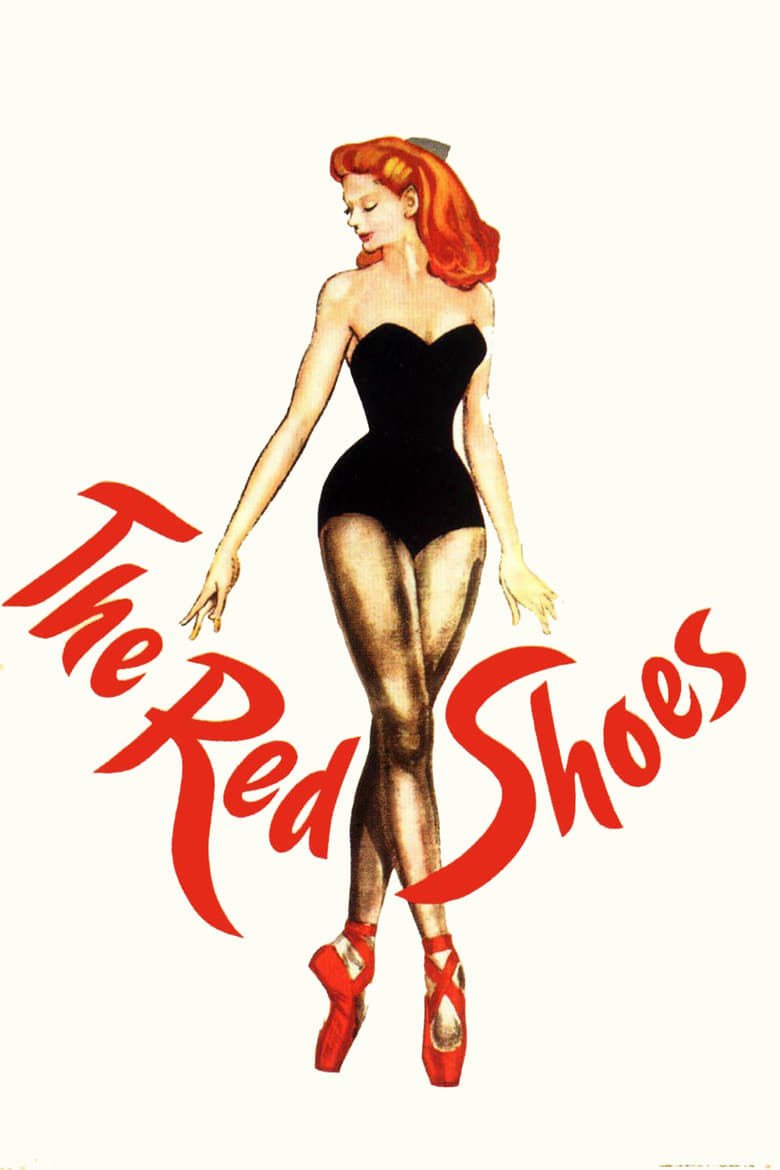
There are films that arrive with a reputation so formidable that watching them feels less like discovery and more like catching up with history. The Red Shoes (1948) is absolutely one of those films, though it earned its standing the hard way: it was a commercial gamble that defied studio scepticism and went on to win two Academy Awards, for Best Original Score and Best Art Direction, before lodging itself so firmly in the collective memory of cinema that its influence is still being felt more than seventy years on. Loosely inspired by Hans Christian Andersen's fairy tale of a girl who cannot stop dancing, the film transplants the story into the world of professional ballet, tracing the collision between art, ambition and love with an emotional force that few pictures of its era, or any era, manage to sustain across a runtime of 133 minutes.
The production comes from The Archers, the independent company formed by the writing and directing partnership of Michael Powell and Emeric Pressburger, who shared all three credits here as writers, producers and directors. By 1948 the pair had already produced A Matter of Life and Death, Black Narcissus and The Life and Death of Colonel Blimp, a run of work that placed them at the very centre of British prestige filmmaking. The Red Shoes nevertheless represented an escalation: a picture built around an extended, genuinely experimental ballet sequence at its heart, something that had no obvious precedent in British cinema and that required the producers to convince a sceptical J. Arthur Rank that audiences would sit still for it. They would, and then some. The film became one of the highest-grossing British productions of its generation, particularly in America, where it ran in some theatres for years. Worth noting too that for anyone interested in how classical music and film image were being fused in the same period, I also covered Fantasia (1940), which offers a useful companion piece on the ambitions of that particular moment.
The principal cast brings together figures drawn from dance and theatre rather than conventional film stardom, which gives the production an unusual texture. Anton Walbrook plays Boris Lermontov, the obsessive impresario at the story's controlling centre, a role that demanded both grandeur and barely concealed menace. Walbrook, Austrian-born and already well-known to British audiences through The Life and Death of Colonel Blimp, was one of the more sophisticated presences working in British film at the time, capable of enormous surface charm and something much colder underneath. Marius Goring plays Julian Craster, the young composer whose career and romantic life become inseparable from the ambitions of the company. And then there is Moira Shearer, the Royal Ballet principal whose film debut this was, playing Victoria Page, the ballerina caught between two consuming demands on her life. Shearer was, first and foremost, a dancer of extraordinary calibre, and Powell built the casting decision around the authenticity that only someone of her technical rank could bring. Robert Helpmann and Léonide Massine, both major figures in the ballet world of the period, round out an ensemble that carries genuine professional weight rather than simulated theatrical glamour. For a companion piece on another kind of performance picture from the same immediate postwar era, see also my review of Dead of Night (1945).
Cinematographer Jack Cardiff was at this point one of the most accomplished colour technicians working anywhere in the world, and his handling of three-strip Technicolor here is something to study on its own terms. The palette swings between the warm, saturated golds of backstage lamplight and the cooler blues of the Côte d'Azur exteriors, and Cardiff finds compositional angles that treat each frame as a considered image rather than a record of what happened to be in front of the camera. The centrepiece ballet sequence, in particular, uses superimposition, camera movement and what might best be described as expressionist geography, spaces that expand and contract according to emotional logic rather than physical reality, in ways that still feel formally adventurous. Reginald Mills cut the picture, and the editing in that sequence is calibrated to the music rather than to any conventional sense of screen time, which is part of what makes it feel so disorienting and propulsive. Brian Easdale's score, which took the Oscar in 1948, sits somewhere between composed incidental music and the extended ballet score that the film's central sequence demands, and it knits the two registers together without the join ever becoming obvious. For a sense of how another British film from roughly the same period handled documentary textures in contrast to all this painterly colour, I wrote about Man of Aran (1934), which sits at a very different end of the British film tradition.
I sat with The Red Shoes for a good long while before I could settle on a number, torn between a very good four and a half and the full five.
For me a four and a half is already a must-watch; the five I keep back for the tiny handful of films I would rank among the greatest ever made. What separates the two, in my book, is emotion, whether a film not only grips and dazzles and shocks me but also makes me laugh, well up, and sit there with my mouth hanging open. This one did every last bit of that. So five it is, and I did not arrive there lightly.
Starting with how it looks, because for 1948 it is flat-out astonishing. The Technicolor is ravishing, the editing daring, the camera forever finding angles you would simply not expect from a film of this vintage, and on what must have been a lovely restoration it looked crisp enough to have been shot last year. There is a particular thrill in the outdoor scenes, too. You watch any number of films set in the forties, but this one was actually made in them, so those streets and shorelines feel less like a careful recreation than a window opening straight onto the past.
The performances are every bit its equal. Anton Walbrook, as the imperious impresario Boris Lermontov, is handed some of the most captivating dialogue in the film and delivers it with a chilling, velvet precision, while Leonide Massine is a joy, all sly, preening mischief, as Grischa. And the finale floored me. It is as tense and as devastating as anything Hitchcock ever built toward; it put me squarely in mind of the closing minutes of Vertigo, that same fusing of beauty and doom, and I do not reach for that comparison lightly.
And then there is the ballet. I am not, by habit, a ballet person at all, and still the film's great centrepiece had me transfixed. Moira Shearer is a revelation as Victoria Page, a dancer of the first rank as much as an actress, and the camera does not simply record her, it climbs inside the dance, so that you feel it surging along rather than watching from a seat.
You can see the whole of Black Swan in its bloodline, a film I enjoyed a great deal and which plainly owes this one an enormous debt. I cannot point to a single misstep anywhere in it. Five stars, one of the very finest films I have ever seen, and worth every minute I spent deciding as much.
The Red Shoes occupies a particular position in the history of British cinema, one of those works that arrived as an argument for what the medium could do and has never quite stopped making that argument since. Its DNA runs through everything from Brian De Palma to Darren Aronofsky, and the films that have borrowed from it, consciously or otherwise, form a long and varied list. Whether you arrive as a committed film enthusiast or simply someone curious about why certain pictures acquire legendary status, it earns its place in the conversation without demanding you take anyone's word for it. Some films tell you they are important. This one simply gets on with being it.
Rating: ★★★★★ | Year: 1948 | Watched: 2026-09-20
Trailer
▶ Watch the official trailer for The Red Shoes (1948) on YouTube
Where to watch
Watch in the UK
Rent: Amazon Video
Buy: Apple TV Store · Amazon Video
Physical: Amazon UK · Zavvi
Watch in the US
Stream: HBO Max Amazon Channel · HBO Max
Rent: Amazon Video · Apple TV Store · Google Play Movies · YouTube
Buy: Amazon Video · Apple TV Store · Google Play Movies · YouTube
Physical: Amazon US
Affiliate disclosure: Movies With Macca may earn a small commission on purchases or subscriptions started via these links. It costs you nothing extra.



