Dead of Night (1945)

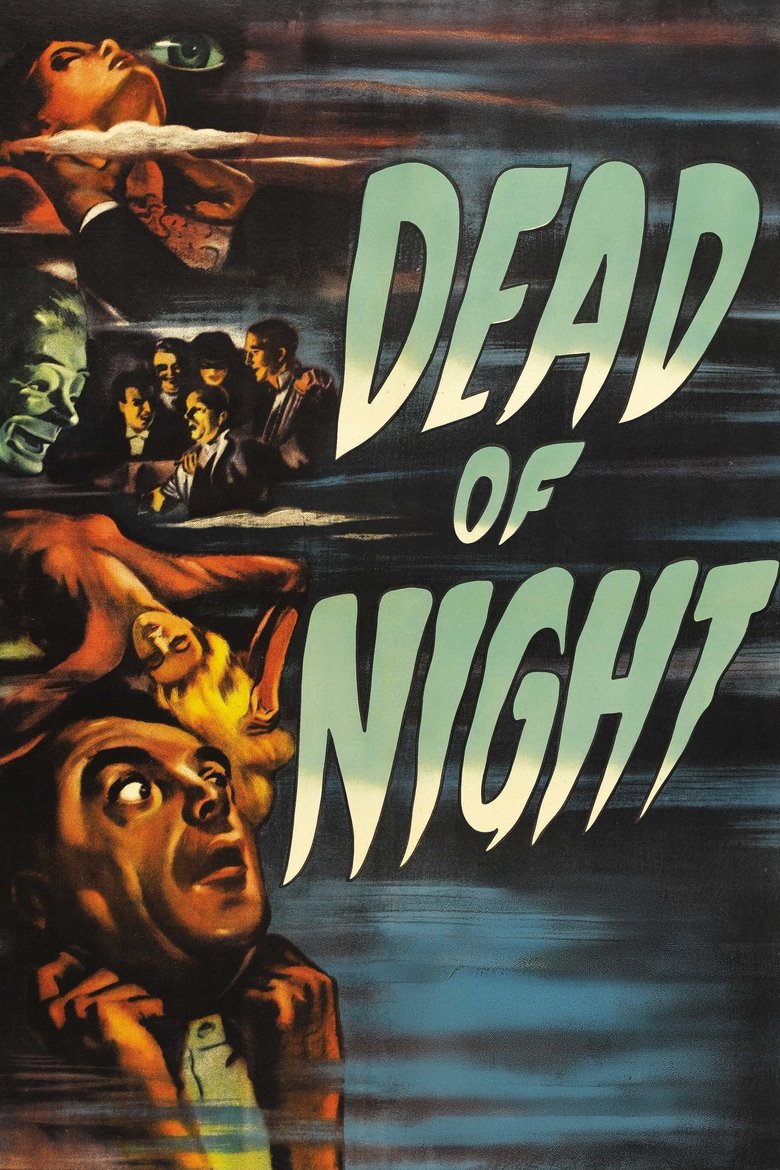
Some films you watch for greatness, and some you watch to see where it all began. Dead of Night sits firmly in the second camp, and there is absolutely no shame in that.
This 1945 Ealing Studios production is one of the foundation stones of British horror, made by a studio far better remembered now for its comedies. Charles Crichton, who directed one of its segments, would go on to make The Lavender Hill Mob, which tells you something about the range of talent the place was drawing on. Dead of Night arrived years before Hammer came along and made the genre its own, and watching it today you are really watching history: the moment a national cinema worked out that it could frighten people.
The film is an anthology, a handful of supernatural tales bound together by a clever framing device. A man arrives at a country house gripped by the eerie certainty that he has dreamed all of this before, and the assembled guests take turns telling their own uncanny stories. It is a simple enough conceit, but the film wears it well, and the way everything knits together is cleverer than you might expect going in.
The segments vary, as these things always do. Some land better than others. But the celebrated one, a ventriloquist losing himself to his dummy, with Michael Redgrave superb as the unravelling performer, remains genuinely unnerving to this day. Redgrave does something remarkable in that segment, playing a man coming apart at the seams in ways that feel psychological and grounded even as the supernatural presses in around him. I will say nothing of how the whole thing ends, except that it delivers a final turn people were still talking about decades later, and rightly so.
By modern standards, it must be said, it is not remotely frightening. Spooky, yes. Atmospheric. Quietly creepy in places. But years of gore, zombies and slashers have thoroughly recalibrated what it takes to unnerve an audience, and Dead of Night works in a gentler, more suggestive register than most contemporary horror. You have to meet it halfway and picture a 1945 crowd for whom this would have been the stuff of nightmares. Do that, and it comes alive in a different way entirely.
It is a softer kind of horror than what Hammer would soon perfect. I only recently enjoyed Peter Cushing doing his thing in their 1958 Dracula, all grand Gothic excess and theatrical menace. Dead of Night has none of that showmanship. It is restrained, almost literary, interested in dread more than shock. But the DNA of everything that followed is right here, unmistakably.
And that influence runs a very long way. The portmanteau horror film, the spooky-stories-around-a-frame structure, echoes down through the decades to the likes of Romero and King's Creepshow and well beyond. When I think about how British horror has always had this particular strand running through it, something rooted in folk unease and quiet menace rather than outright carnage, films like The Witches carrying that same spirit forward years later, Dead of Night feels like the point where the thread begins.
I will admit to a real soft spot for films like this, where the pleasure is as much about watching a form take shape as about the film in front of you. There is something quietly thrilling about seeing the blueprint for so much of what I love being drawn up in real time. It is more important than it is scary, and I genuinely mean that as high praise.
Three and a half stars. Essential viewing for anyone who cares where British horror came from.
Rating: ★★★½ | Year: 1945 | Watched: 2026-08-20
Where to watch
Watch in the UK
Stream: Studiocanal Presents Amazon Channel
Rent: Amazon Video · BFI Player
Buy: Apple TV Store · Amazon Video
Physical: Amazon UK · Zavvi
Watch in the US
Stream: Philo · YouTube TV · Fandor · Fandor Amazon Channel
Rent: Amazon Video · Apple TV Store · Google Play Movies · YouTube
Buy: Amazon Video · Apple TV Store · Google Play Movies · YouTube
Physical: Amazon US
Affiliate disclosure: Movies With Macca may earn a small commission on purchases or subscriptions started via these links. It costs you nothing extra.