
The Disciple: A Wu-Tang Fable (2026)

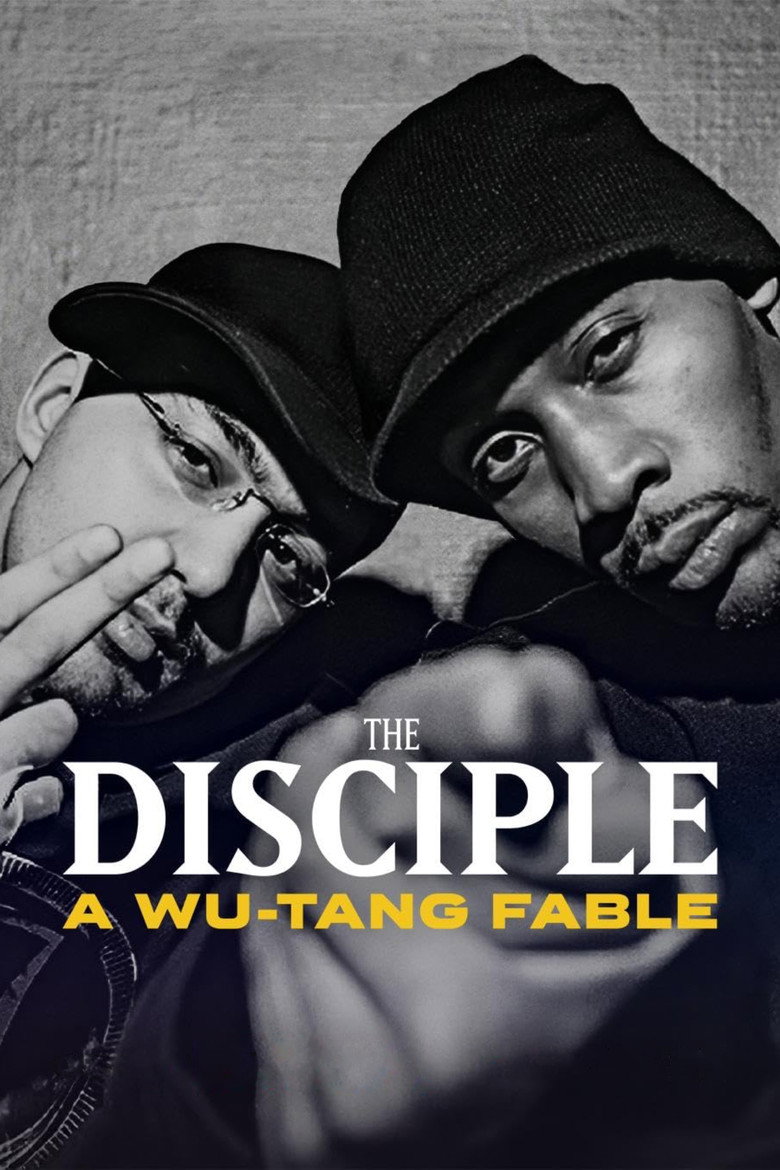
There are music documentaries that feel like essential companion pieces to the art they cover, and there are those that feel like extended promotional materials for one of their subjects. The Disciple: A Wu-Tang Fable, released in 2026 and running at 105 minutes, lands somewhere in the middle of that spectrum. It arrives carrying the considerable weight of one of the most peculiar stories in modern music history: the creation, sale, and strange afterlife of Once Upon a Time in Shaolin, the sole-copy album that Wu-Tang Clan recorded in secret and eventually auctioned off as a singular artwork. That the album ended up in the hands of a notoriously reviled pharmaceutical executive, before being seized by authorities and later passing to a consortium of crypto investors, would be almost unbelievable as fiction. As documentary material, it ought to be irresistible.
The film is directed by Joanna Natasegara, whose background in documentary filmmaking runs toward subjects of real cultural and political weight. Produced across a coalition of companies including Film4 Productions, Violet Films, Aluna Entertainment, Studio Gebbia, and 36 Cinema, it is a co-production between the United Kingdom and the United States, which gives it access to a story that straddles both countries with ease. The two principal figures on screen are RZA, the Wu-Tang Clan's founding architect and the man whose creative vision shaped much of what the group became, and Cilvaringz, the Moroccan-born rapper and producer whose journey from devoted fan to inner-circle collaborator forms the documentary's spine. That choice of structure is, depending on your affection for and prior knowledge of the Clan, either the film's most interesting decision or its most frustrating one.
For context on how music documentaries can use a single obsessive figure as a way into a much larger cultural phenomenon, The Barkley Marathons: The Race That Eats Its Young (2014) offers an instructive comparison, using a similarly eccentric mastermind as a lens rather than a subject in himself. I also reviewed EPiC: Elvis Presley in Concert (2025) earlier this year, which approaches the music-as-artefact question from an entirely different angle.
On a technical level, the film has real craft behind it. Cinematographers Franklin Dow and Pierre Aïm share duties, and what they produce is polished but restrained, leaning on the kind of close, observational framing that suits talking-head documentary well, while occasionally opening up into something more atmospheric when the subject matter demands it. The visual texture throughout has a considered quality, never flashy, which suits a story about people who have spent years keeping secrets. The editing is the work of Chloe Lambourne and Chris Dickens, and between them they give the film a reasonably assured pace in its later sections, though the structural weight of the earlier material does make itself felt as the runtime extends. The score is composed by Mj Cole, whose work here sits at an understated remove from the boom-bap and Staten Island grit of the music at the film's centre. It functions more as mood-setter than pastiche, which is probably the wiser choice given how loaded the Wu-Tang sonic palette already is.
I love Wu-Tang Clan. For my money they are the greatest rap group there has ever been, and I have heard everything they have put out, solo records and all, with one glaring exception: Once Upon a Time in Shaolin, the single, one-of-a-kind album pressed as a solitary artwork and sold for millions.
A documentary digging into that record should have been catnip to me, and in its best moments it is. I knew the controversy and had followed its strange afterlife, but I knew next to nothing about how it was actually made, or the turmoil it caused inside the group.
The problem is where the film chooses to point its camera. The man at the centre of it all is Cilvaringz, and the documentary is far too enamoured of him. It is less the story of the album than the story of Cilvaringz himself, and for well over half its runtime you are listening to a fairly peripheral figure, someone most Wu-Tang fans could not name, recount his childhood, his fandom, and the borderline-stalkerish lengths he went to, befriending RZA's mother and sister and various of the Killa Bees in the hope of being signed. It is a great deal of a man who, in the grand Wu-Tang scheme, few people came here for.
When it finally gets to the album, it is gripping. Cilvaringz dreams the thing up, lands the investors, and pays every member of the Clan and assorted affiliates to appear on it; then RZA takes the concept and runs, turning it into a single 1/1 artefact. What follows is almost too strange for fiction: it is bought by a notorious pharmaceutical executive, among the most reviled men in America, who is later arrested and has the album seized, before it passes to a group of crypto investors who now tour it around, doling out the occasional snatch of the music.
As a fan, I find the whole saga maddening. The idea that there is Wu-Tang music out there I will almost certainly never get to hear is a lasting irritation, and learning how it came about, with Cilvaringz pulling the strings and the likes of Method Man seemingly kept in the dark, only sours it further. It leaves a bad taste. Three stars. A decent and often fascinating documentary that could have been half the length, and twice as good, had it been about the album rather than the man who dreamed it up.
The Disciple: A Wu-Tang Fable is, in the end, a documentary caught between two films it could have been: a portrait of an obsessive outsider who willed himself into hip-hop legend, and a proper forensic account of one of the strangest cultural objects of the twenty-first century. Natasegara and her collaborators clearly have access to extraordinary material and to the people who made it happen, and there are stretches here that remind you just how genuinely weird and wonderful the Wu-Tang Clan universe is, and how much stranger still the Shaolin saga becomes the closer you look. Whether the film earns its 105 minutes is a question the review below addresses directly. What is not in doubt is that the story itself, half fable, half farce, has more than enough strangeness to sustain the telling. It just depends how much of it you want to spend with the man who started it all rather than the music he helped make.
Rating: ★★★ | Year: 2026 | Watched: 2026-10-19
Where to watch
Watch in the UK
Stream: Netflix · Netflix Standard with Ads
Physical: Amazon UK · Zavvi
Watch in the US
Stream: Netflix · Netflix Standard with Ads
Physical: Amazon US
Affiliate disclosure: Movies With Macca may earn a small commission on purchases or subscriptions started via these links. It costs you nothing extra.


