The Diary of a Teenage Girl (2015)

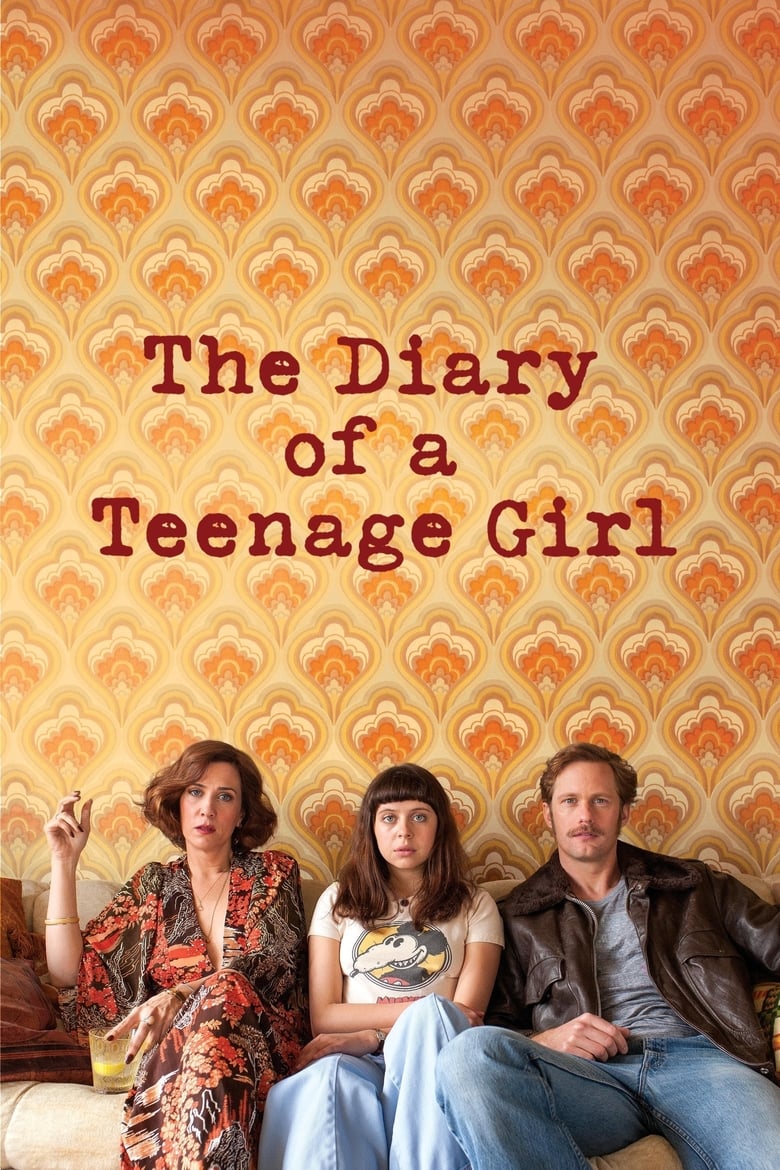
There is something undeniably arresting about watching a teenager narrate her own messy, chaotic awakening into a clunky 1970s dictaphone while sketching comic books. It pulled me in immediately, and for a while I thought I was watching something genuinely special. By the end, I was left with something more complicated than that.
Marielle Heller drops us straight into the headspace of Minnie Goetze, a young woman feeling profoundly unloved in the wake of her parents' bitter split. She is surrounded by her mother's revolving door of boyfriends, seeking refuge in her artwork and a frankly excellent period soundtrack. The whole thing is steeped in 1970s San Francisco with real visual flair, and the animated sequences woven around Minnie's comic book drawings give it a texture that sets it apart from your average coming-of-age picture. This does not feel like anyone else's film. That much I will happily grant it.
For the first twenty minutes, I was distracted by a nagging feeling that I had seen lead actress Bel Powley somewhere before. It was Ashes in the Snow, a vastly different Lithuanian war drama, and fair play to her, she quickly shakes off that distraction with a fiercely committed, raw performance. She carries the whole thing on her shoulders and rarely puts a foot wrong. When the film works, it is almost entirely because of her.
But the film takes a deeply uncomfortable turn that left me with a distinctly sour taste in my mouth. Minnie enters into a secret, highly inappropriate relationship with her mother's much older boyfriend, Monroe, played by Alexander Skarsgård. The narrative is clearly meant to be a messy examination of teenage sexuality and inevitable mistakes, and I understand what Heller is going for. What I cannot get past is how the direction occasionally feels like it is trying to normalise a predatory dynamic rather than interrogate it. Monroe essentially skates away with nothing more than his own self-inflicted addictions. The profound power imbalance at the heart of the story is something the film keeps gesturing towards without ever really reckoning with. It is a bold choice. It is also one that undermines the emotional truth of the whole scenario.
The structural frustrations do not stop there. The narrative is so hyper-focused on Minnie's turbulent romance that the rest of the ensemble barely registers. Her little sister is reduced to a background prop in the family's domestic chaos, which is a genuine waste. And then we reach the finale. After all that heavy, emotionally taxing drama, the picture essentially dusts its hands, shrugs, and decides to go back to the comic book drawing. I sat there waiting for something to land, and it just did not. It is an abrupt, unsatisfying conclusion that robs the preceding two hours of any real payoff.
I kept thinking about how a film like mid90s manages to capture adolescent confusion and bad decisions with a similar unflinching quality, but with a tidier sense of consequence running through it. And if you want a coming-of-age story that really does stick the landing emotionally, I think The Perks of Being a Wallflower handles the weight of a young person's inner world with more care and more courage in its final act.
The Diary of a Teenage Girl is not a bad film. Powley is an absolute revelation, the period detail is gorgeous, and Heller has a genuinely distinctive eye. But the refusal to properly interrogate its most toxic relationship, combined with a frustratingly limp ending, keeps it at arm's length from the greatness it occasionally threatens. Fascinating, flawed, and worth your time, just do not expect it to deliver on everything it promises.
Three stars.
Rating: ★★★ | Year: 2015 | Watched: 2026-08-09
Where to watch
Watch in the UK
Stream: Amazon Prime Video · Amazon Prime Video with Ads
Rent: Apple TV Store · Rakuten TV · Amazon Video · Google Play Movies
Buy: Apple TV Store · Rakuten TV · Amazon Video · Google Play Movies
Physical: Amazon UK · Zavvi
Watch in the US
Stream: Amazon Prime Video · Amazon Prime Video with Ads
Rent: Amazon Video · Apple TV Store · Google Play Movies · YouTube
Buy: Amazon Video · Apple TV Store · Google Play Movies · YouTube
Physical: Amazon US
Affiliate disclosure: Movies With Macca may earn a small commission on purchases or subscriptions started via these links. It costs you nothing extra.