
This Is Not a Film (2011)

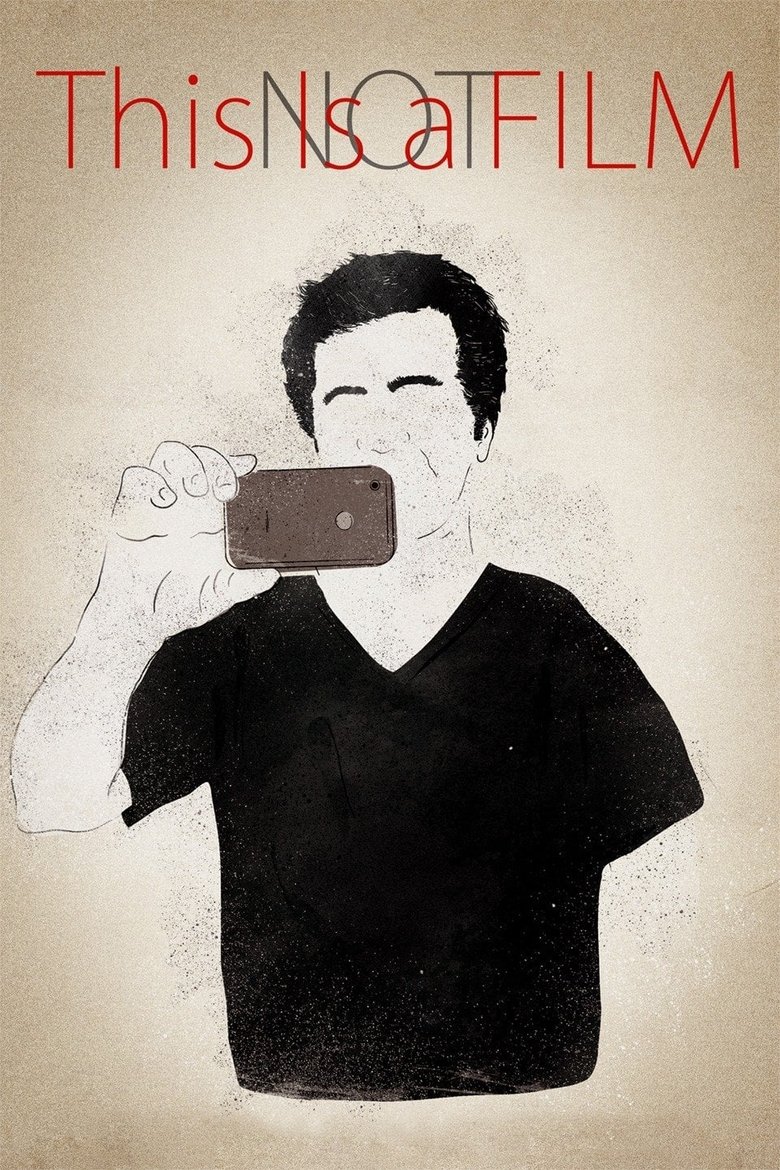
The story behind This Is Not a Film is almost more extraordinary than anything within it.
In 2010, the Iranian director Jafar Panahi was handed a six-year prison sentence and a staggering twenty-year ban on making films, for the crime of supporting the opposition during Iran's 2009 election. Confined to his Tehran apartment while awaiting appeal, and legally forbidden to direct, he did the only defiant thing he could: with a documentarian who came to record him, he picked up a camera anyway and documented a single day of his house arrest, reading aloud the screenplay he was no longer allowed to shoot, turning his own confinement into the material. The result was smuggled out to the Cannes Film Festival, reportedly on a USB stick hidden inside a cake. If that sounds like the plot of a thriller, well, it should.
As an act of artistic resistance, it is stirring stuff, and it is impossible to separate the film from the sheer courage of its existence. Here is a man so compelled to make films that he will do it under house arrest, in defiance of a regime, at real personal risk. That defiance has run through his whole career since, and This Is Not a Film is where you watch that refusal to be silenced caught in real time, unedited, unrehearsed, raw at the edges.
It belongs to a small but potent tradition I have been steadily discovering, of Iranian films made without permits, quietly pushing back against authority. I think of A Moment of Innocence, another film in which the very act of making it became inseparable from what it was about, and of Salaam Cinema, which found its own ways to interrogate what it means to create under constraint. Iranian cinema keeps doing this, keeps finding ways to be alive and urgent under conditions that would silence most artists, and Panahi is perhaps the most extreme example of that impulse.
As a piece of cinema in the conventional sense, this is, admittedly, a modest thing. It is slow, raw and visibly improvised, shot on the fly with whatever was to hand. There are stretches where it meanders, where the claustrophobia of the apartment starts to feel genuinely claustrophobic in ways that are not entirely intentional. Taken purely as a film, it is more fascinating than it is gripping. But that roughness is also the whole point, and a good deal of the appeal. The limitations are the statement. The fact that it exists at all is the argument.
I would stop short of ranking it with the true titans of Iranian cinema. It does not have the shattering emotional force of an A Separation, and its power comes almost entirely from context rather than craft. That feels like an important distinction to make honestly, rather than let the circumstances carry the critical weight entirely. You can admire what Panahi did here, and be moved by it, while still acknowledging that the film itself is more of a document than a fully realised work.
And yet. A man sits in his flat, reads his forbidden screenplay aloud to a camera, and refuses to disappear. That image stays with you. It only reinforced, for me, just how much this national cinema is capable of, and how much it costs some of the people making it.
Three and a half stars. Essential viewing for anyone who believes that films can matter.
Rating: ★★★½ | Year: 2011 | Watched: 2026-08-26
Where to watch
Watch in the UK
Stream: MUBI · MUBI Amazon Channel
Physical: Amazon UK · Zavvi
Watch in the US
Stream: Kanopy
Physical: Amazon US
Affiliate disclosure: Movies With Macca may earn a small commission on purchases or subscriptions started via these links. It costs you nothing extra.



