Talk to Me (2022)

Share
Talk to Me (2022)

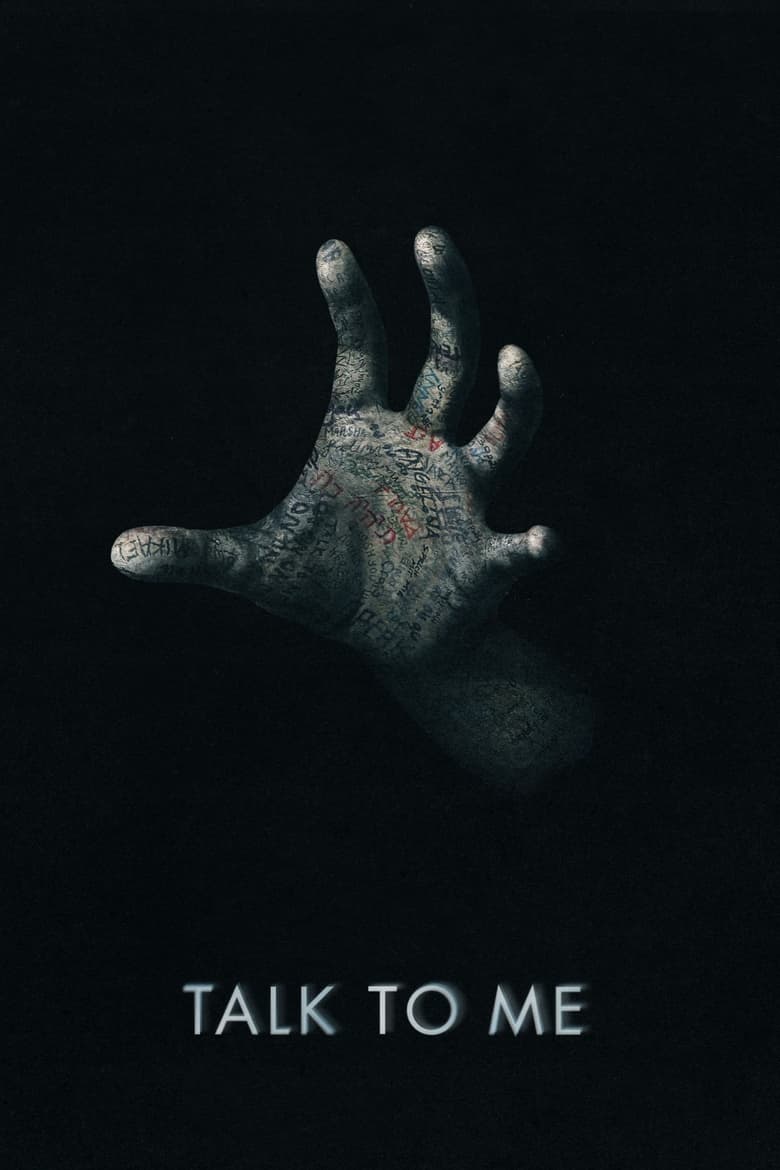
Australian horror has a habit of catching you off guard, and Talk to Me (2022) arrived with precisely that quality. Co-produced by Causeway Films alongside Screen Australia, the South Australian Film Corporation, Bankside Films, and Head Gear Films, the picture is rooted firmly in the tradition of supernatural horror that weaponises the very ordinariness of teenage life against its characters. The central conceit, a resin-sealed embalmed hand passed around at house parties like some kind of occult party trick, taps into something genuinely ancient (the fear of contact with the dead) while dressing it in the language of viral social media dares and peer pressure. It is the sort of premise that sounds almost comedic written down and becomes progressively less funny the further in you get. For an Australian genre film to generate the level of international attention this one did, including a rapturously received run at the Sundance Film Festival in 2023 where it screened in the Midnight section, the material clearly struck a nerve well beyond its home shores.

The film is the feature debut of twins Danny and Michael Philippou, who wrote the screenplay alongside Bill Hinzman. The brothers had previously built a substantial following through their YouTube channel, RackaRacka, producing high-energy horror-comedy shorts that demonstrated both a flair for controlled chaos and an obvious affection for genre filmmaking done with real physical commitment. Translating that sensibility to a ninety-five minute narrative feature is no small thing, and the comparison that immediately presents itself is with another smart, low-budget supernatural horror that quietly redefined what a contained genre picture could do: The Invisible Man (2020), itself a Causeway Films production, which proved that the studio had a particular gift for finding film-makers who understand that dread is more sustaining than shock. The Philippous work in a similar register, using a restricted setting and a tight group of characters to let tension accumulate rather than simply detonate. It is worth noting, too, that Australian horror more broadly has been on something of a roll, a point that the enthusiastic international reception for this film did a great deal to confirm.

The cast is led by Sophie Wilde as Mia, a teenager still processing the loss of her mother, whose grief makes her both the most susceptible and the most emotionally legible character in the group. Wilde was a relative newcomer at the time of filming, and the role asks a great deal of her physically and emotionally. Alongside her are Alexandra Jensen, Otis Dhanji, and Joe Bird as the younger Riley, a performance that requires Bird to go to some genuinely uncomfortable places. Miranda Otto appears in a supporting role, bringing a grounded, recognisably parental authority that the film uses to quietly measure how far things have gone wrong. Cinematographer Aaron McLisky shoots the film with a palette that keeps domestic spaces feeling subtly wrong, ordinary loungerooms and suburban back gardens rendered with a colour grading that sits just a degree or two cooler than comfort. The camera tends to linger a beat longer than you expect, holding on faces during the possession sequences in a way that is more clinical than frenetic, which makes those moments feel observed rather than manufactured. Composer Cornel Wilczek's score works largely at the low end of the frequency range, textures rather than melodies, the kind of sound design that you feel in the chest before you consciously register it as music. Editor Geoff Lamb's cutting in the possession scenes is notably controlled, resisting the temptation to quicken the pace when restraint is the more unsettling choice. Fans of the genre will find useful company in An American Werewolf in London (1981), another film that understood how to make the body itself feel like the source of horror.

For a debut feature, Talk to Me arrives with an almost indecent confidence.

The work of Australian twins Danny and Michael Philippou, who cut their teeth making manic horror shorts on YouTube, it takes a wonderfully simple, awful premise, a group of teenagers passing round an embalmed severed hand that lets them, ninety seconds at a time, invite the dead to possess them, and treats it as both a party game and a slow-motion catastrophe.

This is grief horror dressed up as a viral craze, and it understands precisely how a bored teenager's thrill-seeking can curdle into something they cannot switch back off.

What impressed me most is how unsettling it manages to be without leaning on cheap jolts alone. Sophie Wilde is excellent as Mia, carrying the film's rising dread on her shoulders, and the soundtrack works away nicely under the skin. It also sits in company I have a lot of time for. It reminded me strongly of It Follows, another smart modern horror built on a curse that stalks its way through a group of the young, and of Obsession, both films I rated highly for doing dread properly rather than cheaply. Talk to Me belongs in that bracket, far more interested in mood and consequence than in making you flinch.

It is not without faults. For me the story loosens its grip a touch in the later stretch, once Mia's role shifts from being acted upon to actively trying to fight back against the spirits; the film is at its most frightening when its characters are hopelessly out of their depth, less so when they start mounting a defence. And the violence, especially in the scenes involving the youngest of the group, Riley, played with real nerve by Joe Bird, tips into what struck me as gratuitous, that same queasy sharp-object-to-the-face excess that made Argentina's Where Evil Lurks such a punishing watch, and that I flinched at in Obsession too. Audiences plainly have the appetite for it these days; I am not always sure a film is better for indulging it.

Those are quibbles set against a hugely assured piece of horror, though. The Philippou brothers have made something rare here: a slick, accessible fright film with real ideas about grief and peer pressure humming beneath the scares, and the craft to land them. It marks out two film-makers well worth following, and rather confirms my hunch that a lot of the most interesting horror going is coming from exactly this kind of fearless debut. A strong four stars, and one I would happily press on anyone who likes their scares with a bit of a brain behind them.

Talk to Me is the kind of debut that makes you pay attention to the names behind it, and the Philippou brothers' next move will be worth watching closely. For those who like their horror doing actual work, films that use genre mechanics to say something about loss, compulsion, and the particular recklessness of being young, there is real satisfaction here. It sits comfortably alongside other smart, stripped-back genre pictures that have found audiences by trusting them to keep up, films like The Invisible Man that demonstrate what Causeway Films has been quietly building toward. Whether the Philippous can sustain this level of assurance into a second feature remains to be seen, but on the evidence of this one, they have already earned the benefit of the doubt. Not every horror film leaves you thinking about it the next morning. This one does.


Rating: ★★★★ | Year: 2022 | Watched: 2026-08-17

View on Letterboxd →


Trailer

▶ Watch the official trailer for Talk to Me (2022) on YouTube


Where to watch

Watch in the UK
Rent:
Apple TV Store · Rakuten TV · Amazon Video · Google Play Movies
Buy: Apple TV Store · Rakuten TV · Amazon Video · Google Play Movies
Physical: Amazon UK · Zavvi

Watch in the US
Rent:
Amazon Video · Apple TV Store · Google Play Movies · YouTube
Buy: Amazon Video · Apple TV Store · Google Play Movies · YouTube
Physical: Amazon US

Affiliate disclosure: Movies With Macca may earn a small commission on purchases or subscriptions started via these links. It costs you nothing extra.


Film images and data courtesy of TMDB. This product uses the TMDB API but is not endorsed or certified by TMDB.