
Candyman (2021)

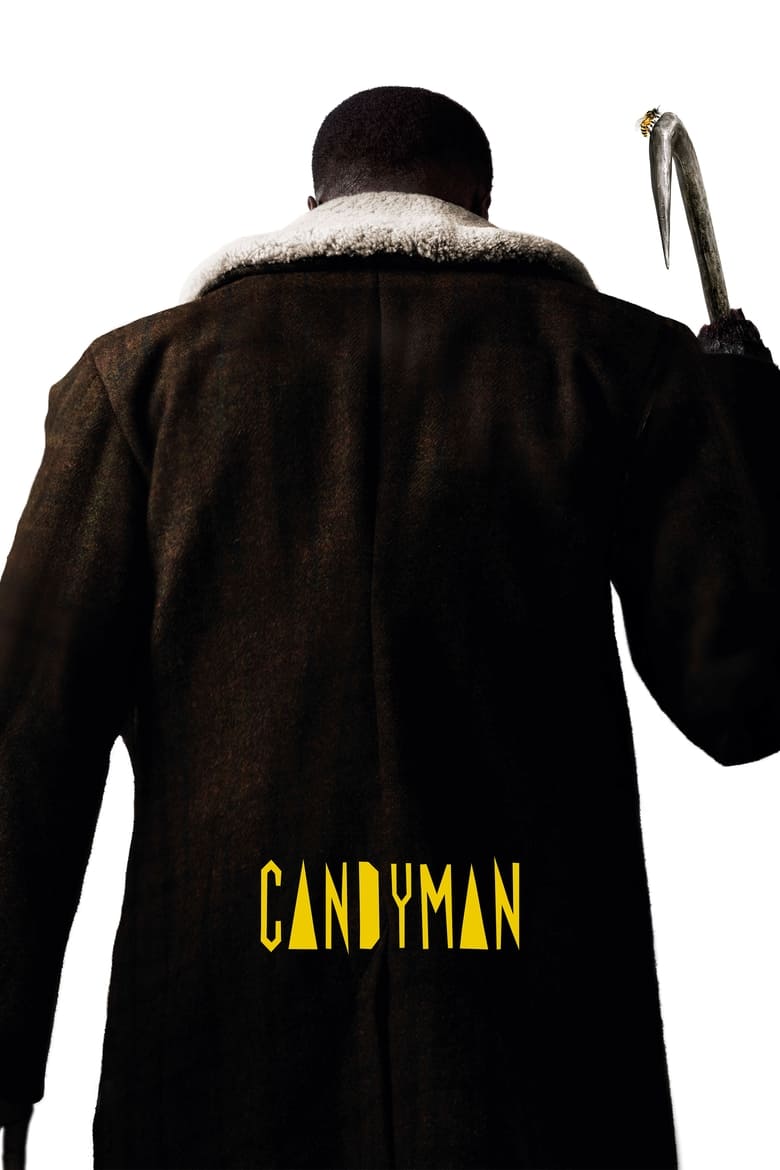
The original 1992 Candyman, based on Clive Barker's short story "The Forbidden" and directed by Bernard Rose, is one of those horror films that transcended its genre almost immediately. It lodged itself in the cultural imagination in a way that very few films manage: the dare, the mirror, the five repetitions of the name. The 2021 continuation arrives nearly three decades later, not as a remake but as a legacy sequel, picking up in the same Chicago neighbourhood of Cabrini-Green where the legend was born, and building on that mythology rather than dismantling it. The setting carries its own weight. Cabrini-Green, once one of the largest public housing projects in the United States, was largely demolished by the 2000s, and the film's interest in that erasure, in what is lost and what lingers when a community is cleared away, gives it a grounding that goes well beyond genre mechanics. If you want a companion piece that similarly uses genre to interrogate race and power in America, see also Get Out (2017), and for something that approaches similar territory with a sharp comedic edge, I also covered They Cloned Tyrone (2023).
Nia DaCosta takes the director's chair here, working from a screenplay she co-wrote with Win Rosenfeld and Jordan Peele, whose Monkeypaw Productions is one of the film's production houses alongside Bron Studios and the combined might of Metro-Goldwyn-Mayer and Universal. DaCosta was only the second film into her career at this point, following her 2019 debut Little Woods, and the pairing with Peele makes a certain sense: both are interested in horror as a vehicle for something more pointed. The script's decision to treat the Candyman not as a single individual but as an accumulating symbol, a figure that collects the grievances of racial violence across generations, is the kind of structural idea that rewards attention. Yahya Abdul-Mateen II leads as Anthony McCoy, a visual artist living in a newly gentrified Cabrini-Green who becomes fixated on the legend to increasingly dangerous effect. Abdul-Mateen, who had already demonstrated considerable range in Watchmen on television, carries the film's physical and psychological deterioration with real commitment. Teyonah Parris plays his partner with a grounded intelligence that keeps the more surreal elements anchored, and Colman Domingo brings the kind of measured, unsettling authority he brings to almost everything he appears in. Nathan Stewart-Jarrett rounds out the principal cast in a role that gains significance as the film progresses.
Cinematographer John Guleserian shoots Cabrini-Green and the surrounding Chicago cityscape with a cool, architectural eye, favouring wide frames that make characters feel small against glass-fronted condominiums and rubble lots alike. There is a recurring stylistic device involving shadow puppetry, used to recount passages of history and folklore, that gives the film a genuinely distinctive visual texture and sidesteps the trap of over-explaining its own mythology. It is the kind of specific, considered creative choice that separates a polished but unremarkable horror film from one with a genuine identity. Composer Robert Aiki Aubrey Lowe, known for his work in drone and experimental music, brings a score built on unsettling tones and low, sustained frequencies, the kind of sound design that you feel as much as you hear. Editor Catrin Hedström keeps the 91-minute runtime disciplined for the most part, though whether the rhythm holds through the film's middle section is precisely the sort of question that belongs in the review below.
The original Candyman is, to my mind, one of the finest horror films ever made, for a reason most of the genre can only dream of: it broke clean out of the screen and into the world. To this day people will not stand before a mirror and say his name five times, just in case he comes. What other kind of film can boast a hold like that? So when a new one was announced I was wary, and I rather avoided it. How on earth do you replace Tony Todd?
The answer, it turns out, is that you do not even try. The smartest decision this film makes is to be not a remake or a reboot but a continuation, set in the same universe, drawing on the same folklore, the same idea of tortured souls, victims of racial violence returning as vengeful spirits. If anything it plays as Candyman 4, a direct extension of the legend rather than a hollow retread of it, and that choice alone earns it a good deal of goodwill from me.
Nia DaCosta, whose later 28 Years Later: The Bone Temple I was fairly scathing about, does strong work here, taking that source material and pushing it somewhere new.
The effects are excellent, the makeup especially so, and the jump scares, sparing as they are, land cleanly when they come. It is a handsome, confident and unsettling horror film.
My one reservation is the pacing, which sags a touch through the middle before the film gathers itself again, but that is a minor complaint against something that honours what came before while having a voice of its own. Three and a half stars, a worthy entry in a series I never thought needed one.
Candyman (2021) sits in an interesting position in the wider landscape of contemporary horror: produced with genuine studio resources, carrying the weight of a beloved original, and yet clearly made by people who thought carefully about what they were adding rather than simply what they were exploiting. At 91 minutes it moves quickly enough to excuse most of its problems, and the craft on display, from the cinematography to the score to the practical effects work, is several notches above the genre average. It is, in the end, the kind of horror sequel that understands why the first film mattered, which turns out to be a rarer quality than you might expect. Sometimes not saying the name too loudly is the wisest thing you can do.
Rating: ★★★½ | Year: 2021 | Watched: 2026-10-01
Trailer
▶ Watch the official trailer for Candyman (2021) on YouTube
Where to watch
Watch in the UK
Stream: Amazon Prime Video · Amazon Prime Video with Ads
Rent: Apple TV Store · Rakuten TV · Amazon Video · Sky Store
Buy: Apple TV Store · Rakuten TV · Amazon Video · Google Play Movies
Physical: Amazon UK · Zavvi
Watch in the US
Rent: Amazon Video · Apple TV Store · Google Play Movies · YouTube
Buy: Amazon Video · Apple TV Store · Google Play Movies · YouTube
Physical: Amazon US
Affiliate disclosure: Movies With Macca may earn a small commission on purchases or subscriptions started via these links. It costs you nothing extra.



