SKATER UKTIS (2025)

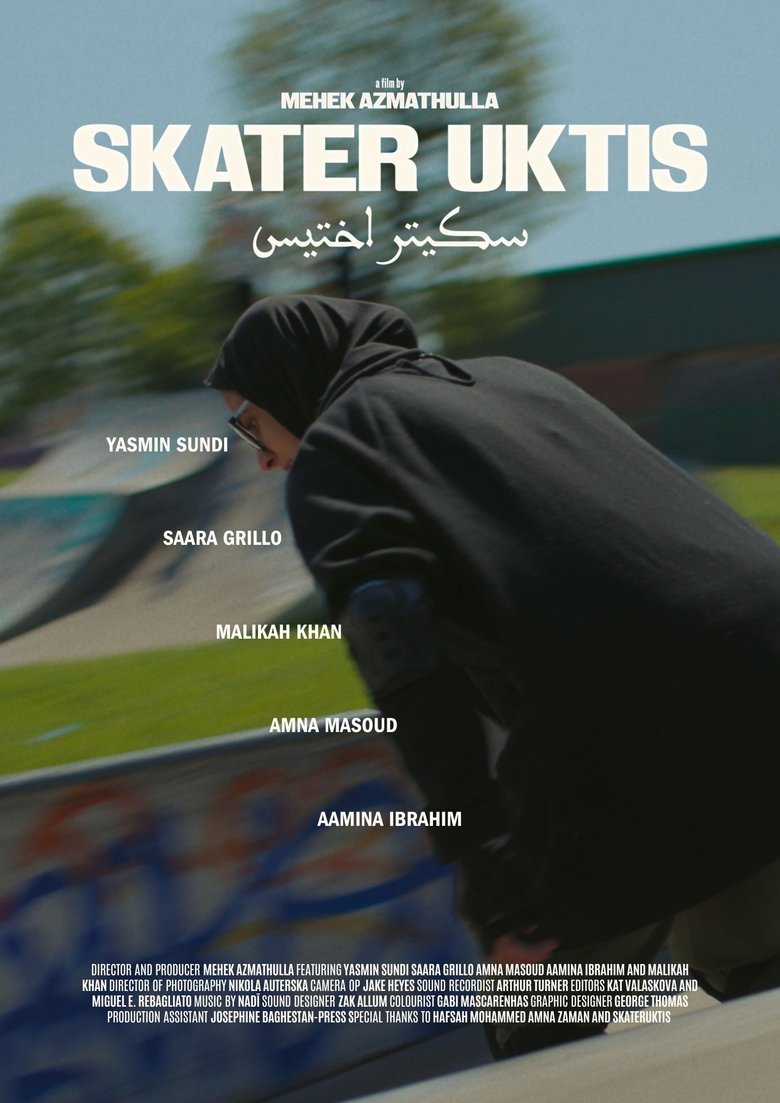
There's a moment in Skater Uktis where the sheer, uncomplicated joy on screen made me grin like an idiot. No irony, no cynicism, just a group of young Muslim women on skateboards, completely in their element. Seven minutes. That's all it takes.
I'll be upfront: I missed this at the Muslim International Film Festival, so when director Mehek Azmathulla sent it over for me to watch, I was genuinely chuffed. I've grown up with the sound of wheels on concrete. Decades of watching skate culture shift and grow and reinvent itself, and if there's one truth I keep coming back to, it's that the board doesn't care who you are. It never has. Skater Uktis gets that instinctively, and it builds everything around it.
What Azmathulla has made here is a beautifully simple snapshot: young Muslim women in England picking up skateboards and finding their tribe in the process. But what elevates the premise, what gives it real reach, is the way these women connect with skaters across the globe, from the USA to Nigeria, across more than twenty countries in total. A plank of wood with four wheels, cutting clean through every cultural and geographical barrier you might imagine. It's a cracking reminder of something we should probably say out loud more often.
Azmathulla doesn't overcomplicate any of it. There's no heavy-handed exposition, no manufactured dramatic arc designed to give the thing a tidy emotional climax. She just points the camera at people who are genuinely happy and lets that happiness do the work. The energy between these women is infectious, the way they support each other, trade tips, share the thrill of landing something new. It's the kind of pure, unadulterated positivity that modern documentary filmmaking doesn't serve up nearly enough. In that sense, it reminded me a little of why I loved Dr. Ben, another short that trusted its subject completely and was all the better for it.
Now, I know what you might be thinking. Seven minutes. Is there really enough on the bone here to call it a proper film? Honestly, yes, and I'd go further: it's exactly the right length. Azmathulla knows precisely when to cut. She delivers a tightly edited burst of warmth and inspiration without letting the premise run out of road. Stretching this to feature length would have been a mistake. The brevity is the point. You walk away, or I suppose you sit away, with a lingering sense of warmth rather than the slightly deflated feeling you get when a short film doesn't know when to stop. It made me smile, plain and simple, and that's all a short film of this nature needs to do.
I do want to be honest about the limitations, because I think they're worth naming. At seven minutes, there isn't space for deeper context, for the personal stories behind each skater, for any real sense of the obstacles these women might have navigated to get here. You won't walk away with a layered, complex portrait of Muslim women in British skate culture. But I don't think that's what Azmathulla is going for, and I'm not going to penalise her for making the film she set out to make rather than the one I might theoretically wish existed. What's here is genuinely good.
The message, if you want to call it that, is pretty simple: if you want to take up something, don't let anyone tell you it isn't for you, and make sure you're lifting up the people rolling alongside you. Skater Uktis carries that quietly, without ever feeling preachy, which is harder to pull off than it sounds.
Three and a half stars.
Mehek Azmathulla has made a heartwarming little gem, and I genuinely hope it finds the wide audience it deserves. Keep an eye on her.
Rating: ★★★½ | Year: 2025 | Watched: 2026-07-13