Listen to Britain (1942)

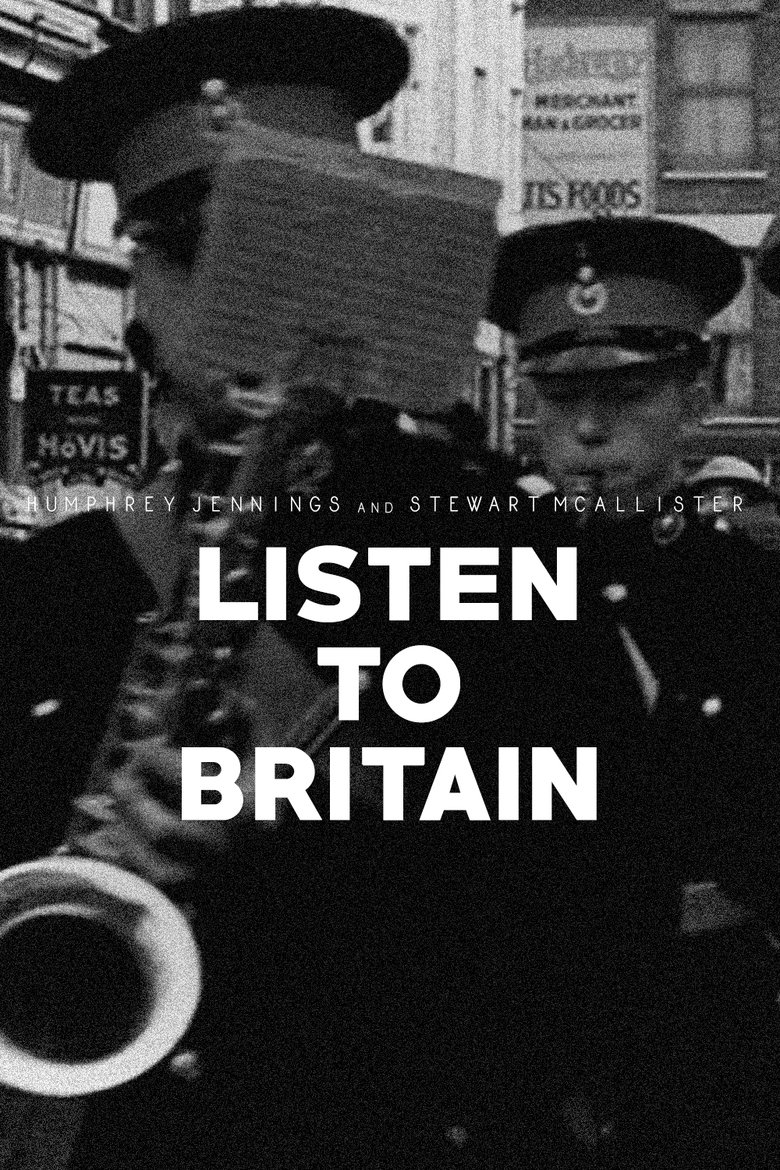
There's something both admirable and frustrating about Listen to Britain. Humphrey Jennings and Stewart McAllister's 1942 short is one of those films you feel almost obliged to respect, because the historical weight of what it captures is genuinely extraordinary. And yet, sitting with it as a piece of cinema rather than as an artefact, I kept waiting for it to do something more with all that remarkable material. It never quite does.
The premise is disarmingly simple. No narrator. No talking heads. No argument being made in the conventional sense. Just the sounds and sights of Britain at war: factory floors humming, soldiers sharing a laugh, civilians getting on with things in that particular stoic way that defined the home front. Jennings and McAllister weave it all together into an audio-visual collage, leaning on ambient noise, music and the rhythms of everyday life to carry you through. On paper, that's a genuinely bold formal choice, and there are moments where it pays off beautifully. The sequences built around live music especially, bands playing to crowds of workers and servicemen and women, have a warmth and immediacy that still lands eight decades later.
And look, from a purely historical standpoint, the value here is beyond question. This is real footage of real people living through one of the most extraordinary periods in modern British history, and there's something quietly humbling about watching it. You're not reconstructing the 1940s home front from descriptions or dramatisations. You're actually there, or as close to there as moving image can get you.
But history and cinema aren't always the same thing, and that's where I find myself with mixed feelings. Because without a driving narrative, without character arcs or a thematic argument that builds and develops, the film can start to feel more like a very accomplished slideshow than a documentary with somewhere to go. I always think the real test of a non-fiction film is whether it maintains your engagement on its own terms, not just because of what it's documenting. Listen to Britain passes that test only intermittently. It drifts. Sequences that feel atmospheric in isolation start to blur into one another, and the cumulative effect is closer to pleasant detachment than genuine emotional involvement.
I had similar thoughts watching Fires Were Started, Jennings' companion piece from around the same period. That film manages to generate genuine dramatic tension from its material in a way that Listen to Britain simply doesn't reach for. Both are valuable records of the era, but Fires Were Started feels like it has a pulse in a way this one occasionally lacks.
There's also the question of what "passive" means in documentary. Some filmmakers use restraint as a genuinely powerful tool, letting the material breathe and trusting the audience to bring their own emotional response. At its best, that's what's happening here. At its worst, it tips over into footage that's beautifully composed but emotionally inert. The line between the two is thin, and Listen to Britain crosses it more than once.
None of that is to dismiss what Jennings and McAllister achieved. The craftsmanship is real, the ambition is genuine, and the access they had to a nation in the middle of a war is something no filmmaker could replicate today. I came to this with enormous respect for its legacy, and I leave with that respect intact. I'm just being honest that it didn't quite connect with me the way I'd hoped.
Two and a half stars. A vital piece of British film history, and a lovely one to look at. Just don't go in expecting it to grip you by the collar.
Rating: ★★½ | Year: 1942 | Watched: 2026-07-09
Where to watch
Watch in the UK
Physical: Amazon UK · Zavvi
Watch in the US
Stream: OVID
Physical: Amazon US
Affiliate disclosure: Movies With Macca may earn a small commission on purchases or subscriptions started via these links. It costs you nothing extra.