Dr. Ben (2023)

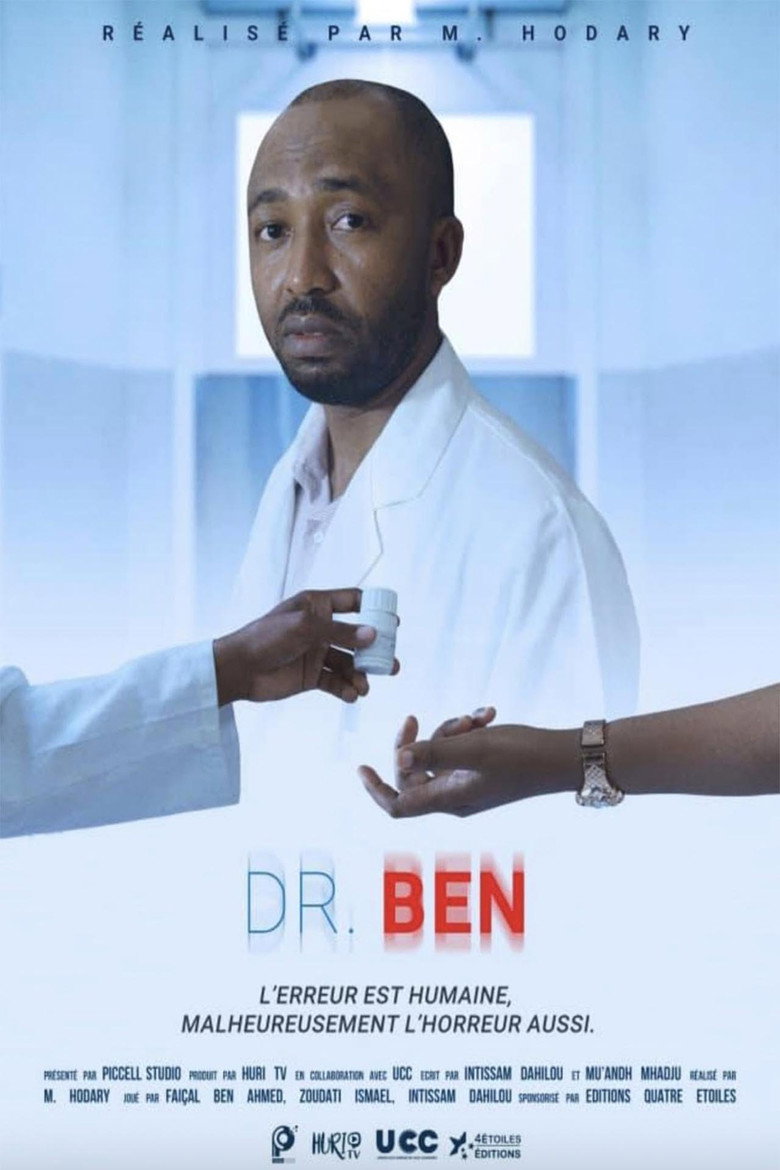
There's a particular kind of viewing experience that comes with hunting down films from nations with barely a handful of titles to their name. You're not approaching it the way you'd approach a new thriller from a country with a rich cinematic tradition. You're adjusting the lens completely. Dr. Ben is only the second film from the Comoros I've ever managed to track down, and that context matters. It has to.
The setup is a solid one for a short thriller. A physician makes a catastrophic mistake that costs a patient their life, and rather than face the consequences, he buries it. But his nurse grows suspicious of what happened, and decides to launch her own quiet, dangerous investigation into the truth. It's the kind of premise that, in the right hands, can generate real tension within a tight runtime. A medical cover-up, a hospital setting, someone determined to drag a secret into the light. You can feel the potential in it.
And M. Hodary, who by all accounts wore nearly every hat on this production, directing, editing, handling the framing, sound design and VFX himself, deserves genuine credit for what he pulls off with clearly very limited resources. The film is actually shot quite well. There's a sterile, uneasy quality to the hospital environment that works in the story's favour, and you get the sense that Hodary understands how to use a camera even when everything else is working against him. Intissam Dahilou, who also co-wrote the script, brings a grounded, committed energy to the nurse at the centre of the investigation. She's the most watchable thing in the film, and she gives it a sense of stakes that the production itself sometimes struggles to sustain.
That's where the problems creep in. The low budget doesn't sink the film outright, but it shows in the places that matter most for a thriller: the emotional peaks. When the script demands intensity, some of the performances tip into stiffness, and the scenes that should crackle with danger end up sitting a little flat. Worse, for a short film, the pacing drags. A cover-up story like this needs to keep tightening the screw, notch by notch, until something gives. Here, the tension plateaus too early and never quite finds the boiling point you're waiting for.
It's a respectable effort, genuinely. When you're talking about a cinema that barely exists yet, a short film that is coherently shot, competently constructed and driven by a clear creative vision is worth acknowledging. It reminds me a little of the experience of watching emerging filmmaking from across the African continent, where I found Touki Bouki (1973) to be such a revelation precisely because it arrived fully formed and deeply confident. Dr. Ben isn't there yet, but that's not the same as saying it's without merit.
What it is, honestly, is rough. Rough in its pacing, rough in its dramatic execution, rough in the way it runs out of runway before the story can really land. The passion behind the camera is real, and Hodary has enough technical instinct to suggest there's something worth watching for in whatever comes next from him. But taken purely as a piece of suspense, as a thriller that needs to grip you and hold on, it doesn't quite do the job.
Two stars. A promising stepping stone for Comorian cinema, and genuinely well-shot for the budget it was working with. But as a standalone thriller, it's a bit too uneven to fully recommend. Worth half an hour of your time if you're curious, or if, like me, you're on a quest to see something, anything, from every corner of the world's filmmaking map.
Rating: ★★ | Year: 2023 | Watched: 2026-06-16