Pope Francis: A Man of His Word (2018)

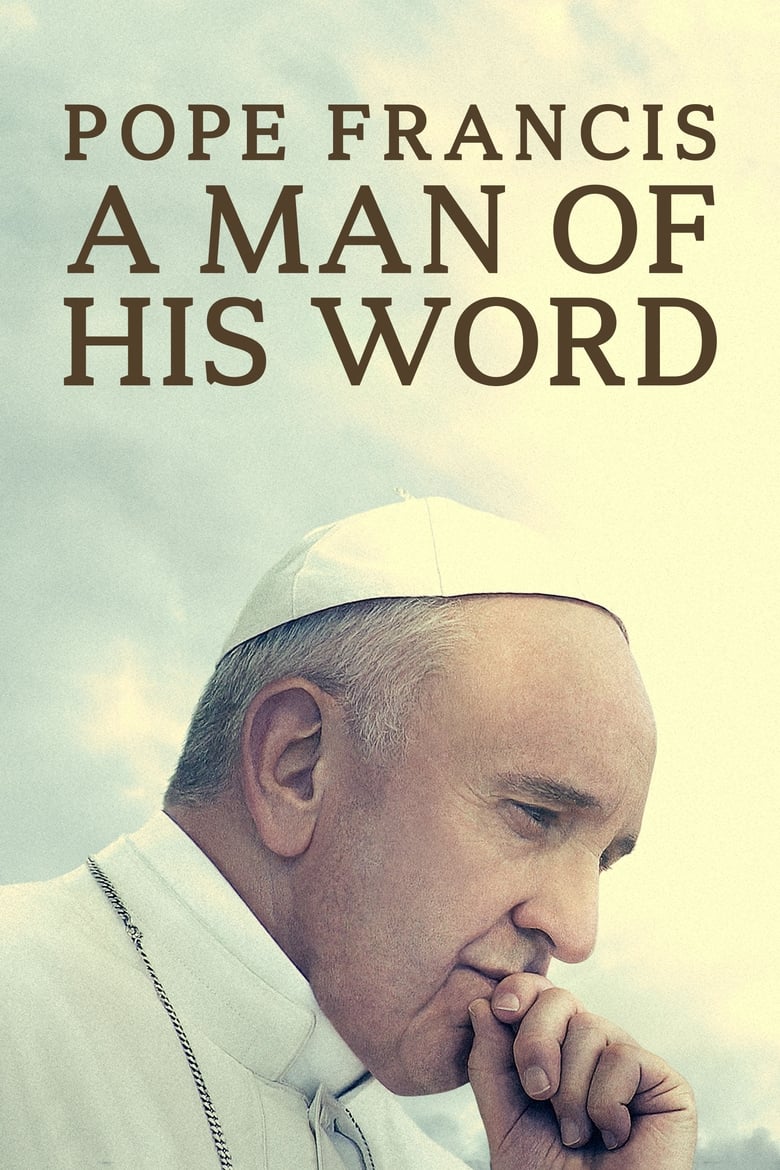
The cover art for Wim Wenders' 2018 documentary is genuinely quite cool. Striking, minimalist, it promises something profound and intimate about the life of the modern pontiff. But the moment you actually press play, that sleek packaging gives way to what is, without exaggeration, one of the most by-the-numbers documentaries I've ever sat through. For a director whose work I've admired elsewhere, including the quietly devastating Paris, Texas (1984), the final product here feels remarkably safe. Bordering, if I'm being blunt, on a glorified promotional video rather than a probing piece of cinema.
The most glaring issue is the sheer volume of stock footage woven throughout the runtime. I entirely understand the logistical nightmare of shadowing the Pope. The man has a schedule. But leaning this heavily on pre-existing clips feels more than a little cheeky. Instead of genuine fly-on-the-wall access, we get a polished montage of papal visits and sweeping aerial shots you could easily pull from the evening news. Any sense of real discovery evaporates pretty quickly. What you're left with feels less like an investigative documentary and more like a carefully curated highlight reel, the kind of thing you'd see playing on a loop at a Vatican gift shop.
Content-wise, the picture doesn't exactly challenge you either. It is, when you strip it back, essentially the leader of the Catholic Church telling existing Catholics how to pray, how to think, and how to live. There's very little critical friction. The questions, when they come, feel pre-approved. Nobody's going to be left squirming in their seat, and that's a genuine shame, because the access on offer here is remarkable. This is one of the very few films ever granted the privilege of being shot inside Vatican City, and that alone gives it a certain archival value. Historians will find it useful. But the filmmakers seem almost entirely unwilling to use that extraordinary access to ask anything genuinely tough. It's a bit like being handed the keys to a racing car and deciding to pootle round a car park.
This is, clearly, one of the most blatant pieces of "docuganda" I've encountered in quite a while. It preaches exclusively to the converted, offering comfort rather than insight, warmth rather than scrutiny. The visual polish is undeniable, and I won't pretend the historical footprint isn't interesting. But it completely lacks the journalistic rigour you'd hope for from a filmmaker of Wenders' stature and experience. There's a version of this documentary that uses its extraordinary position to hold a powerful institution to account, to ask the difficult questions about the Church's history and its place in the modern world. That film would have been worth making. This one isn't quite it.
If you're already a devout follower looking for reassurance and inspiration, it's a harmless enough watch. For anyone expecting a critical examination of the modern papacy, though, it's a profoundly disappointing letdown. Two and a half stars, and honestly, most of those are for the cover art and the sheer novelty of those Vatican corridors.
Rating: ★★½ | Year: 2018 | Watched: 2026-07-15
Where to watch
Watch in the UK
Rent: Apple TV Store · Rakuten TV · Amazon Video · Sky Store
Buy: Apple TV Store · Rakuten TV · Amazon Video · Sky Store
Physical: Amazon UK · Zavvi
Watch in the US
Rent: Amazon Video · Apple TV Store · Google Play Movies · YouTube
Buy: Amazon Video · Apple TV Store · Google Play Movies · YouTube
Physical: Amazon US
Affiliate disclosure: Movies With Macca may earn a small commission on purchases or subscriptions started via these links. It costs you nothing extra.