Planet of the Apes (1968)

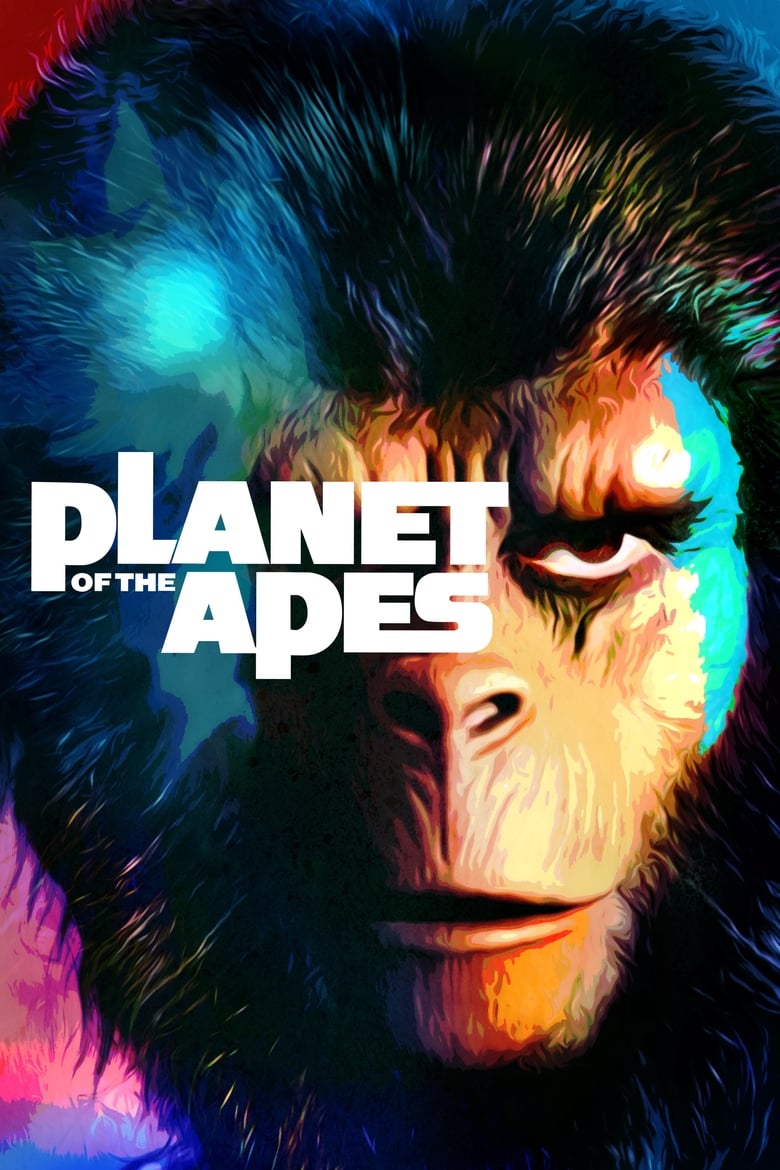
There are films that arrive at exactly the right cultural moment and reshape what popular cinema thinks it can do. Franklin J. Schaffner's Planet of the Apes, released in 1968 by 20th Century Fox and APJAC Productions, is one of those films. It arrived into a America convulsed by the civil rights movement, the Vietnam War and an anxiety about nuclear annihilation, and it used the alibi of science fiction to ask questions that a straight drama might have struggled to get past the studio gate. The source material was Pierre Boulle's 1963 French novel La Planète des Singes, but the screen adaptation, credited to Michael Wilson and Rod Serling, took considerable liberties with the book's satirical comedy, pushing the material toward something more elemental and, at times, genuinely disturbing. Serling, then at the height of his fame as the architect of The Twilight Zone, brought his characteristic habit of wrapping pointed social commentary inside genre packaging. The result was a script that functions on the surface as adventure and underneath as an extended, uncomfortable question about power, species and civilisation.
Schaffner was a television veteran who had already proved himself with The War Lord (1965), and he handles the tonal range here with a steady hand, never allowing the film to collapse into self-parody despite the inherent absurdity of its central conceit. An American astronaut, Taylor, crash-lands on a planet where apes hold dominion and humans are hunted, caged and used for experimentation. Charlton Heston plays Taylor with a quality that can really only be described as monumental: all physical authority and barely suppressed contempt, the kind of performance that holds a frame simply by occupying it. Around him, Roddy McDowall and Kim Hunter, performing entirely in prosthetic make-up, manage something rather remarkable: genuinely legible emotional performances beneath layers of appliance work that must have been punishing to wear. Maurice Evans and James Whitmore round out a cast that takes the material seriously even when the material might have invited them to do otherwise. That collective commitment is, even now, the film's strongest defence against its detractors.
Leon Shamroy's cinematography frames the desert landscapes of Arizona and Utah with a wide, almost classical eye, giving the film a scale and sweep that its relatively modest budget might not have promised. The compositions are frequently beautiful in a spare, sun-bleached way, emphasising the isolation of the planet and the smallness of the humans within it. Jerry Goldsmith's score is among the more audacious of his career: atonal, percussive, built around unconventional instrumentation that refuses to comfort the audience with familiar orchestral warmth. Where most Hollywood science fiction of the period reached for brass and strings, Goldsmith reached for ram's horns and prepared piano, creating a soundscape that still feels genuinely alien. Hugh S. Fowler's editing maintains momentum across a runtime that takes its time establishing place and situation, and the pacing in the film's central act, as Taylor is processed through an ape bureaucracy that mirrors human institutional cruelty with uncomfortable precision, has a kind of escalating dread that the cutting earns without hurrying. For a companion piece from this same extraordinary year in cinema, see also Oliver!, which picked up the Academy Award for Best Picture at the same ceremony where this film's make-up work received an honorary recognition of its own.
It is worth noting too that Planet of the Apes sits within a broader tradition of Hollywood genre films in the 1960s that were doing more philosophical and political work than their posters suggested. I also covered Point Blank from the year immediately prior, another film that used genre conventions as a vehicle for something more unsettling, and there is a similar quality here of a mainstream studio picture quietly refusing to behave like one. The franchise that followed, four sequels within the original continuity and then a full reboot decades later, is itself a measure of how much conceptual weight the original premise could bear.
Planet of the Apes is badly dated, there is no getting around that. The science it hangs everything on is laughable by today's standards, and the special effects and make-up, impressive as they must once have been, now look very much of their time. But you do have to put your 1968 goggles on. Seen in the context of when it was made, this was surely groundbreaking stuff, and it is only fair to judge it partly on those terms.
Because underneath the dated trappings is a seriously strong story. It is no wonder it went on to spawn a run of four sequels within its own continuity, then a standalone remake, and a whole rebooted franchise after that. A concept has to be made of sterner stuff than most to sustain all of that, and this one is, raising big, uncomfortable questions about humanity, civilisation and who ends up on top.
Charlton Heston makes a terrific lead, all granite jaw and mounting fury, and the supporting cast around him does well. And then there is the ending. It is one of the all-time great twists, truly iconic, the kind of final image that has burned itself into the culture. The catch, in my case, is that I had it spoiled long ago, by The Simpsons of all things, which rather softens the blow when you finally reach it. If you have somehow managed to avoid knowing, guard that innocence with your life.
So this is a film whose age I had to look past rather than one that swept me up on its own terms. The effects creak, the science is nonsense, and the twist had been handed to me decades too early. And yet the story is strong enough, and Heston committed enough, that none of it quite sinks the thing. Three and a half stars, a dated but deservedly influential piece of science fiction whose ideas have aged a great deal better than its visuals.
Planet of the Apes occupies a particular position in the canon: not quite flawless, not always comfortable to revisit, but impossible to dismiss. Its ideas have migrated so thoroughly into the culture, through sequels, parodies and that one notorious Simpsons musical, that fresh encounters with the original now require a conscious act of historical imagination. What endures, beyond the iconic final image and the period make-up work, is the script's willingness to be genuinely bleak about what human beings, or their successors, do with power. That is not a question that has dated in the least.
Rating: ★★★½ | Year: 1968 | Watched: 2026-10-12
Trailer
▶ Watch the official trailer for Planet of the Apes (1968) on YouTube
Where to watch
Watch in the UK
Stream: Disney Plus
Rent: Apple TV Store · Rakuten TV · Amazon Video · Sky Store
Buy: Apple TV Store · Rakuten TV · Amazon Video · Sky Store
Physical: Amazon UK · Zavvi
Watch in the US
Rent: Amazon Video · Apple TV Store · Google Play Movies · YouTube
Buy: Amazon Video · Apple TV Store · Google Play Movies · YouTube
Physical: Amazon US
Affiliate disclosure: Movies With Macca may earn a small commission on purchases or subscriptions started via these links. It costs you nothing extra.