
Point Blank (1967)

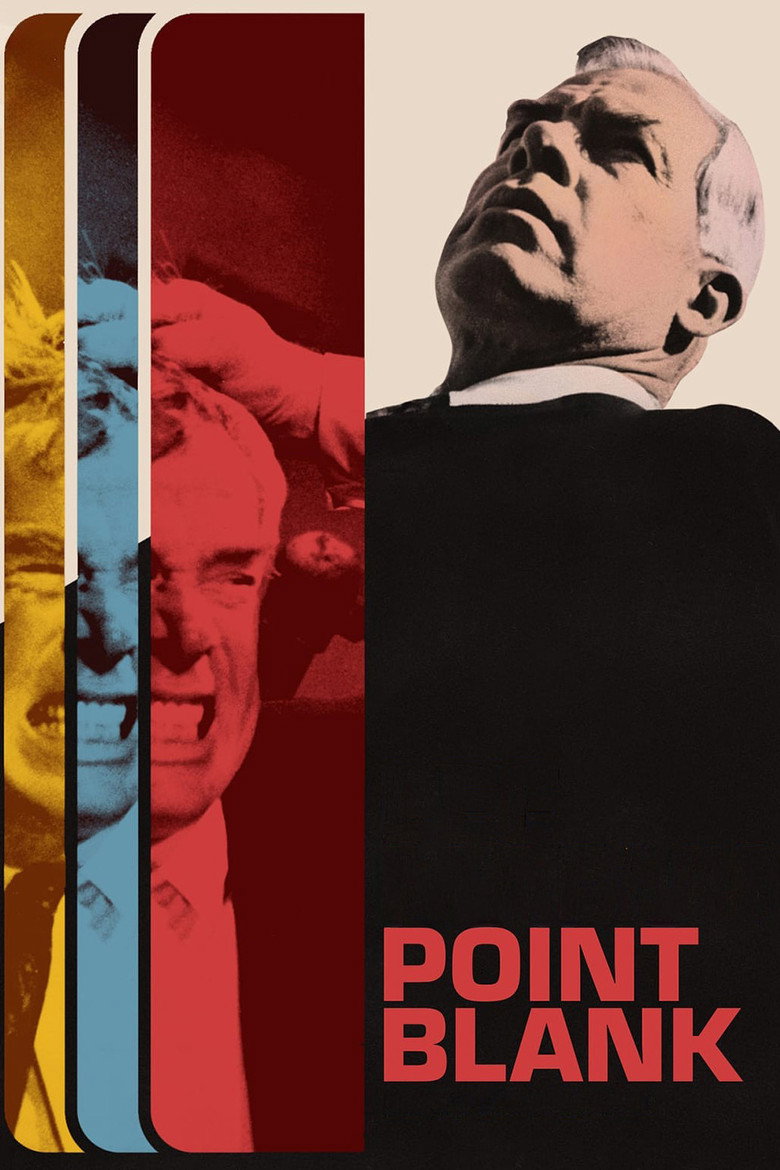
By 1967, Hollywood was in the middle of an identity crisis it could not quite name. The old studio system was crumbling, European art cinema was bleeding across the Atlantic, and a generation of filmmakers was working out what American genre pictures could look like if you dismantled them from the inside. Point Blank lands squarely in that moment. Based on the 1962 crime novel The Hunter by Richard Stark (the pen name of Donald Westlake), it takes the bones of a straightforward revenge thriller and puts them through something considerably stranger: a fractured, almost dreamlike reworking in which time, space and motivation are treated as loose suggestions rather than fixed coordinates. It is the kind of film that sits comfortably alongside the French New Wave while never pretending to be anything other than a Metro-Goldwyn-Mayer production shot on location in Los Angeles and San Francisco.
The man responsible for that peculiar balancing act is John Boorman, the British director who had arrived in Hollywood on the strength of his work with Dave Clark and The Dave Clark Five on Catch Us If You Can (1965). Point Blank was only his second American feature, and the fact that MGM handed him a Lee Marvin vehicle with relative creative freedom says something about how much the studios were willing to experiment in this period, even if they would not always admit it. The screenplay, credited to Alexander Jacobs, Rafe Newhouse and David Newhouse, keeps the premise clean: a man called Walker is shot and left for dead after a double-cross on Alcatraz, and he comes back, implacably and without apparent hurry, to collect the ninety-three thousand dollars he is owed from a shadowy criminal syndicate known as The Organisation. The money is almost comically modest as a MacGuffin, which may well be the point. Boorman would go on to make Deliverance five years later, another film built around a man stripped of everything ordinary and forced into something primal, and you can see the same obsession forming here.
Lee Marvin had won his Academy Award for Cat Ballou just two years before, and he brings to Walker a particular quality that very few actors possess: genuine physical weight, not bulk, but the sense that the man takes up more space than his frame should account for. Opposite him, Angie Dickinson brings a coiled, watchful intelligence to the female lead, and John Vernon, in only his second feature film role, is quietly unnerving as the double-crosser at the heart of the story. Carroll O'Connor and Keenan Wynn round out a cast that is polished but unremarkable on paper, though Boorman uses them well within the film's particular register.
Cinematographer Philip H. Lathrop shoots the film with a cool, hard eye, favouring the clean lines of modernist architecture, reflective surfaces, long corridors and geometric interiors that make the Los Angeles of 1967 feel both glamorous and slightly inhuman. There is a recurring visual logic built around emptiness and angles, rooms that ought to feel lived-in but somehow do not. Johnny Mandel's score complements this with something jazz-inflected and purposefully sparse, less a conventional thriller underscore than a mood that drifts in and recedes, leaving silence to do a fair amount of the work. Henry Berman's editing is worth noting specifically: the cutting between past and present in the opening sequence is genuinely unusual for a mainstream studio picture of the era, closer in spirit to Alain Resnais than to anything else MGM was releasing that year, and it sets the film's fractured tone immediately. For comparison on how experimental editing and image-making were being pushed in entirely different directions at the same moment, see also my thoughts on Dog Star Man and Titicut Follies, both from roughly the same period and both similarly uninterested in conventional film grammar.
What I loved most about Point Blank is the sheer look and feel of it.
It is drenched in a particular late-sixties cool, from the clipped, stylised way everyone speaks to the clothes, the hard modernist architecture and the fractured, almost experimental way Boorman shoots the whole thing. On that level it is a treat. It is a lean revenge thriller, Lee Marvin's double-crossed crook stalking his way up a criminal organisation to reclaim the money he is owed, and visually it never puts a foot wrong.
Lee Marvin is well cast in the lead. He is not asked to do a great deal beyond radiate a cold, implacable menace, but he does that superbly, carrying the film with gravitas and that granite stillness of his. He is the heavy, immovable centre the whole thing revolves around, and he is exactly right for it.
Where it lost me a touch is the story, which felt rather thin once you scrape away all that style. Strip out the surface and what remains is a slight tale of a man and his wounded pride, and in that respect it reminded me of The Long Goodbye, another handsome, atmospheric crime picture that turns out to be more about bruised male ego than plot. Both are films I remember for their mood far more than their stories. Three stars, then, gorgeous to look at and anchored by a perfectly judged Marvin, let down only by a story that never quite matches the style around it.
Point Blank occupies a specific and not entirely comfortable place in the canon: admired more than loved, cited more than rewatched, the kind of film that turns up on every serious list of late-sixties American cinema and then quietly divides the room. It influenced a long line of cool, style-first crime pictures, and Boorman's willingness to subordinate narrative clarity to atmosphere and sensation was, at the time, a genuine provocation aimed at Hollywood convention. Whether that provocation fully pays off across ninety-two minutes is, as ever, a matter of what you are prepared to trade for a film that looks this good. Some bargains are worth making. Some are just very stylish debts.
Rating: ★★★ | Year: 1967 | Watched: 2026-10-01
Trailer
▶ Watch the official trailer for Point Blank (1967) on YouTube
Where to watch
Watch in the UK
Stream: Amazon Prime Video · Amazon Prime Video with Ads
Rent: Apple TV Store · Google Play Movies · YouTube
Buy: Apple TV Store · Google Play Movies · Sky Store · YouTube
Physical: Amazon UK · Zavvi
Watch in the US
Stream: fuboTV · YouTube TV
Rent: Amazon Video · Apple TV Store · Google Play Movies · YouTube
Buy: Amazon Video · Apple TV Store · Google Play Movies · YouTube
Physical: Amazon US
Affiliate disclosure: Movies With Macca may earn a small commission on purchases or subscriptions started via these links. It costs you nothing extra.



