Frances Ha (2012)

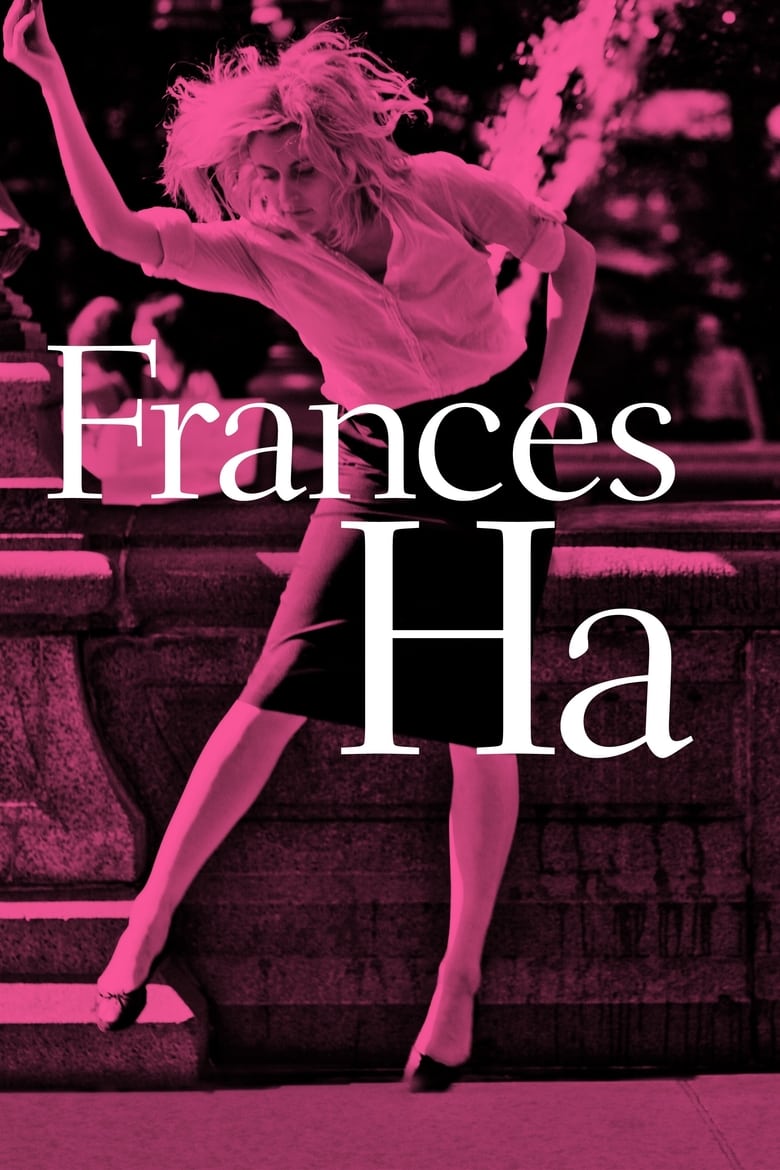
There's a moment in Frances Ha where the title character describes her ideal relationship as two people who are so in sync they don't even need to talk across a crowded room, they just look at each other and know. It's the kind of thing that sounds lovely in theory and heartbreaking in context, because Frances is describing something she's already losing. That one little speech does more heavy lifting than most films manage in two hours, and it's delivered with such offhand naturalism you almost miss how precisely it's been written. That's Greta Gerwig for you.
Co-written by Gerwig and Noah Baumbach, and shot in a gorgeous, grainy black-and-white that gives New York the feeling of a French New Wave memory, Frances Ha is the kind of film that quietly wins you over before you've even noticed it trying. Gerwig's restless, slightly scatterbrained energy might seem like a gamble for a solo-driven narrative at first, but it quickly becomes clear that every stumble, every deflected compliment, every awkward pause is meticulously calibrated. Baumbach gives her the space to breathe, and she responds with a performance that feels less like traditional acting and more like watching someone figure themselves out in real time. It's disarming. It's brilliant.
What hits hardest is the film's unflinching honesty about that peculiar panic of your late twenties. The quiet shame of feeling behind while everyone else seems to be ticking off life's expected milestones. Frances watches her closest friend Sophie settle into adulthood, new flat, career, relationship, the full set, while Frances herself drifts from couch to couch, job to job, connection to connection. The growing distance between them isn't marked by dramatic confrontations or tearful rows. It's missed calls, polite evasions, and the slow, aching realisation that love doesn't always survive adulthood intact. It's painfully relatable. There's a specific grief in watching a foundational friendship quietly change shape without anyone meaning for it to, and this film captures it better than almost anything I've seen.
By conventional storytelling standards, very little actually "happens" here. No grand revelations, no tidy resolutions, no sweeping plot mechanics. Instead, it's a beautifully observed character study that finds its weight in small moments: a missed dance cue, a half-finished sentence, a fleeting glance across a crowded room. The deliberate pacing might frustrate viewers hungry for narrative propulsion, but that's exactly what makes it work. Life at that age rarely unfolds in clean arcs. Frances Ha honours that truth with warmth, gentle humour, and genuine empathy. It refuses to fix anything. It just lets Frances be. And somehow, that's enough.
I'll be honest, there are stretches where you feel the looseness of the structure. A late detour to Paris, for instance, is charming but slightly adrift, and occasionally the film's commitment to aimlessness threatens to tip into actual aimlessness. But Gerwig never lets you fully disconnect. There's always something in her face, some flicker of hope or embarrassment or quiet determination, that pulls you back in. She makes Frances's failures feel like your own, and her small victories feel genuinely earned.
Four stars. Frances Ha is a quiet triumph, a film that proves you don't need high stakes or a plotted climax to tell a deeply human story. It's the kind of movie you can't quite summarise, not because it's vague, but because its power lies in how closely it mirrors the messy, beautiful reality of growing up. A lingering, deeply affectionate portrait of friendship, uncertainty, and the grace of simply trying.
Rating: ★★★★ | Year: 2012 | Watched: 2026-05-20
Where to watch
Watch in the UK
Stream: Amazon Prime Video · Amazon Prime Video with Ads
Rent: Apple TV Store · Rakuten TV · Amazon Video · Google Play Movies
Buy: Apple TV Store · Rakuten TV · Amazon Video · Google Play Movies
Physical: Amazon UK · Zavvi
Watch in the US
Stream: Netflix · Philo · AMC Plus Apple TV channel · AMC+ Amazon Channel
Rent: Amazon Video · Apple TV Store · Google Play Movies · YouTube
Buy: Amazon Video · Apple TV Store · Google Play Movies · YouTube
Physical: Amazon US
Affiliate disclosure: Movies With Macca may earn a small commission on purchases or subscriptions started via these links. It costs you nothing extra.