Mothlight (1963)

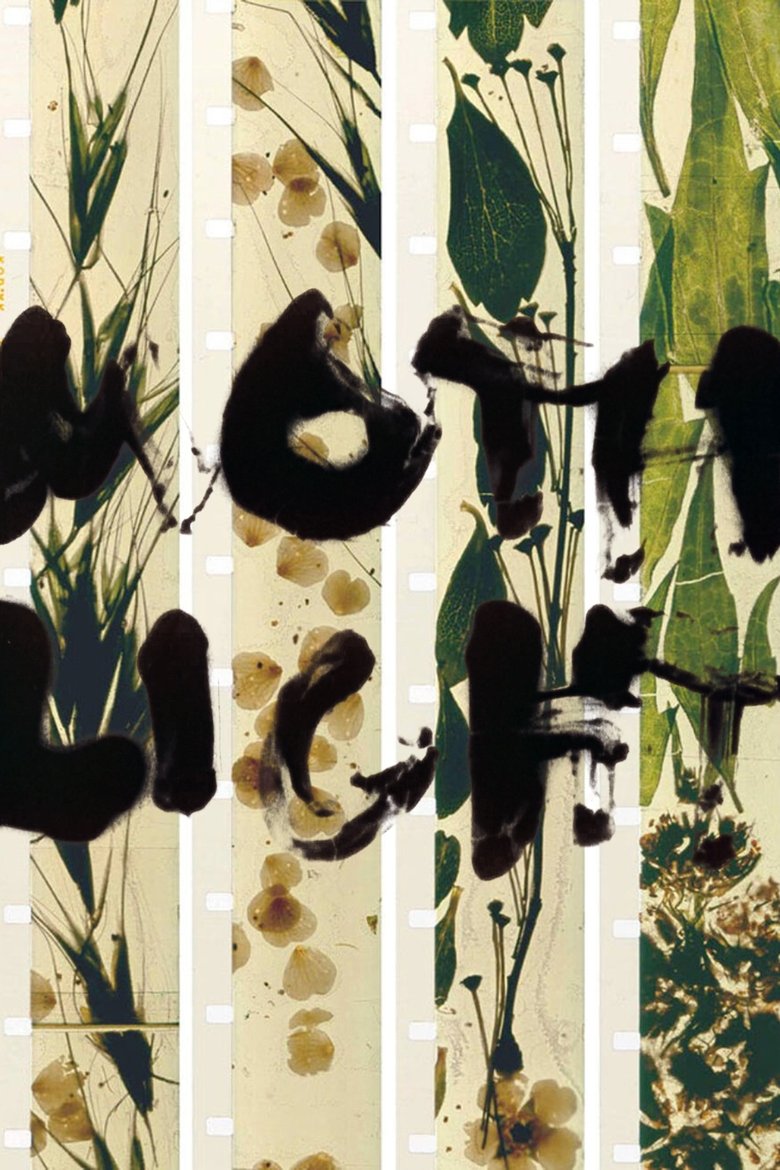
Let me be upfront: I subjected myself to Mothlight as part of my ongoing challenge to complete every list on Letterboxd's stats page. Not exactly the most romantic way to encounter a piece of avant-garde history, but there you go. And having now sat through Stan Brakhage's four-minute collage of dead moths, insect wings and leaf fragments flickering at 24 frames per second, I can confirm that completing a list and enjoying what's on it are very different things.
The technique is genuinely interesting, and I'll give it that much. Brakhage didn't use a camera at all. He took actual moth remains, leaves and bits of insect, sandwiched them between strips of splicing tape, and ran the whole physical collage through an optical printer. The result is a handmade filmstrip, a piece of direct cinema in the most literal sense possible. As a moment in the history of what celluloid can do when someone refuses to follow any of the rules, it's a fascinating footnote. I can acknowledge that clearly and without embarrassment.
What I cannot do is pretend it's any fun to watch.
The experience is exactly what you'd expect from the description: a frantic, flickering barrage of translucent wings, veined textures and the occasional green leaf strobing across the screen in fragments too brief to properly register. Brakhage's apparent intent was to capture something like a moth's own fragmented perception of light, to build a purely visual rhythm stripped of narrative entirely. Fine. I follow the logic. There's even a moment, maybe the first thirty seconds, where the sheer strangeness of it holds your attention. The shapes have a quality not unlike Henri Matisse's paper cutouts, all flat colour and abstract form.
Then the novelty evaporates, and you're left staring at dead insect parts for another three and a half minutes.
The repetitiveness is the real killer. There's no development, no shift in register, no sense that anything is building or changing or going anywhere. It simply flickers and flickers until it stops. Film academics will argue, not entirely without justification, that this is the point: that Mothlight liberates the medium from the tyranny of the camera, the story, the character. But liberation from all those things leaves you watching something that doesn't feel like a film you're actively engaged with. It feels like a texture you endure. Four minutes is an act of mercy by Brakhage's standards, and it still felt like considerably longer.
I'd had a similarly bewildering time with Prelude: Dog Star Man, also from Brakhage, also as part of this same Letterboxd challenge. That one at least has a kind of brooding physical energy to it. Mothlight can't even offer me that. It's the more radical experiment and, for my money, the less rewarding one.
Look, I'm not going to pretend this deserves to be dismissed entirely. Its place in the history of structural and experimental film is real. Brakhage's dedication to pushing at the physical boundaries of what a filmstrip even is deserves some respect, even from a viewer who found the result profoundly tedious. But respect for an idea and enjoyment of its execution are two separate things, and I'm not here to perform enthusiasm I don't feel.
As a viewing experience, Mothlight is alienating, relentlessly repetitive, and, if I'm being honest, a bit of a joke. One star.
Rating: ★ | Year: 1963 | Watched: 2026-07-08