Letter from an Unknown Woman (1948)

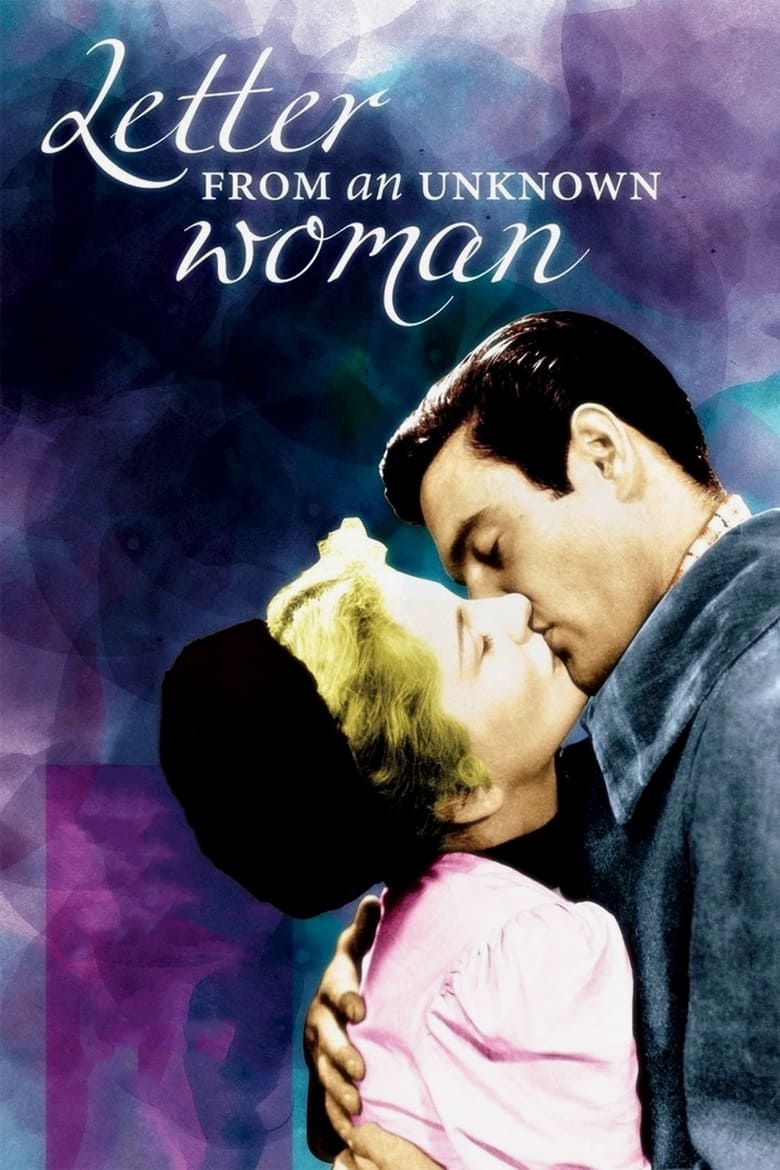
Max Ophüls made Letter from an Unknown Woman in 1948, the same year he returned to Hollywood after years in European exile, and the film bears the marks of a director who had absorbed the romantic fatalism of the Continent and was now working it through the machinery of the American studio system. Based on a novella by Stefan Zweig, the Austrian writer whose fiction was built on obsession, memory, and the cruel asymmetries of love, the story is straightforward enough to summarise in a sentence: a woman writes a letter to a man who has never truly known her, and in reading it he is made to face what his carelessness has cost. Ophüls had spent years in France and had directed the prestige romance La Signora di Tutti before the war scattered him across continents; by the time he arrived at Universal Pictures for this project, he was a director of considerable formal rigour working with Howard E. Koch, the screenwriter perhaps best remembered for his co-credit on Casablanca, though Koch's script here is a quieter, more inward piece of work.
The film sits comfortably alongside the Hollywood melodramas of the late 1940s that treated female interiority with unusual seriousness, a tradition worth setting alongside other films of the era. I reviewed The Reckless Moment (1949), another picture from that period in which a woman's emotional life becomes the entire moral architecture of the film, and there are affinities worth noting. Equally, those interested in mid-century films built around a woman's unspoken or unacknowledged suffering might find a companion piece in The Spiral Staircase (1946), which operates in a different register but shares something of the same period texture. The source material here, Zweig's 1922 novella Brief einer Unbekannten, had already been adapted once before in 1933, which gives some indication of how readily this particular story lends itself to the screen: it is a premise that cinema, with its capacity for remembered images and non-linear time, is especially well suited to carry.
Joan Fontaine takes the lead as Lisa, and the casting is polished but not obvious. Fontaine had spent much of her early career playing women defined by anxiety or vulnerability, most famously in Hitchcock's work, and fans of that period in her career may find my thoughts on Rebecca (1940) useful as a point of comparison. Here she is given something rather different to do: a character whose defining quality is not fear but constancy, a woman whose love is absolute and entirely unreciprocated. Louis Jourdan plays Stefan Brand, the pianist at the centre of the story, and it is a role that asks him to be charming without being likeable, a difficult balance that the part requires but does not always reward. Mady Christians, Marcel Journet, and Art Smith fill out the supporting cast with the kind of confident, unfussy period work that keeps the frame populated without drawing attention away from the central dynamic.
Cinematographer Franz Planer gives the film a look that suits its subject: pools of soft light in Viennese interiors, stairwells and doorways used to frame moments of longing or departure, images that carry a slightly dreamlike weight without tipping into the mannered. Planer and Ophüls had worked together on earlier European productions, and that familiarity shows in the camera's willingness to follow characters in long, slow movements rather than cutting to make a point. The cutting itself, handled by editor Ted J. Kent, is patient in the same way, allowing scenes to breathe rather than pressing for effect. Daniele Amfitheatrof's score leans on the classical piano music that the film's setting demands, which creates a kind of built-in emotional shorthand: the music is both diegetic atmosphere and emotional underlining, the two functions blurring into each other as the story moves between past and present.
Letter from an Unknown Woman is a slow, deliberate, dialogue-heavy sort of film, the kind that asks for your patience and is in no hurry to reward it.
What carries it, more than anything, is Joan Fontaine, who is exceptional in the lead. It is a role that could easily have tipped into the mawkish, and she keeps it grounded and deeply affecting throughout.
At its heart it is a simple, sad story: a woman who loves a man, utterly and across a lifetime, while he barely remembers she exists. That is essentially the whole of it, and I must admit that it is so relentlessly one-note that at a certain point my attention began to drift, the dialogue washing over me until the words started to lose their shape. For a stretch in the middle I was watching it rather than feeling it.
To its credit, it does come around in the end. The final stretch gathers the film's long ache into something that landed, and pulled me back in just as I had drifted out. It recasts much of what came before, and I came away thinking better of it than I had halfway through. Three stars. A touch too slow and single-minded for me to love, but beautifully acted and, in the end, rewarding if you can stay the course.
Letter from an Unknown Woman is the kind of film that critics tend to place high on lists of forgotten masterworks, and there is enough here, in the precision of its images, the care of Fontaine's performance, and the structural elegance of its framing device, to understand why it attracts that reputation. Whether the film quite earns it in the watching, rather than in the thinking-about-it afterwards, is a more open question. It is, at any rate, a serious piece of work from a director who cared about surfaces and what lies beneath them, and it has aged with a certain quiet dignity. Some films reward patience; others simply ask for it. This one, perhaps, is somewhere in between.
Rating: ★★★ | Year: 1948 | Watched: 2026-10-22
Trailer
▶ Watch the official trailer for Letter from an Unknown Woman (1948) on YouTube
Where to watch
Watch in the UK
Physical: Amazon UK · Zavvi
Watch in the US
Stream: FlixFling
Rent: Amazon Video · Apple TV Store · Google Play Movies · YouTube
Buy: Amazon Video · Apple TV Store · Google Play Movies · YouTube
Physical: Amazon US
Affiliate disclosure: Movies With Macca may earn a small commission on purchases or subscriptions started via these links. It costs you nothing extra.