
Lady Windermere's Fan (1925)

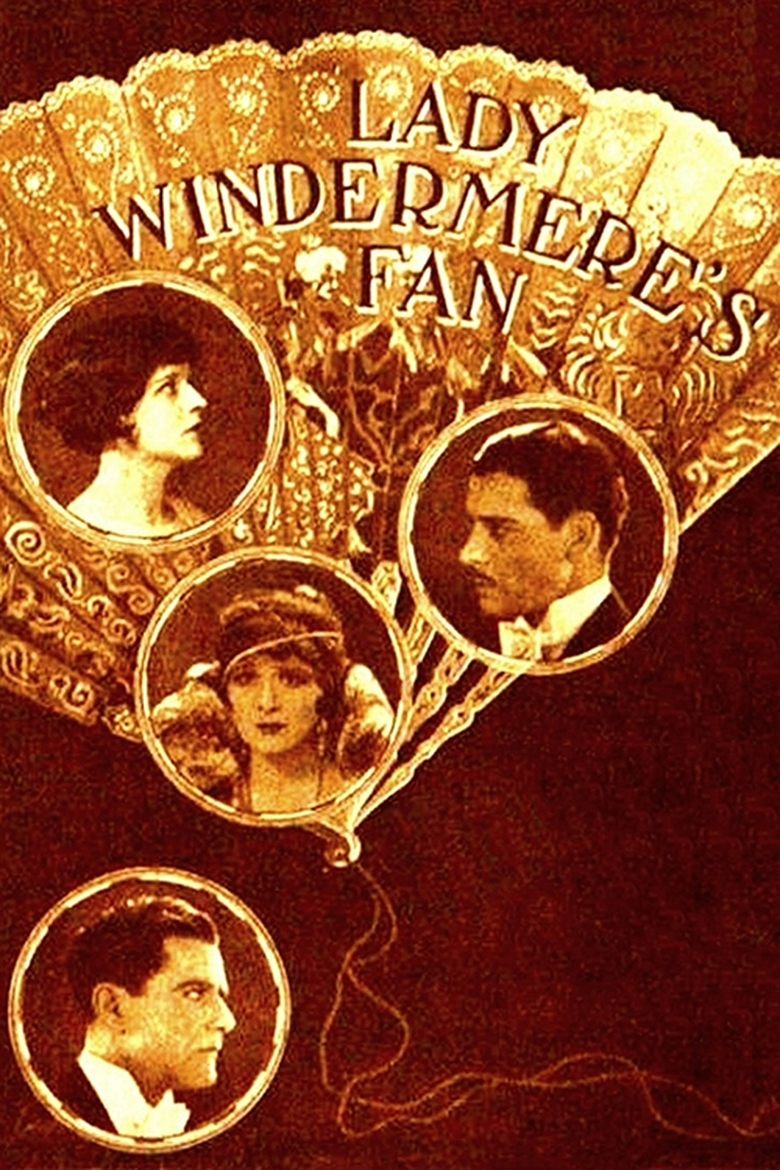
Oscar Wilde's 1892 stage play Lady Windermere's Fan had already lived several theatrical lives before Ernst Lubitsch brought it to the screen for Warner Bros. in 1925. The play, a comedy of manners set in London high society, turns on reputation, rumour and the terrible social machinery that grinds into motion when a wife suspects her husband of infidelity. It is the sort of drawing-room material the Edwardian and late Victorian stage thrived on: polished, pointed, structured around misunderstanding and the anxious preservation of respectability. Adapting it for a silent American audience in the mid-1920s meant stripping out precisely the quality Wilde considered his finest asset, which is to say the dialogue, and that is a tension the film carries from its first reel to its last.
Lubitsch, by 1925, was already a significant figure in Hollywood, having arrived from Germany a few years earlier where he had built his reputation on a run of sophisticated comedies and lavish historical pictures. What came to be known as the "Lubitsch touch" was well established by this point: a preference for implication over statement, for the cut-away or the closed door that tells you everything without showing you anything. Screenwriter Julien Josephson was tasked with translating Wilde's stage architecture into something that could breathe on film, and the resulting script leans on visual storytelling to do the work the intertitles cannot quite manage alone. Lubitsch also served as his own editor on the picture, which means the pacing and rhythm of the cutting reflect his instincts directly rather than a collaborator's interpretation of them. The cinematography was handled by Charles Van Enger, who shoots the society interiors with the kind of crisp, well-lit formality appropriate to the material: bright surfaces, careful compositions, a world that presents itself as orderly even as the story beneath it is quietly unravelling. The score, as with so many silents, would have been supplied live in the original theatrical exhibition, so what a modern viewer hears depends entirely on which accompaniment, if any, their version of the film carries.
The cast is worth a moment's attention. Ronald Colman, who would spend the sound era becoming one of Hollywood's most reliable romantic leads, is here still building his screen persona, his natural elegance sitting comfortably in the film's upper-class milieu. May McAvoy plays Lady Windermere herself, a role that requires the kind of expressive suffering that silent cinema demanded of its heroines and that she handles with considerable skill. Irene Rich, as the figure at the centre of the scandal, brings a more layered quality to proceedings, a character who is simultaneously sympathetic and socially dangerous. Bert Lytell and Edward Martindel round out the principal company, competent and thoroughly in keeping with the film's well-mannered register. As a companion piece from the same mid-1920s moment in silent cinema, I also covered Seven Chances, Buster Keaton's 1925 comedy, which takes a very different approach to what the medium could do that year. And for a sense of how Lubitsch's European contemporaries were working in a broadly similar period, see also Berlin: Symphony of a Great City and The Passion of Joan of Arc, two films that show just how wide the range of ambition and technique was in late silent cinema.
Lady Windermere's Fan struck me as a fairly average silent film, and like a lot of them, it is held back more than anything by its age. It is a story of society misunderstanding and near-scandal, a wife convinced her husband is straying and the fallout that threatens to follow, and there is clearly a sharp sensibility behind it. But at a hundred and one years old, it creaks, and I could not get past how thoroughly of its time it felt.
It is adapted from Oscar Wilde, and you hardly need telling that Wilde was a great writer. The trouble is that his gift was for language, for the perfectly barbed line, and this is a silent film; all that famous wit has to reach you through intertitles rather than from anyone's mouth, which feels a bit like fighting the material with one hand tied. The acting is fine, by the standards of silent cinema, broad and expressive in the usual way, but nothing about it lifts the film beyond the merely competent.
And that is where I land: competent, but no more. Measured against what cinema can do now, it simply does not stand up, and I found not much in it to hold me beyond a mild admiration for the pedigree of the source. Two and a half stars. A perfectly watchable, well-bred silent drama, but one firmly of its moment, and not one I would press on anyone who was not already curious about the era.
Lady Windermere's Fan sits in a category that any honest survey of cinema history has to acknowledge: films that matter more as documents than as experiences, and that ask a modern viewer to do a fair bit of historical imaginative work to meet them halfway. Lubitsch would go on to produce far sharper, more assured comedies once sound gave him back the verbal wit his sensibility required, and it is not difficult to watch this film and feel the constraint. For those already curious about silent Hollywood, or about how prestige source material was handled in the studio system of the period, there is something here worth seeing. For everyone else, it is a polished but unremarkable 89 minutes, well-behaved to the last.
Rating: ★★½ | Year: 1925 | Watched: 2026-10-25
Where to watch
Watch in the UK
Stream: Amazon Prime Video · Amazon Prime Video with Ads
Physical: Amazon UK · Zavvi
Watch in the US
Stream: MGM+ Amazon Channel · Britbox Apple TV channel · MGM Plus Roku Premium Channel
Physical: Amazon US
Affiliate disclosure: Movies With Macca may earn a small commission on purchases or subscriptions started via these links. It costs you nothing extra.


