Berlin: Symphony of a Great City (1927)

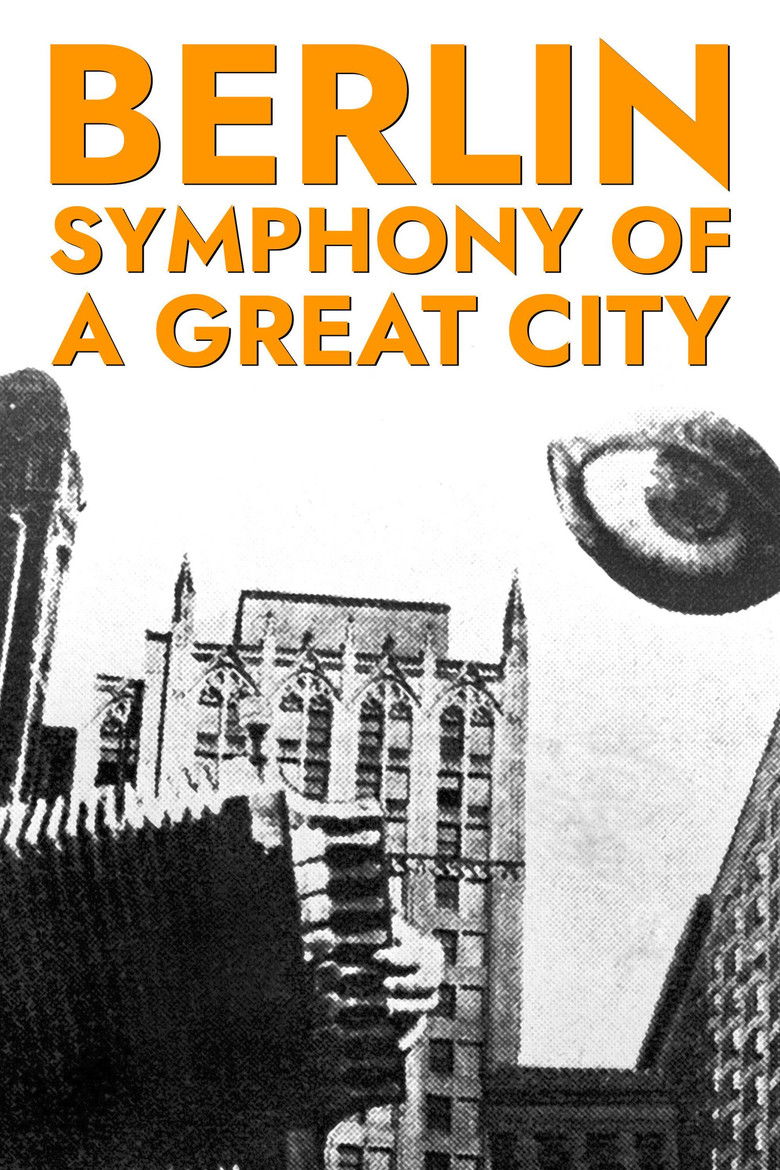
There is a version of this review where I rave about Berlin: Symphony of a Great City. I genuinely wanted to. The idea is irresistible: a film-maker plants himself in a great European city for a single day, dawn to dusk, and simply watches, lets the trains and the factory workers and the shop windows and the nightlife speak for themselves through the grammar of montage alone. As a concept, and as a historical document of Weimar Berlin in 1927, Walter Ruttmann's film is a genuine find. To see that city breathe, in the uneasy calm sitting precisely between two catastrophic wars, is to peer through a window onto a world that would shortly cease to exist. That is not nothing. That is, in fact, quite something.
The trouble is that watching it as a piece of cinema, as an actual experience of sitting in the dark and being gripped, is a rather different proposition.
Here is my problem. Within about five minutes, you have the film completely figured out. Streets wake up, machines clatter, crowds pour through arteries, cafes fill, night falls. Ruttmann arranges it all handsomely, and there are individual images of real beauty and strangeness. But the film does not build. It does not argue. It catalogues. And by around the twenty-minute mark I found myself admiring it the way you admire a very well-organised archive: respectfully, distantly, with one eye on the clock.
What stings a little is that I know the form itself is not the problem, because I have real time for what this film helped to start. Dziga Vertov made Man with a Movie Camera just two years after this, working in the same general tradition, and that film crackles and spits with wit, invention and a fierce political intelligence that keeps it genuinely alive nearly a century on. And then you have something like Koyaanisqatsi, which takes the city symphony into a completely different register and absolutely holds you from beginning to end. Both of those films have a point of view, a restless sense of argument underneath the images. Ruttmann's feels comparatively flat beside them. It is the blueprint rather than the building.
I keep coming back to that comparison because it feels honest rather than unfair. Ruttmann was doing something new, and the film-makers who came after him and did it better owe him a debt. But being first does not automatically mean being best, and there is no particular reason to pretend the film is a richer experience than it actually is. The Passion of Joan of Arc, made the very next year, remains an absolutely shattering piece of work by any measure, not just a historical curiosity. Berlin, for all its genuine interest, does not quite survive the same test.
What it does survive, and what keeps it worth your time in the right context, is its value as a historical record. If Weimar Germany is a period you care about, or if you want to trace the roots of a particular strand of documentary film-making, this is essential viewing and I would not talk you out of it. The score is decent accompaniment, and the images carry a weight that goes beyond cinema. There is something quietly melancholy about watching a city that magnificent going about its ordinary business, completely unaware of what is coming.
But taken purely as a film, measured against what came before it and everything that followed, it is dated and repetitive in ways its finest contemporaries somehow are not. I come away valuing what it represents far more than the hour I actually spent inside it.
Two stars.
Rating: ★★ | Year: 1927 | Watched: 2026-08-31
Where to watch
Watch in the UK
Stream: GuideDoc
Physical: Amazon UK · Zavvi
Watch in the US
Stream: HBO Max Amazon Channel · GuideDoc · IndieFlix · HBO Max
Rent: Amazon Video · Google Play Movies · YouTube · Fandango At Home
Buy: Amazon Video · Google Play Movies · YouTube · Fandango At Home
Physical: Amazon US
Affiliate disclosure: Movies With Macca may earn a small commission on purchases or subscriptions started via these links. It costs you nothing extra.