Johnny Mad Dog (2008)

Share
Johnny Mad Dog (2008)

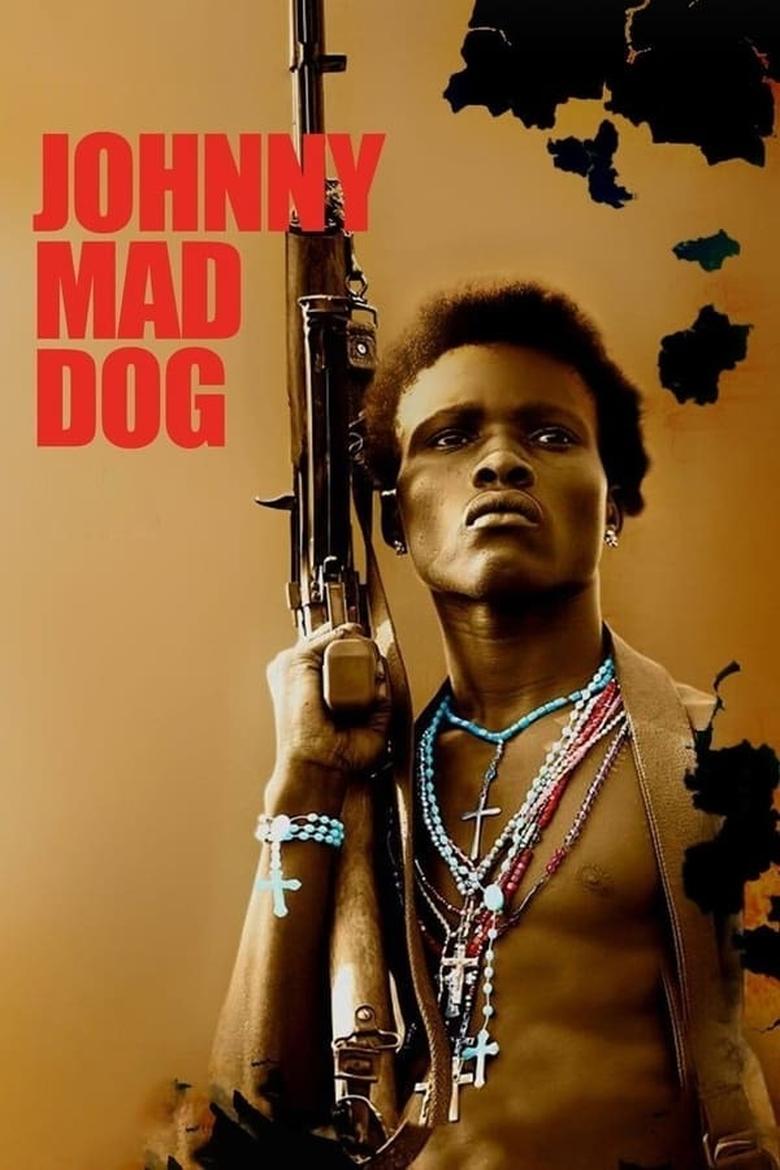
Johnny Mad Dog arrives from a corner of world cinema that rarely gets much attention on mainstream screens: the co-production networks of France and Belgium that, through the 2000s, funded a number of films made on location in sub-Saharan Africa with non-professional casts and limited budgets. Released in 2008, it was written and directed by Jean-Stéphane Sauvaire, a French filmmaker who had previously worked in documentary and short-form work before making this his debut feature. The film is adapted from Emmanuel Dongala's novel of the same name, published in 2002, a book written by a Congolese-American author drawing on the real devastation of West African civil conflicts. Sauvaire and his producing partners at Lunar Films, Explicit Films and MNP Entreprise chose to set the story during the Second Liberian Civil War, a conflict that ran from 1999 to 2003 and involved the widespread, systematic use of children as combatants by various armed factions. That context is not incidental to the film. It is the film.

The production was shot on location in Liberia itself, which was a considerable logistical and ethical undertaking given how recently the country had emerged from the violence the story depicts. Sauvaire cast Christopher Minie, Daisy Victoria Vandy, Dagbeh Tweh, Barry Chernoh and Cornelius Keagon in the principal roles, none of them professional actors in any conventional sense. Some cast members, by various accounts surrounding the film's release, had direct personal experience of the conflict being portrayed. That choice to work with people who carried genuine proximity to the material rather than trained performers is central to everything the film attempts, and it set the production apart from the more sanitised dramatisations of African conflict that occasionally surface through more conventional studio routes. The film had a notable festival life on release, screening in the Directors' Fortnight section at Cannes in 2008, which gave it the kind of European art-house visibility that a film this raw would struggle to find through other channels.

Visually, the film has the texture you might expect from its circumstances: handheld, close, often uncomfortably immediate in the way it places you alongside its young protagonists rather than above them. Without a named cinematographer attached in the available production record, it is harder to credit a specific eye behind the camera, but the images carry a documentary restlessness, the sort of framing that feels less like composed shots than like a camera trying to keep up with something genuinely unpredictable. The colour palette leans towards the bleached-out heat of West African daylight and the murk of interiors that have been looted of everything useful. There is no named composer on the production either, and the film leans on ambient sound and found noise rather than a conventional score, which suits its register. Silence and sudden eruptions of sound do a lot of the work that music might otherwise handle. For those interested in how conflict and childhood interact on screen, it makes for a worthwhile comparison with the kind of witness-driven documentary filmmaking Macca explored in The Missing Picture (2013) and Wall of Peace (2023), two films that similarly ask what it means to look honestly at violence without making it palatable.

There is also a useful comparison to be drawn with Paranoid Park (2007), Gus Van Sant's portrait of a teenager existing in a kind of moral and emotional suspension, though Sauvaire's approach is far less meditative and considerably more confrontational. Where Van Sant holds adolescence at an aesthetic distance, Johnny Mad Dog refuses the luxury of distance altogether.

The image that stays with me from Johnny Mad Dog is the dressing-up: boys of ten to fifteen going into battle in wedding dresses, wigs and angel wings, whatever they have managed to loot, each answering to a fearsome nom de guerre.

Jean-Stéphane Sauvaire's 2008 film, adapted from Emmanuel Dongala's novel and set amid the Second Liberian Civil War, follows a unit of these children as they shoot and pillage their way toward the capital. There is something horribly close to Peter Pan's lost boys about them, a gang of kids playing the most lethal game imaginable with no adult coming to call time on it, and that surreal edge is exactly what lodges the film in your head.

What gives it such an awful charge is how real it all feels. Sauvaire shot on location in Liberia with a cast of nonprofessionals, some of them former child soldiers, and you can sense that lived experience in every frame; nothing here is prettied up or held at a safe distance. It is a raw, harrowing watch, and it earns that rawness honestly rather than reaching for cheap shock. The dress-up only sharpens the horror, a constant reminder that these killers are, underneath the guns and the war paint, still children.

I'll be straight about the limits, though. This is plainly a film made on very little, ragged around the edges in ways that sometimes work against it, and across its length it can feel one-note, hammering the same pitch of chaos without much modulation or shape. It plays more as an immersion than a story, and a touch more light and shade would have let it land harder still. Even so, what Sauvaire captures does not leave you when the credits roll, and as an unflinching act of witness it is well worth seeking out, which lands it at three and a half stars for me.

Johnny Mad Dog sits in a particular category of film that is genuinely difficult to recommend in the usual sense of the word, because what it offers is not pleasure or even catharsis so much as testimony. It is the kind of work that justifies the existence of international co-production funding precisely because no commercial logic would have produced it. Sauvaire's willingness to travel to the source, to cast from lived experience rather than from an acting school, and to resist the narrative tidiness that might have made the film easier to sit through, gives it a weight that more polished productions about comparable subjects rarely achieve. At 97 minutes it does not outstay its welcome, even when it feels relentless. Films like this are not made to make you comfortable. They are made so that something true gets seen, and this one earns that ambition honestly enough that the ragged edges feel like part of the point rather than a failure of craft. It stays with you, which is perhaps the only thing that really matters.


Rating: ★★★½ | Year: 2008 | Watched: 2026-08-13

View on Letterboxd →


Trailer

▶ Watch the official trailer for Johnny Mad Dog (2008) on YouTube


Where to watch

Watch in the UK
Rent:
Apple TV Store
Buy: Apple TV Store
Physical: Amazon UK · Zavvi

Watch in the US
Stream:
Philo
Physical: Amazon US

Affiliate disclosure: Movies With Macca may earn a small commission on purchases or subscriptions started via these links. It costs you nothing extra.
Film images and data courtesy of TMDB. This product uses the TMDB API but is not endorsed or certified by TMDB.