Get Carter (1971)

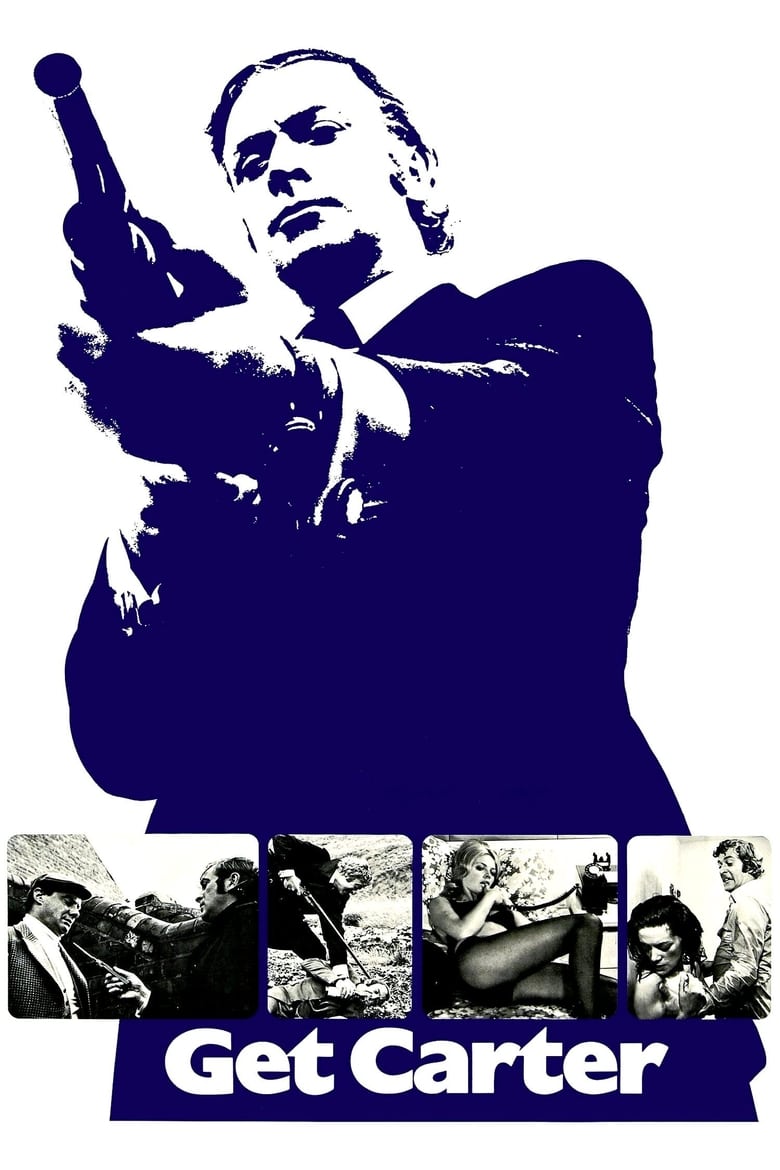
There is a particular strain of British crime film that emerged at the turn of the 1970s, one that wanted nothing to do with the Swinging Sixties gloss that had preceded it. Where films like Goldfinger had offered a fantasy Britain of tailored suits and supervillain lairs, the mood had curdled considerably by 1971. Get Carter arrived into that changed atmosphere like a slap. Adapted by director Mike Hodges from Ted Lewis's 1970 novel Jack's Return Home, it transplanted the story from the novel's Lincolnshire coast to the industrial North East, dressing it in the concrete reality of Newcastle's terraced streets, working men's clubs and grey seafront. The result is one of those rare genre pictures that feels less like a product of its moment than a document of it, a film that caught something raw and unglamorous about British working-class life and built a crime story around it without flinching.
Hodges was making his feature debut here, moving across from television work, and the confidence he brings to the material is striking for a first film. Metro-Goldwyn-Mayer's British arm backed the production, though the budget was modest enough that the location work in Newcastle was genuinely scrappy and immediate rather than dressed for the camera. The screenplay, written by Hodges himself from Lewis's source material, keeps the moral landscape deliberately murky: there is no clean line between the lawful and the criminal, only varying degrees of complicity. The supporting cast reinforces that texture. Ian Hendry plays against Caine with a coiled, resentful energy, John Osborne (the playwright, here making a rare acting appearance) brings an unsettling stillness to his role as a crime boss, and Tony Beckley contributes a memorably unpleasant turn as one of Carter's Newcastle adversaries. Britt Ekland, though her screen time is limited, features in what became one of the film's more notorious sequences. For a companion piece in Michael Caine's 1970s work, see also The Quiet American, where an older Caine brings a similarly cold control to a morally ambiguous figure, albeit in a very different register.
Cinematographer Wolfgang Suschitzky, a Vienna-born photographer who had built a distinguished career in British documentary and drama, shoots Newcastle as a place of functional ugliness, all overcast skies, brutalist multi-storey car parks and coal-dark rivers. There is no attempt to beautify any of it. The frame composition is precise without ever feeling fussy, and the location photography has a newsreel quality that keeps the violence grounded rather than stylised. Alongside that, Roy Budd's score is one of the most distinctive pieces of film music British cinema produced in the decade: the opening theme, built around a spare jazz piano motif, is cool and percussive, the kind of music that sounds exactly like the film looks. Editor John Trumper keeps the pacing lean, cutting with a discipline that respects the story's deliberate accumulation of detail without ever letting scenes outstay their welcome. The overall effect, picture and sound working together, is a film with a texture as specific as a particular town on a particular grey afternoon.
I could not shake the thought, watching Get Carter, that this is the film that must have inspired GTA London on the old PlayStation. That grimy, grey, early-seventies British underworld of back-street pubs, hard men and seaside towns gone to seed is all here, and it carries the same lived-in menace the game traded on years later. It is a gritty, no-nonsense slice of British crime cinema, and a very good one.
The story is long and distinctly complicated, a revenge tale of a London gangster heading north to Newcastle to dig into his brother's death, and there were moments where I had to work to keep track of who was doing what to whom. But the payoff is well worth the effort, and it earns its ending. Holding the whole thing together is Michael Caine, who is excellent, playing Jack Carter as a cold, controlled, altogether terrifying presence. It is one of his finest roles, and he carries the film with ease.
What strikes you most is how unlike the films of its time it is. Where a lot of early-seventies British cinema still felt buttoned-up and polite, Get Carter is startlingly violent and gritty, with a hard, unsentimental edge that must have been bracing in 1971. Remarkably, it has barely dated. The violence still lands, the atmosphere still bites, and it stands up today far better than most films of its vintage.
More than anything, it plays like the gritty cockney answer to Bullitt. Where that film gave San Francisco its cool, McQueen-in-a-Mustang swagger, this gives you the rain-soaked British equivalent, all cheap suits, menace and moral murk, and I rate the two about level. Three and a half stars, a lean, nasty and hugely influential British crime classic that has aged a great deal better than it has any right to.
Get Carter has had an interesting afterlife. It was poorly received in the United States on release, dismissed in some quarters as merely brutal, but its reputation in Britain grew steadily across the 1970s and 1980s until it became something close to canonical. A Hollywood remake arrived in 2000 with Sylvester Stallone, and its polished but unremarkable existence served mainly to confirm what the original had always known: that the film's power is inseparable from its setting, its period and the particular shabbiness Hodges and Suschitzky captured on location. I also reviewed Network, another film from the same era that shares this one's refusal to soften its edges or reassure its audience, and the comparison is an interesting one. Get Carter remains a film that rewards returning to, not because it is comfortable viewing, but precisely because it is not. Some films age by becoming period pieces. This one aged by becoming a standard.
Rating: ★★★½ | Year: 1971 | Watched: 2026-10-08
Trailer
▶ Watch the official trailer for Get Carter (1971) on YouTube
Where to watch
Watch in the UK
Rent: Apple TV Store · Rakuten TV · Amazon Video · Google Play Movies
Buy: Apple TV Store · Rakuten TV · Amazon Video · Google Play Movies
Physical: Amazon UK · Zavvi
Watch in the US
Rent: Amazon Video · Apple TV Store · Google Play Movies · YouTube
Buy: Amazon Video · Apple TV Store · Google Play Movies · YouTube
Physical: Amazon US
Affiliate disclosure: Movies With Macca may earn a small commission on purchases or subscriptions started via these links. It costs you nothing extra.