Germany, Year Zero (1948)

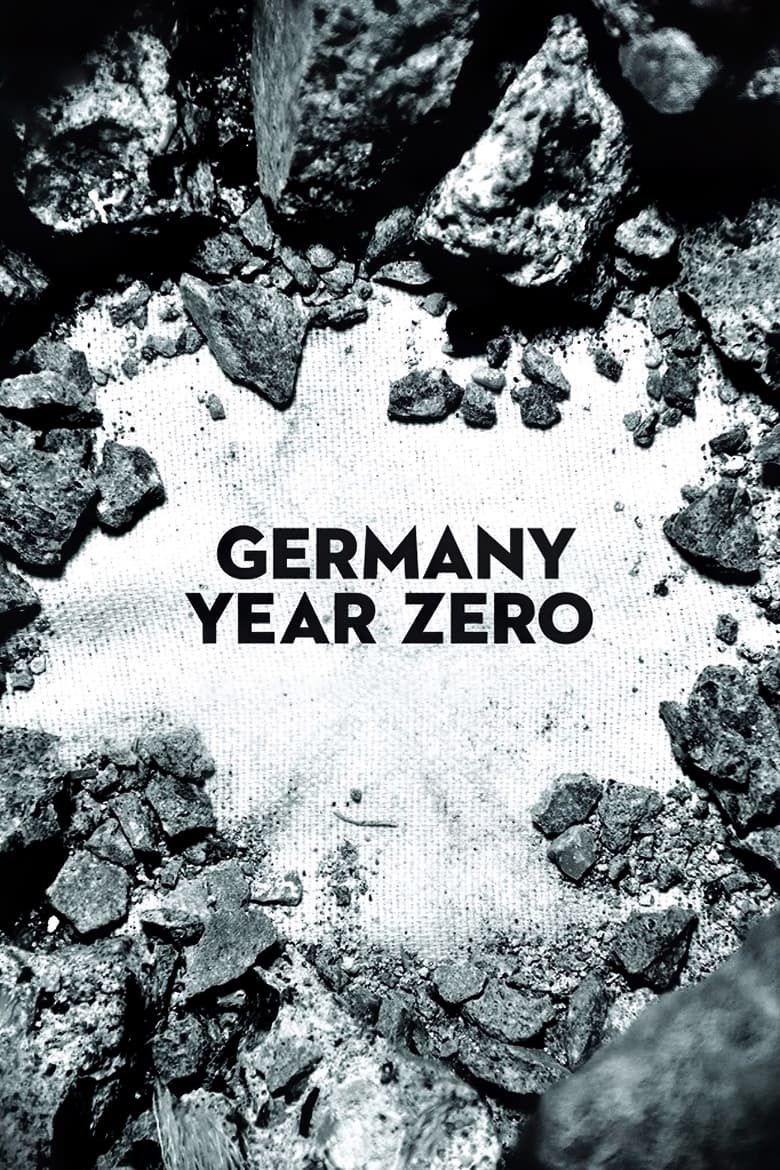
Sometimes the best way into a director's work is through a side door. A documentary about Roberto Rossellini sent me digging back into his films, and that led me straight to Germany, Year Zero. I'm glad I watched it. I'm also not sure I'd ever want to sit through it again.
What strikes you immediately is how little this feels like a feature film. Rossellini drops you into the bombed-out streets of post-war Berlin with such unflinching, documentary-like precision that I genuinely had to check my notes to remind myself it's a work of neorealist fiction. The rubble is real. The hunger on people's faces looks real. The city itself becomes a kind of co-star, a portrait of total collapse that no studio backlot could have faked. And crucially, Rossellini isn't interested in the grand geopolitical aftermath of the war. He's interested in the children left scrabbling around in the wreckage. That's a perspective mainstream cinema still largely sidesteps, and fair play to him for planting the camera there.
The young actor Edmund Moeschke, playing the film's protagonist, gives a performance that feels less like acting and more like raw, unmediated survival. There's no Hollywood sheen here, no musical cues nudging you toward the correct emotion. Rossellini strips all of that away, and what's left is genuinely unsettling: a boy navigating poverty, moral corruption and a shattered adult world that has handed him nothing worth inheriting. The question the film keeps circling, quietly, is a devastating one. The Nazi regime was monstrous, full stop. But what do you do with the innocent children left standing in the ruins of it? It's a question mainstream war cinema still doesn't ask nearly enough.
Here's where my admiration starts to curdle a bit, though. For all the bravery of the filmmaking, the narrative momentum is practically non-existent. What you're watching often feels less like a cohesive story and more like a series of grim vignettes strung together by geography and mood. I found myself admiring the intent while struggling to stay genuinely engaged. That's a frustrating place to be.
There's a deliberate emotional distance in Rossellini's direction that I suspect is entirely intentional, a kind of objective clinical gaze on human desperation. But intention and effect aren't always the same thing. The film shows you a boy trying to survive in a broken world without ever really inviting you into his inner life. We observe him. We rarely feel with him. For a modern viewer, that distance can tip from austere into cold, and a film that's already light on narrative drive can ill afford to also feel remote.
It reminded me, in some ways, of the experience I had watching Turtles Can Fly, another film that plants children at the centre of a world destroyed by adults and political violence. That film also makes for uncomfortable, demanding viewing. But it pulls you closer. Germany, Year Zero keeps you at arm's length throughout, and by the time the runtime has stretched on, it begins to feel like a bit of a slog if I'm being honest.
None of that makes it unimportant. As a historical document, as an act of bearing witness to a demographic that history conveniently forgets, it's striking and vital. The locations alone carry a weight that no staged production could manufacture. Rossellini clearly felt a moral obligation to point the camera at this particular corner of the ruins, and that obligation is honourable.
But there's a difference between a film that matters and a film that works. Germany, Year Zero matters, without question. Whether it works, as a piece of storytelling that holds you across its runtime, is another question, and for me the answer is only just about yes. Two and a half stars. Respect it. Admire the impulse behind it. Just don't expect it to be an easy or especially gripping watch.
Rating: ★★½ | Year: 1948 | Watched: 2026-07-17
Where to watch
Watch in the UK
Stream: BFI Player · BFI Player Amazon Channel · BFI Player Apple TV Channel
Physical: Amazon UK · Zavvi
Watch in the US
Stream: HBO Max Amazon Channel · Criterion Channel · HBO Max
Physical: Amazon US
Affiliate disclosure: Movies With Macca may earn a small commission on purchases or subscriptions started via these links. It costs you nothing extra.