From Up on Poppy Hill (2011)


Yokohama, 1963. Japan is preparing to host the following year's Olympic Games, a moment freighted with national pride and a quiet, collective desire to draw a line under the devastation of the Second World War. It is into this particular atmosphere of forward momentum and unresolved memory that From Up on Poppy Hill (2011) plants itself: a high school romance between two teenagers, Umi and Shun, that unfolds against the backdrop of student activism, the possible demolition of a beloved school clubhouse, and a family secret that neither of them saw coming. The film is, in the most straightforward sense, a coming-of-age story set at a hinge point in Japanese history, and that social and political context sits just behind the personal drama, giving it a texture it might otherwise lack.
The film was directed by Goro Miyazaki, whose debut feature, Tales from Earthsea (2006), received a mixed reception, making Poppy Hill something of a second chance to establish himself as a Ghibli director in his own right rather than simply the son of the studio's founding figurehead. The screenplay was written by Keiko Niwa and Hayao Miyazaki himself, adapted from a manga by Tetsurô Sayama and Chizuru Takahashi that ran in the early 1980s. The father-and-son dynamic behind the camera adds a layer of biographical interest that is hard to ignore entirely, though the film makes no explicit play of it. Production was handled by Studio Ghibli alongside Japanese broadcasters and advertising partners including Nippon Television Network Corporation, Mitsubishi, Hakuhodo DY Media Partners, and dentsu, a consortium that reflects the institutional weight the studio carries in Japan. The Japanese voice cast is led by Masami Nagasawa as Umi and Junichi Okada as Shun, with Keiko Takeshita, Yuriko Ishida, and Rumi Hiiragi (familiar to Ghibli audiences from Spirited Away) in supporting roles. Nagasawa and Okada bring a warm, unhurried quality to their characters, which suits the film's pacing rather well.
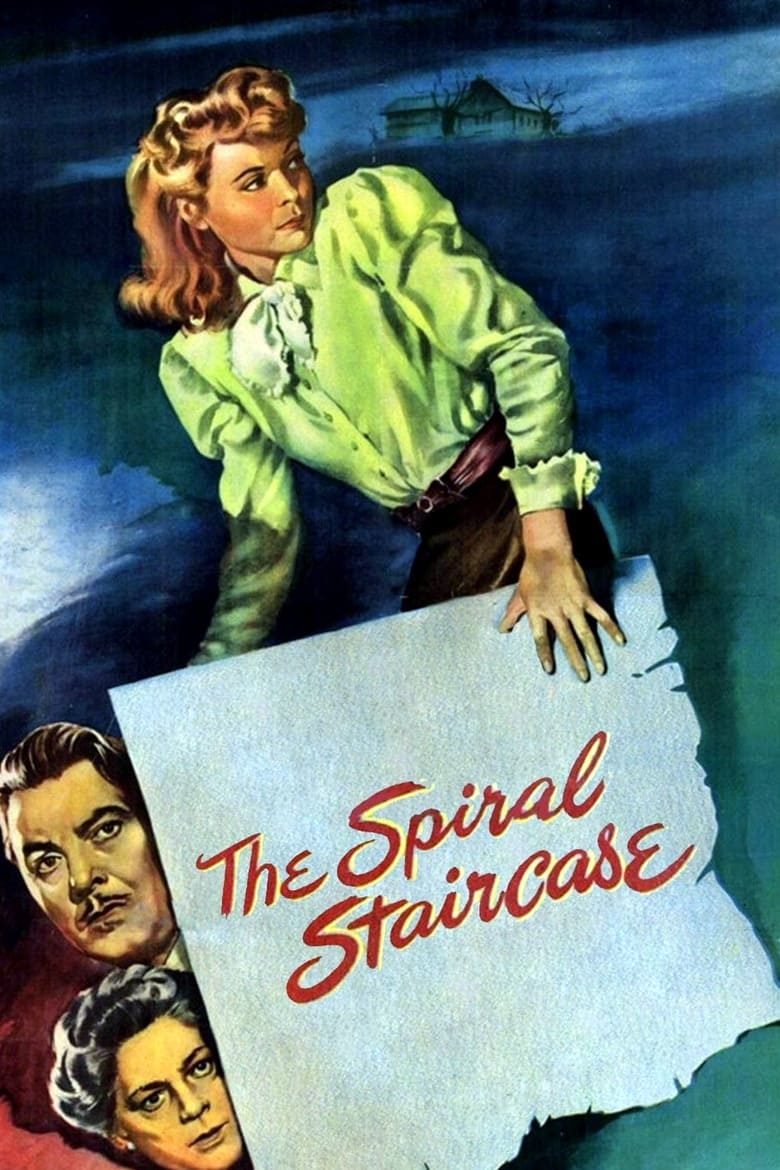
Cinematographer Atsushi Okui, a long-standing Ghibli collaborator whose credits stretch back to Princess Mononoke and beyond, brings a characteristic quality to the imagery here: clean, sun-warmed compositions in which domestic spaces and harbour views alike feel simultaneously idealised and lived-in. There is a recurring visual motif of signal flags raised each morning above the sea, a small act of remembrance that the film returns to with quiet persistence. The editing, handled by Takeshi Seyama, keeps things at a gentle, unhurried tempo, which either reads as pleasingly contemplative or a touch slack depending on your patience for understatement. The score was composed jointly by Satoshi Takebe and Hachidai Nakamura, and it leans into a period-inflected warmth, folk melodies and period pop sitting alongside more conventionally orchestral passages in a way that anchors the film firmly in its early-1960s setting. I also reviewed Ryuichi Sakamoto: CODA, which, if you have any interest in how music and Japanese cultural identity intersect, makes for an interesting companion piece. For a broader look at how Japanese animation handles the turbulent energies of youth and history, see also my thoughts on Neon Genesis Evangelion: The End of Evangelion, though that is a considerably more abrasive experience than anything Poppy Hill has in mind.
This is Studio Ghibli doing the thing it does better than anyone, and on that level alone it is a wonder to look at.
The animation and the music are sublime, and I do not think that is overstating it. Some of the most beautiful hand-drawn art you will ever see on a screen carries the Ghibli name, and the studio's very best, Spirited Away for me, sits among the finest animated films ever made. Poppy Hill looks and sounds every bit as lovely as you would hope.
The drawback is what sits underneath all that beauty. This is a sweet, touching romance, but it is a fairly by-the-numbers one, and it feels a touch more cutesy and softened than some of the studio's older, weightier features. I enjoyed spending time in it, yet I was never especially gripped by where it was heading, largely because I could see where it was heading from some way off.
Here is the test for me: strip away the animation and imagine this exact story told in live action, and I suspect I would have come away calling it decidedly average. That it works as well as it does is almost entirely down to the craft wrapped around it. So this is nowhere near the best of Ghibli, and I would not pretend otherwise. But even middling Ghibli is good, better than most studios manage at full stretch, and that counts for a great deal. Three stars.
From Up on Poppy Hill is the kind of film that prompts genuine debate about how much a studio's craft identity can carry a story that might not fully earn its emotional weight on its own terms. It is polished but unremarkable in its plotting, generous in its atmosphere, and a reasonably honest portrait of a Japan in transition, even if that historical texture never quite bites down. If you enjoy animated drama from outside the Disney and Pixar orbit, I covered The Princess and the Frog and A Town Called Panic, both of which approach the form from very different angles and are worth a look for the comparison. Ghibli, even at a quieter register, has a way of making you feel you have spent your time well. Whether that is quite enough is the question this one leaves hanging in the Yokohama air.
Rating: ★★★ | Year: 2011 | Watched: 2026-10-02
Trailer
▶ Watch the official trailer for From Up on Poppy Hill (2011) on YouTube
Where to watch
Watch in the UK
Stream: Netflix · Netflix Kids · Netflix Standard with Ads
Physical: Amazon UK · Zavvi
Watch in the US
Stream: HBO Max Amazon Channel · HBO Max
Rent: Amazon Video · Apple TV Store · Google Play Movies · YouTube
Buy: Amazon Video · Apple TV Store · Google Play Movies · YouTube
Physical: Amazon US
Affiliate disclosure: Movies With Macca may earn a small commission on purchases or subscriptions started via these links. It costs you nothing extra.