
Ryuichi Sakamoto: CODA (2017)

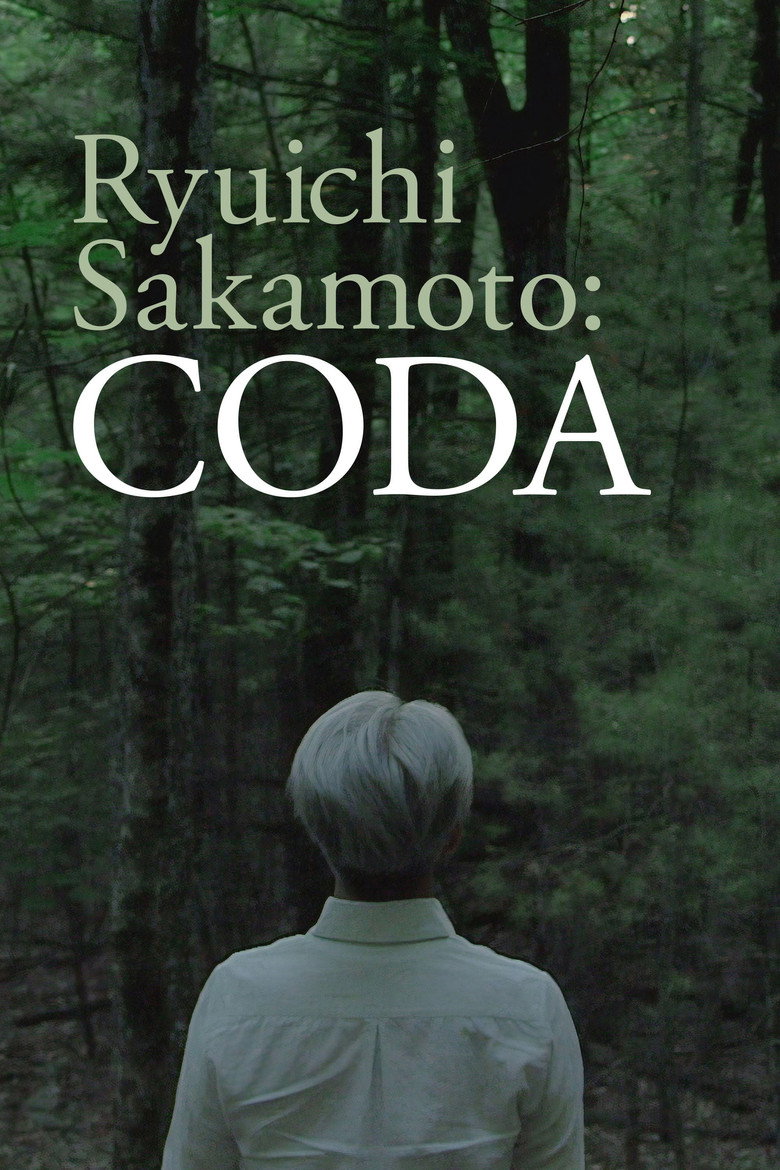
Ryuichi Sakamoto is one of those rare figures whose career resists easy summary. A founding member of the Yellow Magic Orchestra, the pioneering electronic group that shaped Japanese pop and left fingerprints all over Western synth music in the late 1970s and early 1980s, he went on to become one of cinema's most distinctive composers, winning an Academy Award for Merry Christmas, Mr. Lawrence, contributing to Bernardo Bertolucci's The Last Emperor and collaborating repeatedly with directors from Nagisa Oshima to Alejandro González Iñárritu. He also remained, throughout, a committed solo artist whose work moved restlessly between ambient electronics, contemporary classical, and something that sometimes defies category altogether. Ryuichi Sakamoto: CODA, released in 2017, documents a specific and loaded period in his life: the years following the 2011 Tōhoku earthquake and tsunami, which intensified his long-running anti-nuclear activism, and the 2014 throat cancer diagnosis that forced him to reckon, perhaps for the first time, with his own limits as a working artist.
The film is a debut feature from director and writer Stephen Nomura Schible, an American filmmaker who had previously worked as a producer on music documentaries, and the production carries the focused, unhurried quality of someone genuinely committed to understanding rather than celebrating his subject. Made with the cooperation of Sakamoto himself, it is the kind of access documentary that lives or dies by what the camera is actually permitted to witness, and Schible spent the better part of five years following the composer. The result runs exactly 100 minutes and was produced through Borderland Media and Cineric Creative, placing it in the tradition of American independent documentary-making even as its subject and much of its texture feel distinctly Japanese. Among those who appear on screen alongside Sakamoto are Leonardo DiCaprio, David Bowie, John Malkovich and Debra Winger, figures whose connections to him range from screen collaborations to mutual admiration, and their presence is woven in contextually rather than used as marquee decoration.
The film was shot by two cinematographers, Neo Sora and Tom Richmond, and the visual approach they arrive at together is worth noting. There is a lot of quiet, patient observation: Sakamoto at a piano, Sakamoto in nature, Sakamoto in the kind of institutional spaces that surround medical treatment. The images favour texture over spectacle, finding beauty in mundane surfaces and natural environments in a way that mirrors Sakamoto's own creative process, which has long involved treating the sounds of the world as raw material. Sora, who is also a filmmaker in his own right and is Sakamoto's son, brings an evident intimacy to the closer material that no outside eye could quite replicate. The score is, as you might expect, Sakamoto's own work, which creates an unusual doubling: the film is documenting a composer while being wrapped in his music, so the two layers are in constant, quiet conversation. Editors Yūji Ōshige and Hisayo Kushida shape the material into something that moves more like a piece of music than a conventional biography, building around recurring images and ideas rather than a strict chronology. One particularly noted creative choice, which drew attention during the film's festival run, is a sequence involving a piano retrieved from the tsunami wreckage, an object Sakamoto treats as an instrument rather than a relic. It is the kind of specific, strange detail that tells you more about an artist than any amount of talking-head testimony. For a companion piece on another documentary that finds a filmmaker willing to sit patiently inside a singular personality, see also The White Diamond (2004). And since Sakamoto's screen work brought him into orbit with DiCaprio's generation of Hollywood, I also reviewed Gangs of New York (2002), which offers a different angle on that world.
It will surprise nobody to learn that a film about Ryuichi Sakamoto sounds beautiful, and Coda duly does.
What lifts it beyond a lovely soundtrack, though, is how close it lets you get to the man himself, a restless genius forever chasing sounds nobody else would think to look for. Stephen Nomura Schible's documentary follows the great Japanese composer over several years, through his history and his working methods, and into a stretch of his life shadowed by his battle with cancer.
The best of it, for me, is watching him work. He is the sort of artist who will wander out into a forest with a microphone, or coax music from a piano wrecked by the tsunami, and there is something moving in seeing where a mind like that goes looking for beauty. His illness lends the whole thing an added weight, too. You feel the urgency of a man who knows his time to make things may be running short, and the footage of him carrying on regardless is deeply affecting.
It is, I will grant, a niche piece. If you have no particular interest in Sakamoto, or in how music actually gets made, I suspect it will drift straight past you, and I would not press it on the average viewer after a Saturday-night watch. But as a portrait of a singular artist, and simply as a way to spend an hour and a half learning about a remarkable life, I found it consistently rewarding. Three and a half stars, a beautiful, thoughtful documentary for the curious, if not quite for everyone.
Ryuichi Sakamoto: CODA sits comfortably in a small and honourable tradition of music documentaries that treat their subject as an artist first and a celebrity second, films more interested in process than in mythology. It will find its audience among people already disposed to care about Sakamoto's work, or about the relationship between sound, silence and the natural world, and that audience will likely find it generous and absorbing. Those coming cold may find the pacing demands a certain patience. What lingers, though, is the portrait of a man who kept working not because the work was easy but because it was the only honest response he had to being alive. I also covered Five Dedicated to Ozu (2003), another film that finds formal beauty in sustained, quiet attention, which makes for an interesting double bill if you are in that particular mood. For a very different kind of creative portrait, my thoughts on Neon Genesis Evangelion: The End of Evangelion (1997) touch on another corner of Japanese artistic ambition from roughly the same era. A film that earns its place quietly, which is, come to think of it, exactly how Sakamoto would probably have wanted it.
Rating: ★★★½ | Year: 2017 | Watched: 2026-09-23
Trailer
▶ Watch the official trailer for Ryuichi Sakamoto: CODA (2017) on YouTube
Where to watch
Watch in the UK
Rent: Apple TV Store · Rakuten TV · Amazon Video · Google Play Movies
Buy: Apple TV Store · Rakuten TV · Amazon Video · Google Play Movies
Physical: Amazon UK · Zavvi
Watch in the US
Stream: MUBI · MUBI Amazon Channel
Rent: Amazon Video · Apple TV Store · Fandango At Home
Buy: Amazon Video · Apple TV Store · Fandango At Home
Physical: Amazon US
Affiliate disclosure: Movies With Macca may earn a small commission on purchases or subscriptions started via these links. It costs you nothing extra.



