Forbidden Games (1952)

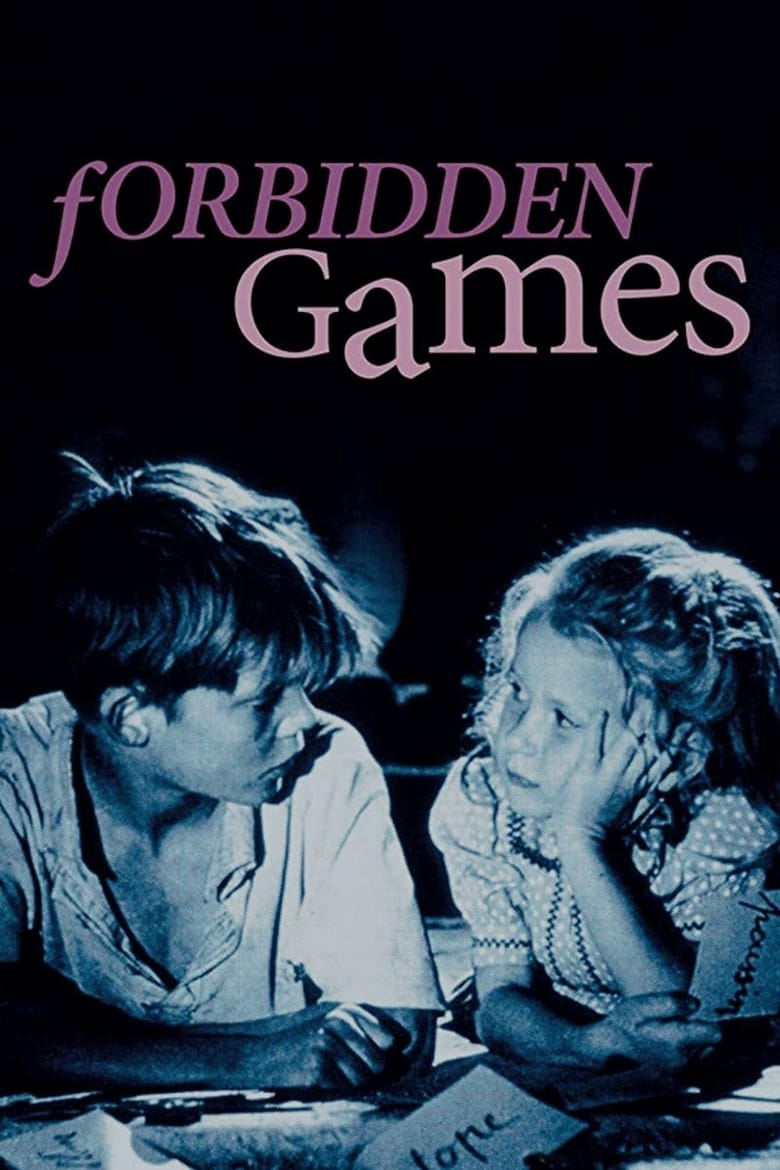
René Clément's Forbidden Games arrived in 1952, barely seven years after the guns fell silent across Europe, and the wound it examines had barely begun to close. Produced by Silver Films and released to immediate international attention, the film won the BAFTA for Best Film and the Honorary Foreign Language Film Oscar at the 1953 Academy Awards ceremony, as well as taking the Grand Prize at Venice in 1952. That roll-call of recognition tells you something about how the film landed at the time: here was French cinema saying something blunt and necessary about what the war had done, not to soldiers or statesmen, but to children. For a companion piece from the same mid-century moment in European cinema, see also Journey to Italy, another film from that era grappling with lives caught in the long aftermath of catastrophe, and I also wrote about Paths of Glory, Kubrick's scorching indictment of the machinery of war, which shares this film's refusal to dress conflict up in anything resembling glory.
The screenplay was written by Clément alongside François Boyer, adapting Boyer's own novel. Clément was, by this point, an established figure in French cinema, already known for La Bataille du Rail (1946), a film about the French Resistance that he had shot with documentary rigour in the immediate aftermath of liberation. That background matters here. He brought the same instinct for observed, grounded realism to Forbidden Games, trusting the camera to sit close to its subjects rather than to arrange them for effect. The film was made on a modest budget, largely on location in rural France, which gives it a texture that studio production simply could not have manufactured: the mud and livestock and rough interiors of a farming family's wartime existence feel genuinely worn-in rather than dressed.
At the centre of the film are Brigitte Fossey and Georges Poujouly, playing Paulette and Michel respectively. Fossey was five years old during filming, Poujouly around eleven, and both give performances of an unsettling naturalness. Child performances this unguarded are rare in any era, and Clément's handling of them is careful and patient. Philippe de Chérisey, Laurence Badie and Suzanne Courtal fill out the peasant family that takes Paulette in, and they carry the comedy and the tensions of rural domestic life with an ease that keeps the film grounded whenever it risks tipping into sentimentality. The casting, across the board, feels like observation rather than construction.
Robert Juillard's cinematography leans into natural light and open landscape, with wide shots of the French countryside that establish scale and isolation before moving in close to the children's faces when the emotional register demands it. There is a quiet contrast at work throughout: the vastness of war set against the very small, very private world that two children are trying to build inside it. The score by Narciso Yepes, built almost entirely around a solo classical guitar, is spare and a little melancholy, the simplicity of the instrument carrying its own kind of irony against the weight of the subject matter. Yepes had not yet established the international reputation he would later earn, and Forbidden Games helped change that. The guitar theme became genuinely iconic, one of those rare cases where a score and a film become so associated that it is difficult to hear one without thinking of the other.
Forbidden Games took me completely by surprise. I came to it with no great expectations and found a powerful anti-war film, and a deeply affecting one at that. What strikes you first is how close to the wound it was made: this came just seven years after the end of the Second World War, when the devastation it depicts was still raw and recent for almost everyone involved in making it.
That proximity gives it a weight you cannot fake. The two child leads would have been too young to carry memories of the war, but the adults around them, cast and crew alike, would have lived through it directly, and you feel that lived experience in every frame. I understand some actual wartime footage is woven in, too, and whether or not that is so, the opening, a Nazi air raid that orphans the young heroine, is hard-hitting and unflinching in a way that sets the tone for everything after.
What lingers, though, is the relationship at its heart. The bond between Paulette, the orphaned city girl, and Michel, the young peasant boy who takes her in, is beautiful and touching, two children trying to make sense of death by building small rituals and graves of their own. It is tender and sad and, in its quiet way, devastating. Three and a half stars. A moving, surprising and understated piece of French cinema that has stayed with me far longer than I expected it to.
Forbidden Games sits in a particular tradition of European cinema that trusts its audience to sit with discomfort rather than offering resolution. It does not tell you how to feel so much as it puts you in the room and lets the feeling arrive on its own. At eighty-seven minutes it is precise and unpretentious, a film that earns its reputation not through spectacle but through patience and honesty. Whether it entirely holds together as a piece is something you will find addressed in the review above, but its place in the canon of post-war European cinema is not really in question. Some films are best encountered without too much foreknowledge, and this is very much one of them. Go in quietly, and let it find you.
Rating: ★★★½ | Year: 1952 | Watched: 2026-10-24
Trailer
▶ Watch the official trailer for Forbidden Games (1952) on YouTube
Where to watch
Watch in the UK
Stream: Studiocanal Presents Amazon Channel
Physical: Amazon UK · Zavvi
Watch in the US
Stream: Darkroom
Physical: Amazon US
Affiliate disclosure: Movies With Macca may earn a small commission on purchases or subscriptions started via these links. It costs you nothing extra.