Max Vanderspuy on Fishbrain, body horror and turning his award-winning short into a feature

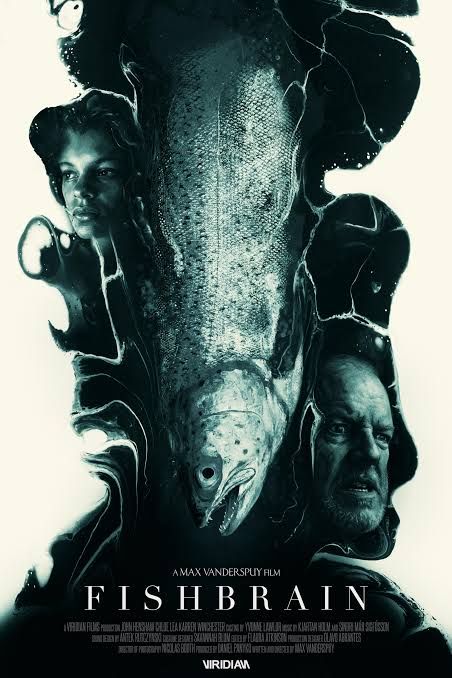
Of all the shorts I caught around this year's BFI London Film Festival, Max Vanderspuy's Fishbrain was the one that lingered longest, a briny, tactile piece of body horror whose practical effects had me thinking of An American Werewolf in London, and which I gave three and a half stars. Beneath the spectacle sits something far more tender and uncomfortable, a study of love, duty and resentment curdling in a decaying coastal house. The film took the Best Production Design prize and sold out its LFF premiere, and Max is now developing it into his debut feature, so I was keen to ask him how it all came together. He was generous enough to answer my questions in real depth, and my thanks go to him for the time.
In conversation with Max Vanderspuy
Body horror this ambitious is rare in a short film. What drew you to the genre for Fishbrain, and how did you and your team achieve effects of that scale and tactility on a short's resources? (Congratulations on the production design award, too, it's all up there on screen.)
Thank you! I've always loved horror, and Fishbrain felt like a natural fit because I wanted to make Ori's inner life physical. The body horror is her grief, anger and resentment taking shape. The diseased fish might be the catalyst for her transformation, but emotionally I wanted it to feel as though everything she'd been holding in was finally breaking through.
Achieving that came down to a really talented team and a lot of preparation. I worked closely with our production designer, Olavo Abrantes, and our creature and prosthetics designer, Theo Salisbury, to develop the final creature. We drew inspiration from real fish, particularly the wolf eel, which is a wonderfully gnarly creature. Even at its most fantastical, I wanted the transformation to have a physical logic the audience could believe in.
What you see is a combination of practical effects, prosthetics, puppetry and VFX. Theo built a full prosthetic suit for a performer to wear. I wanted the creature's movement to have the weight and physicality of a real body. We planned what could be achieved practically and where VFX could enhance it, and I storyboarded the transformation so every shot had a clear purpose. You're always chasing the clock on a short film set, so having a detailed shot list and storyboard helped us focus our time and get the shots we needed to build the sequence.
Underneath the horror, Fishbrain is really about love, duty and resentment, the way caring for someone can curdle into a cage. Where did that emotional core come from, and how did you balance the human drama against the genre spectacle?
The emotional core was there from the beginning. I'm really drawn to family dynamics, and there was something about a grandfather and granddaughter that interested me. There's an expectation of love, but also a distance in age and experience. In their case, that relationship has become tied to a responsibility Ori doesn't know how to escape.
That led me to a question I keep coming back to: what do we owe each other? What does Ori owe her grandfather, and what does he owe her in return? Her response is cruel, but his refusal to acknowledge how trapped she feels is damaging too. I wanted to understand both of them without making either of them easy to defend.
The first half plays almost as a taut thriller, a battle of wills between them, so that by the time it descends into body horror, you understand the people going through it. The horror grows out of their decisions. I think the spectacle has more weight once you've spent time with the people experiencing it.
You've cited The Thing, Under the Skin and Eraserhead as touchstones. How did those influences shape the look, texture and sound of the film?
With The Thing, I was particularly drawn to the creatures' movement and wet textures. The way they move makes them feel organic and present in the space, while the wetness adds fine surface detail and another layer of life. I wanted that same physical presence in Fishbrain's transformation.
Under the Skin influenced Ori's sense of alienation and how we placed her within her surroundings. We used sweeping wides on the beach to make her feel engulfed by that graveyard of fish. Inside the house, we used negative space to emphasise her isolation and make the room around her feel oppressive. I was also drawn to the film's droning textures and wanted to bring some of that unease into our score and sound design.
With Eraserhead, the connection for me is how sound gives a domestic space such a disturbing presence. The industrial hum creates a pressure that never quite lets up. In Fishbrain, the sound of the ocean forms the backbone of the room tone inside the house. It's always there, even if the audience doesn't consciously register it. I think that constant presence reinforces the sense that Ori can't escape this decaying world, even inside her own home.
For Fishbrain's score, I wanted that ominous, atmospheric quality alongside melody and more traditional instrumentation. I worked closely with composers Kjartan Holm and Sindri Mar Sigfusson to find that balance, using droning textures to build tension and keyboards and strings to give particular sequences and the characters' decisions more emotional weight.
Chloe Lea and John Henshaw are both superb, one all suppressed desperation, the other pitiable and monstrous at once. What were you looking for in casting Ori and her grandfather, and how did you build that claustrophobic dynamic?
For Ori, I wanted an actor the same age as the character, who is nineteen. She's caught in a situation she doesn't yet have the life experience to find a clean way out of, and I wanted the audience to feel how young she is. I'd seen Chloe in Dune: Prophecy and was struck by their naturalism, even in such a heightened world. That felt essential for Ori: however extreme her decisions became, I wanted us to believe the person making them.
For her grandfather, I wanted a presence Ori could feel intimidated by. John brought that bullying quality, but he also found the grief and insecurity underneath it. You can see both in his face and eyes, sometimes without him having to say very much.
We developed their dynamic in rehearsal and through the blocking. They spend so much time close together in that living room, yet her grandfather does everything he can to avoid looking at Ori. He focuses on the television while she keeps watching him, prodding and trying to get through. They're physically close, but there's this wall between them, and we could build a lot of tension out of that.
The film leans so hard on the physical, food, skin, smell, water, the rituals of keeping someone alive. How did you use those textures to make the pressure Ori is under something the audience can physically feel?
I wanted audiences to feel they were inside that house with Ori: hearing it crumble around her and almost being able to smell the fish. I love films that immerse you in a world, and here those details make the pressure of her everyday life feel physical.
Food was particularly important because preparing a meal is such an ordinary act of care. In Fishbrain, it becomes the means by which Ori tries to escape. She's still carrying out the routine of looking after her grandfather, while using that same routine to hurt him. That makes something familiar feel deeply uncomfortable.
The decay in the house and the fish also gives the world a physical character before Ori begins to change. I wanted the body horror to feel connected to the place she's been living in, with that sense of deterioration eventually reaching her own body.
The decaying coastal setting does an enormous amount of work. How did location and production design shape the world of the film?
Great locations are a massive help in making a world feel real and lived in. We shot at two beaches around Dover, using the white cliffs to give the film scale. We also filmed near the Seven Sisters, where there's a house just off the beach that felt perfect for Ori and her grandfather: isolated, looking out over this enormous expanse of sea. For me, that isolation helps explain why Ori feels so cut off, even with all that open space around her.
The art department then made those landscapes feel diseased. We sourced real fish from local fishmongers to dress the beaches, and the team painstakingly coated them in this black, gloopy concoction they'd made. Inside the house, the clutter and disorganised kitchen tell you something about how Ori and her grandfather are coping, without either of them having to explain it.
Fishbrain sold out its LFF premiere. What's it been like watching audiences react to something this visceral?
It was such a thrill to sit with that first public audience. I loved hearing people react to the fish and the body horror, because those are things we'd spent so long trying to get right. It was also exciting to hear their curiosity about the world we'd built. Seeing the film provoke both that immediate physical reaction and a desire to know more was really rewarding.
You're developing Fishbrain into your debut feature. What does the feature-length version let you explore that the short couldn't, and where are you in that journey?
The feature gives me room to go further into the mythology, including why the diseased fish are washing up on these shores. It also lets me explore Ori's relationship with her grandfather and their family history, particularly what happened to her grandmother, Imogen.
The short drops us into a relationship that's already under huge pressure. With a feature, I can explore more of what brought them there and give the consequences of their choices more space to unfold. I want the larger story to grow out of those characters and their relationship with this place.
I'm almost finished with the script, and my team and I have started actively developing the feature.
My thanks again to Max Vanderspuy for his time and his candour. Fishbrain had its world premiere at the BFI London Film Festival, where it won Best Production Design, and my review of the short is up on the site. I will be watching keenly for the feature.