
Dog Star Man (1965)

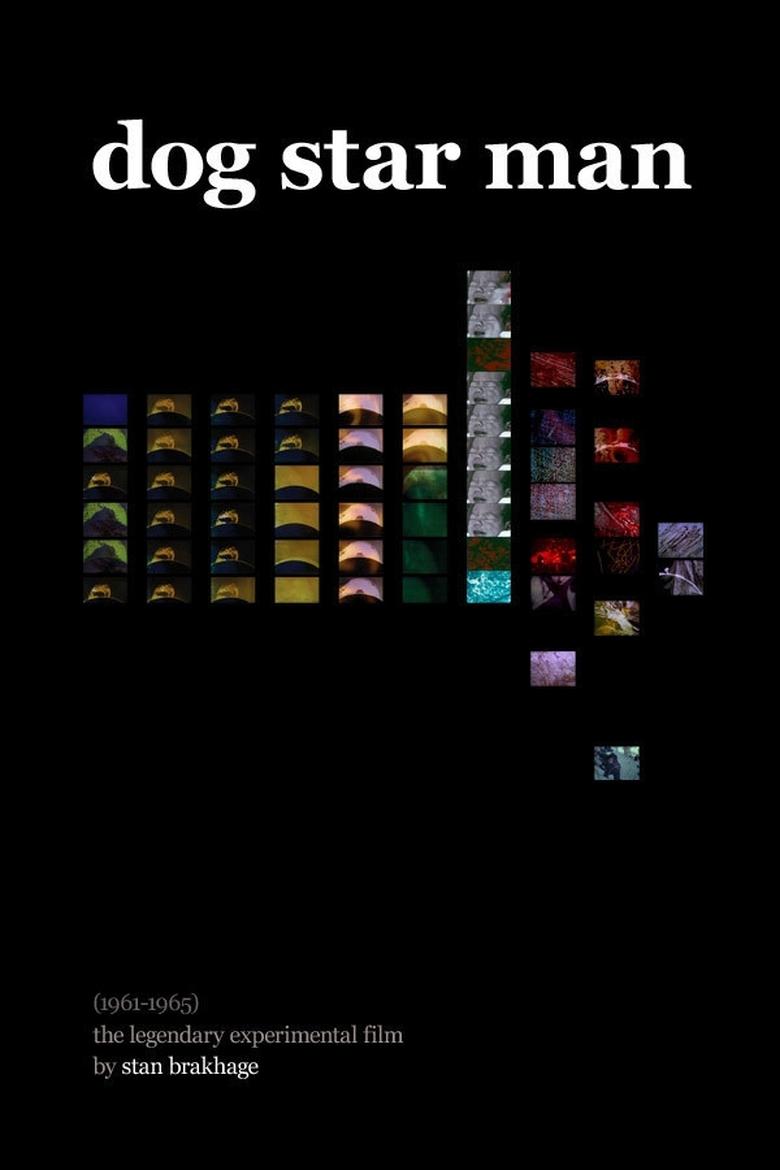
Dog Star Man is one of the most discussed works in the history of American experimental cinema, a film that arrived in pieces between 1961 and 1964 before being assembled into its complete 78-minute form in 1965. Stan Brakhage released it through Film-Makers' Cooperative, the distribution organisation co-founded by Jonas Mekas that served as the beating heart of the American avant-garde scene, and the film sits at the centre of Brakhage's career in much the same way a long poem might sit at the centre of a poet's collected works. It is structured loosely around a single day and the turning of seasons, following a man and his dog as they climb a mountain, though describing it in those terms makes it sound far more conventional than it is. This is not a narrative film in any recognisable sense. It is closer to a visual and philosophical statement, one that Brakhage had been building toward across a body of work that stretched back through the 1950s.
Brakhage made the film entirely alone, serving as director, writer, cinematographer and editor, with Jane Wodening (his wife at the time) also appearing on screen. That self-sufficiency was not simply a practical necessity but a statement of artistic intent. Brakhage was committed to what he called "untutored eye" cinema, a cinema that might recover vision unconditioned by language or convention. He scratched directly onto celluloid, painted over frames by hand, layered multiple exposures and collaged imagery together in the editing, producing images that pulse and flicker rather than hold still. The look of the film is inseparable from its method: close-up textures of bark and snow, bursts of pure colour, fleeting human forms dissolving into abstraction. It is a set of images that clearly owes nothing to the studio system and everything to the painter's studio. For a companion piece on a very different kind of visionary American filmmaking from the same decade, see also Titicut Follies, which I reviewed separately.
No composer is credited on Dog Star Man, and indeed the film is silent, which is itself a choice worth sitting with. Without music, dialogue or sound design to guide the viewer's emotional response, the weight falls entirely on the edited image. The cutting is rapid and often deliberately disorienting, working against continuity in the way that a piece of abstract painting works against representation. Brakhage had already experimented with purely tactile, non-camera filmmaking on Mothlight in 1963, pressing moth wings and plant matter directly onto film stock, and some of that physical, handmade quality carries over into Dog Star Man's approach to the image. The film also had a direct precursor in Prelude: Dog Star Man, which I covered earlier on the site, so if you want the full arc of how Brakhage arrived at this point, that review is a reasonable place to start.
Brakhage's reputation in academic and avant-garde circles is substantial and genuinely earned. Dog Star Man appears regularly on lists of the most significant works in film history, is taught in art schools and university film programmes across the world, and has attracted serious critical writing from figures who find in it something close to revelation. Whether that experience translates for a general audience, or for any given viewer approaching it in good faith, is rather the question.
By my own reckoning, experimental cinema and I are simply never going to get along, and Dog Star Man is the third time Stan Brakhage has proved the point.
I came to it off the back of his moth-wing collage Mothlight and the Prelude to this very film, and both left me fed up rather than transported. The full thing is more of the same, only longer: a silent, wordless rush of hand-painted light, scratched celluloid and abstract shapes, a man and his dog lost somewhere in the blur, and not a scrap of story to hold onto. You can barely call it a film. It is a moving texture, and not a great deal more.
I know how this sounds, of course. Brakhage is a titan of the avant-garde, Dog Star Man is a landmark, and cleverer viewers than me find whole universes in it, so the failing here may well be mine and not his, and I would not dream of arguing anyone out of loving it. But three films deep, I can only be straight about my own experience, and my own experience was boredom, plain and heavy, the kind that has you counting down the minutes until it stops.
Half a star. I have given Brakhage a fair go now, and I think he and I can safely agree to leave it there.
Dog Star Man remains one of those films that divides cleanly along lines of temperament rather than taste. For those already inside the world of structural and lyrical avant-garde cinema, it is a canonical achievement, a work that genuinely expanded what film could be asked to do. For those outside that world, it asks for a great deal and offers very little in the way of handholds. What is clear is that Brakhage was not making work carelessly or without rigour: the commitment to his method is total, and the film stands as a record of one filmmaker's sincere attempt to remake cinema from first principles. Whether sincerity of purpose is enough, of course, is precisely the kind of question worth thinking through. Sometimes a mountain climb is just a very long walk.
Rating: ½ | Year: 1965 | Watched: 2026-09-18



