Collision Course (2026)

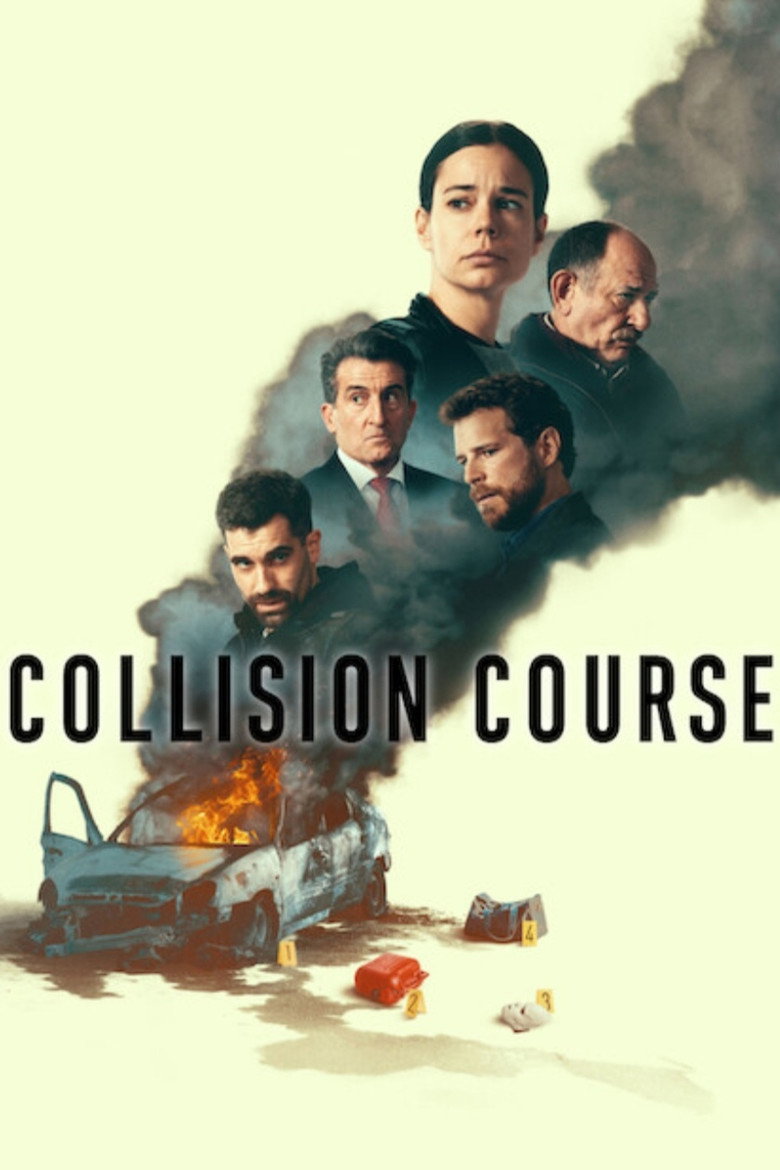
Set against the economic shadow of Spain in 2013, Collision Course arrives as a crime thriller from Bambú Producciones, the Madrid-based production house behind some of the more polished but unremarkable genre television Spain has exported in recent years. The premise is familiar enough: a bank robbery, a crash during the getaway, and the slow unravelling of loyalties among a crew who, it turns out, were never quite what they seemed to one another. The period setting is not merely decorative. Spain in 2013 was still deep in the grip of austerity, unemployment running at record levels, the banking sector carrying the particular kind of moral weight that makes a heist feel, to a certain type of viewer, like a reasonable response to the world. Whether the film does anything meaningful with that backdrop is a question the review below addresses rather more directly than this introduction can.
Daniel Sánchez Arévalo directs from a script he co-wrote with Ramón Campos, a pairing that brings two reasonably experienced names to the project. Sánchez Arévalo is probably best known internationally for Gordos (2009) and the ensemble drama Primos (2011), both of which showed a genuine feel for tangled group dynamics and overlapping personal histories. Campos, meanwhile, has been a significant force in Spanish prestige television, and you can feel that influence here: the script is structured with the kind of careful, layered architecture that works well across six episodes but places different demands on a single two-hour sitting. At 122 minutes, Collision Course asks the audience to hold a good deal in their heads. The ensemble cast features Karra Elejalde, a reliable and sometimes extraordinary character actor whose CV stretches from Álex de la Iglesia comedies to the time-travel drama Timecrimes, alongside Luis Zahera, Tamar Novas, and Álvaro Cervantes. All five leads are capable of serious dramatic work, and on paper this is exactly the kind of company you want for a crime film that wants to be about something.
The performance at the centre of it all, though, is Laia Costa's, and her presence here will feel familiar to anyone who has spent time with her earlier work. I also reviewed Maine (2018), where Costa demonstrated an ability to hold a film almost single-handedly, and her instincts here are the same: grounded, precise, and not remotely interested in the kind of actorly signposting that lesser thrillers tend to reward. For a point of comparison closer to the genre, see also Sexy Beast (2000), a film that understood how to build a heist narrative around a genuinely unsettling ensemble dynamic. Collision Course is working in broadly similar territory, even if the execution lands differently.
Cinematographer Rafa García shoots the film in a palette that suits the material: desaturated where you might expect warmth, close and slightly claustrophobic in the aftermath of the crash, with a tendency to favour faces over action during the scenes of accusation and disclosure. It is workmanlike in the best sense, functional and purposeful, and it keeps the film from ever looking cheap. The score is the work of Federico Jusid and Lorenzo Perelmuter, a collaboration that leans on string arrangements and low electronic texture to signal unease without tipping into melodrama. Jusid in particular has a track record with Spanish-language drama, having scored several prestige productions that required a similar balance of restraint and atmosphere. Editor Miguel Sanz Esteso has the unenviable task of managing a structure that folds back on itself repeatedly, and the cutting during the film's more kinetic sequences has a rhythm that at least keeps the surface moving. Whether that momentum holds across the full running time is, again, a matter for the review itself.
I came away from Collision Course disappointed, and it stung a touch more because of who is in it. I adored Laia Costa in Maine, so I sat down to this expecting something special. She is, predictably, the standout here too, carrying scenes with the same magnetism she brought to that film. But she is let down by almost everything around her.
And that is the frustrating part, because this should have been a slam dunk. It is a heist movie, and who does not love a heist movie? The Spanish setting, a bank job, a getaway gone wrong, the hidden betrayals among the crew; the raw ingredients are all there for something lean and gripping. Instead, the film takes that can't-miss setup and buries it under an impossibly convoluted plot, forever folding back on itself with twists and double-crosses until I had more or less stopped caring who had betrayed whom.
It does not help that it is so drawn out. For a story that ought to crackle with tension, there are long, baggy stretches where the momentum simply drains away, and the clever structure starts to feel like an excuse to stall. Two and a half stars. A heist film with a terrific lead and every reason to be gripping, undone by a plot too pleased with its own complications to remember to be exciting.
Collision Course is, by any reasonable measure, a film with the right ingredients assembled in the wrong proportions. Spanish crime cinema has shown it can do this sort of thing with real bite, as I touched on when covering Arco (2025), and the gap between what Collision Course promises and what it delivers is wide enough to be genuinely frustrating rather than merely disappointing. Sánchez Arévalo and Campos are not lacking in craft or ambition, and there is a better, leaner version of this film somewhere inside the one that was released. What remains is a thriller that mistakes complexity for depth, and forgets, somewhere in all its folding and refolding, that the most important thing a heist movie can do is make you lean forward in your seat.
Rating: ★★½ | Year: 2026 | Watched: 2026-11-01
Trailer
▶ Watch the official trailer for Collision Course (2026) on YouTube
Where to watch
Watch in the UK
Stream: Netflix · Netflix Standard with Ads
Physical: Amazon UK · Zavvi
Watch in the US
Stream: Netflix · Netflix Standard with Ads
Physical: Amazon US
Affiliate disclosure: Movies With Macca may earn a small commission on purchases or subscriptions started via these links. It costs you nothing extra.