Beatriz's War (2013)

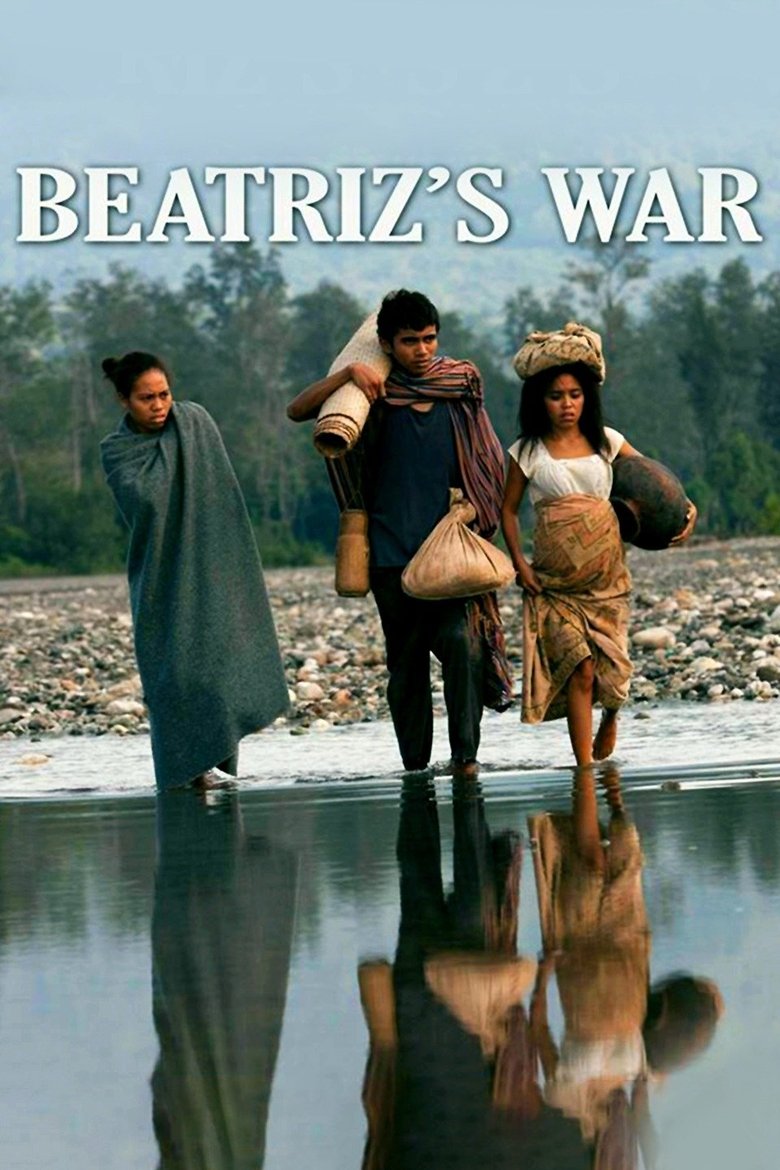
Ten days. Think about that for a second. Just ten days after East Timor gained its independence from Portugal in 1975, Indonesia moved in and began over two decades of brutal occupation. It's one of those historical facts that stops you cold, and it's one that most of the world, myself included for a long time, knew embarrassingly little about. Beatriz's War is here to make sure you can't look away.
Directed by Luigi Acquisto and Bety Reis, this 2013 picture carries a remarkable distinction: it's East Timor's very first feature film. That alone would make it noteworthy. But what's striking is that it doesn't coast on that novelty. It earns its place. The story follows Beatriz and her family across the long, grinding years of occupation, watching her transform from a frightened girl into a woman who refuses, quietly and stubbornly, to be broken. It's a journey told with patience and with pain, and it gets under your skin.
Now, I'll be honest: this isn't a polished production. The editing can feel rough, the visual style is inconsistent, and there are moments where the seams show in ways that a bigger budget might have smoothed over. But here's the thing: that rawness isn't necessarily a flaw. There's something fitting about a film this unvarnished telling a story this brutal. It doesn't try to dress up occupation and terror in the kind of sleek cinematography that can accidentally make horror look beautiful. It keeps things grounded, unglamorous, and real.
And what it lacks in production sheen, it more than compensates for in human feeling. The cast bring a lived-in authenticity that I wasn't expecting. Beatriz's evolution feels earned rather than written, if that makes sense. You believe in these people. The film is also wise enough not to reach for gore or spectacle to make its point. The terror here is quieter and, because of that, more pervasive. It's the terror of checkpoints, of disappearances, of cultural erasure being carried out methodically and without apology.
The soundtrack deserves a special mention. Traditional Timorese music runs through the film like a thread, and it's genuinely moving. Music becomes an act of resistance here, a way of saying: you can occupy our land, but you haven't occupied us. It gives the film a beating, defiant heart that lifts it considerably.
The story, which I believe is rooted in real testimony, carries the specific weight that only truth can produce. There's a moment about halfway through where the sadness of it all just settles on you like a stone, and it doesn't really lift. That's not a criticism. That's the film doing its job.
What I kept thinking about, watching this, is how familiar the shape of this story is. A smaller population, a larger aggressive power, atrocities committed far from international cameras. You see it across Africa, across the former Yugoslavia, across the Caribbean and Asia. It's a grim, inescapable pattern, and Beatriz's War sits alongside films like Balibo, which covers the same conflict from a different angle, as essential viewing for anyone trying to understand what happened on that island. The two films complement each other in ways that feel almost necessary.
Is Beatriz's War a perfect film? No. But perfection isn't what this story needs. What it needs is honesty and heart, and it has both in abundance. It's a film made by and for a people who deserve to have their history witnessed, and watching it, you feel the weight of that responsibility. For a debut national feature made under considerable constraints, it's a genuinely impressive achievement, and more than that, it's a deeply affecting one.
Three and a half stars.
Rating: ★★★½ | Year: 2013 | Watched: 2026-07-29
Trailer
▶ Watch the official trailer for Beatriz's War (2013) on YouTube