
'Aho'eitu (2015)
★★★ — 'Aho'eitu (2015)

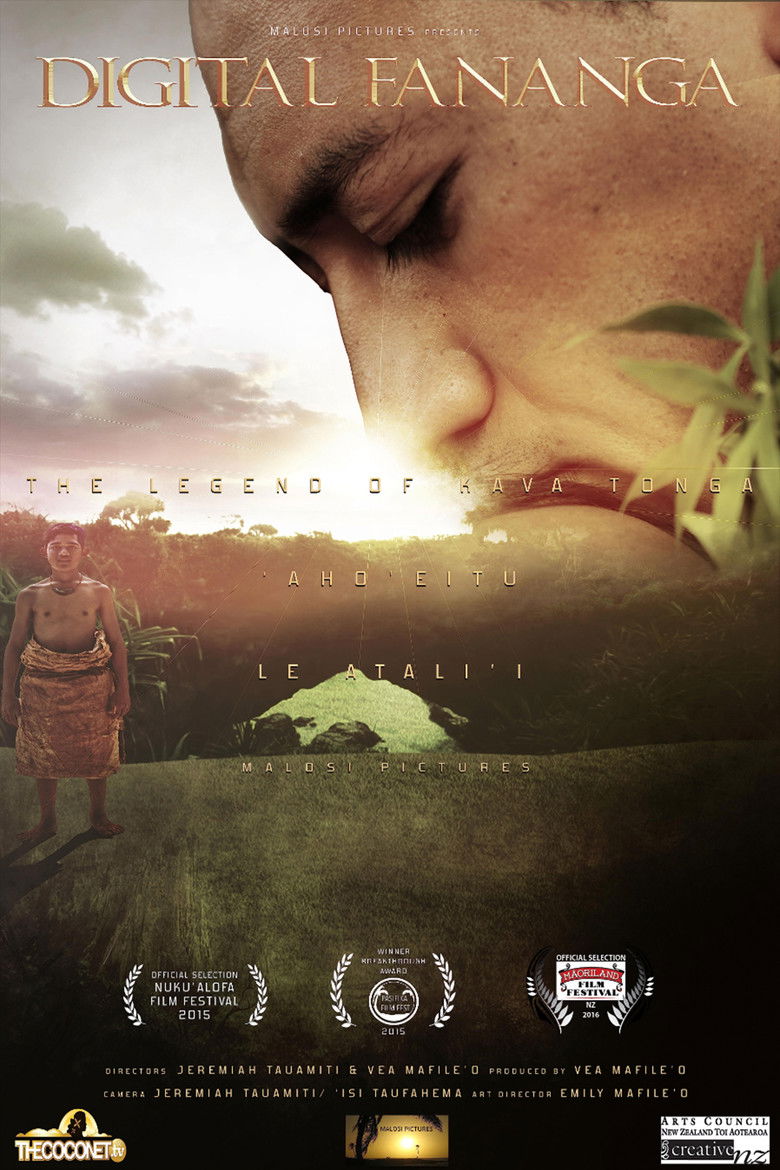
'Aho'eitu is a 2015 short drama from Malosi Pictures, running just twenty-seven minutes and co-directed by Jeremiah Tauamiti and Vea Mafile'o. The film draws on one of Tonga's most enduring foundation myths: the story of 'Aho'eitu, a young man born of a mortal mother and the sky god Tagaloa, who leaves his earthly home to seek out his father in the heavens and, in doing so, discovers both brothers and a destiny as the first Tu'i Tonga, the first king of the islands. It is, in other words, a story about legitimacy, belonging, and the price of reaching above your station, themes that Pacific cultures have carried in oral tradition for generations before anyone thought to put them on screen. The production is a New Zealand and Tonga co-production, modest in scale but clearly shaped by a genuine commitment to representing Tongan mythology with care rather than spectacle. For a sense of what other New Zealand productions look like at the opposite end of the scale, I also reviewed What We Do in the Shadows (2014) and The Legend of Johnny Lingo (2003), both of which sit in very different territory, though each in their own way reflects the range of storytelling coming out of that part of the world.
Tauamiti and Mafile'o, working from source material rooted in oral tradition rather than a written script with a credited author, lead a cast of four principal performers: Sione Pia Fatai, Sisi'uno Helu, Nonga Pulu, and Latu Va'eno. With a runtime as short as this, there is little room for extended character building, and the performers are asked to carry the weight of myth rather than psychology, which is a genuinely different kind of acting challenge. The film sits in a long tradition of short dramas that use brevity as a formal constraint rather than a limitation, though of course whether the constraint serves or hinders the material here is a question best answered by what follows. For a companion piece from the same era of short, culturally particular filmmaking, see also Tangerine (2015), another 2010s production that demonstrated what focused, low-resource filmmaking can achieve when the creative intention is clear.
On a technical level, the credited craftspeople for cinematography, editing, and composition are not publicly documented in available records, which is not uncommon for small independent shorts produced outside the major festival circuits. What can be said about the film's look, from the footage itself, is that it makes consistent and patient use of natural Pacific landscape, favouring wide, considered framings over rapid cutting. The visual approach gives the material a stillness that sits well with mythology: these are images that feel unhurried, as if the story itself has been waiting a long time to be told and sees no reason to rush now. The score, similarly, works close to the grain of the material, drawing on cultural textures rather than reaching for a generic orchestral wash. Both choices, visual and sonic, feel deliberate rather than accidental, which says something about the discipline of the directors even within tight constraints.
The story follows a young man, the son of a god, who journeys to find his father and earn his place in the divine order. If that sounds familiar, it's because it is. The moment the premise clicked into place, I couldn't help thinking of Disney's Hercules. The broad shape is almost identical: a half-mortal lad reaching up toward the heavens, searching for belonging and the recognition of a father who exists on a different plane entirely. But where Hercules wraps that myth in colour and pop songs, 'Aho'eitu takes it somewhere quieter and more grounded, rooted in Tongan oral tradition and mythology. The bones of the story feel ancient, and the film is smart enough not to dress them up too heavily.
What genuinely impressed me was how well made this is given the obvious budget constraints. The cinematography is a real highlight. There are shots here that feel considered and patient, making good use of the natural landscape in a way that gives the film a sense of place and atmosphere. For a short, low-budget production, that's no small achievement. A lot of films with far more money behind them can't manage it. The soundtrack, too, does exactly what you'd want from it: it supports the tone without overplaying its hand, and it feels culturally rooted rather than generic.
My A-Z World Movie Tour has taken me to some unexpected corners of world cinema, and Tonga was always going to be one of the more challenging stops. I'd had a similar feeling watching Atoll People (1970), another Pacific island film that offered a window into a world I hadn't really seen represented on screen before. There's a real value in that, beyond any critical assessment of craft or story. When a film introduces you to a mythology and a culture you weren't previously familiar with, it's doing something worth appreciating.
That said, I want to be honest about the limitations here. At short film length, there's only so much the story can do with its premise, and I did find myself wanting more. The emotional journey at the centre of it could have used a bit more room to breathe. I cared about what was happening, but I suspect a feature-length version of this material would hit considerably harder. As it stands, it's a compelling sketch rather than a fully realised piece.
But I keep coming back to the fact that this was apparently the first Tongan film on Letterboxd when I watched it. There's something meaningful about a small production carrying that kind of flag. The people behind it clearly cared about telling this story well, and it shows. The craft is there. The passion is there. And for a viewer like me, the education is very much there too.
Three stars. A good little short, and a genuinely worthwhile stop on the tour.
I keep returning to the thought that short films adapted from mythology occupy a peculiar and underserved space in cinema, and 'Aho'eitu is a reminder that the format can carry genuine cultural weight even when the running time is against it. The craft on display here, patient, considered, culturally grounded, is the kind of thing that tends to get overlooked precisely because the film is small and the culture it represents is rarely given a platform. There is something quietly significant about a production like this existing at all. It does not solve the problem of wanting more, but it makes a strong case for why more should exist. Sometimes the most honest thing a short film can do is leave you wishing it were longer. This one earns that particular frustration.
Rating: ★★★ | Year: 2015 | Watched: 2025-09-12
Related on Movies With Macca
More from New Zealand: What We Do in the Shadows (2014) · Mortal Engines (2018) · King Kong (2005) · Atoll People (1970)
More from the 2010s: Wonder (2017) · Beautiful Boy (2018) · The Witch (2015) · What We Do in the Shadows (2014)
More drama: Viy (1967) · Wonder (2017) · A Better Tomorrow (1986) · Beautiful Boy (2018)



