A Tale of Two Sisters (2003)

Share
A Tale of Two Sisters (2003)

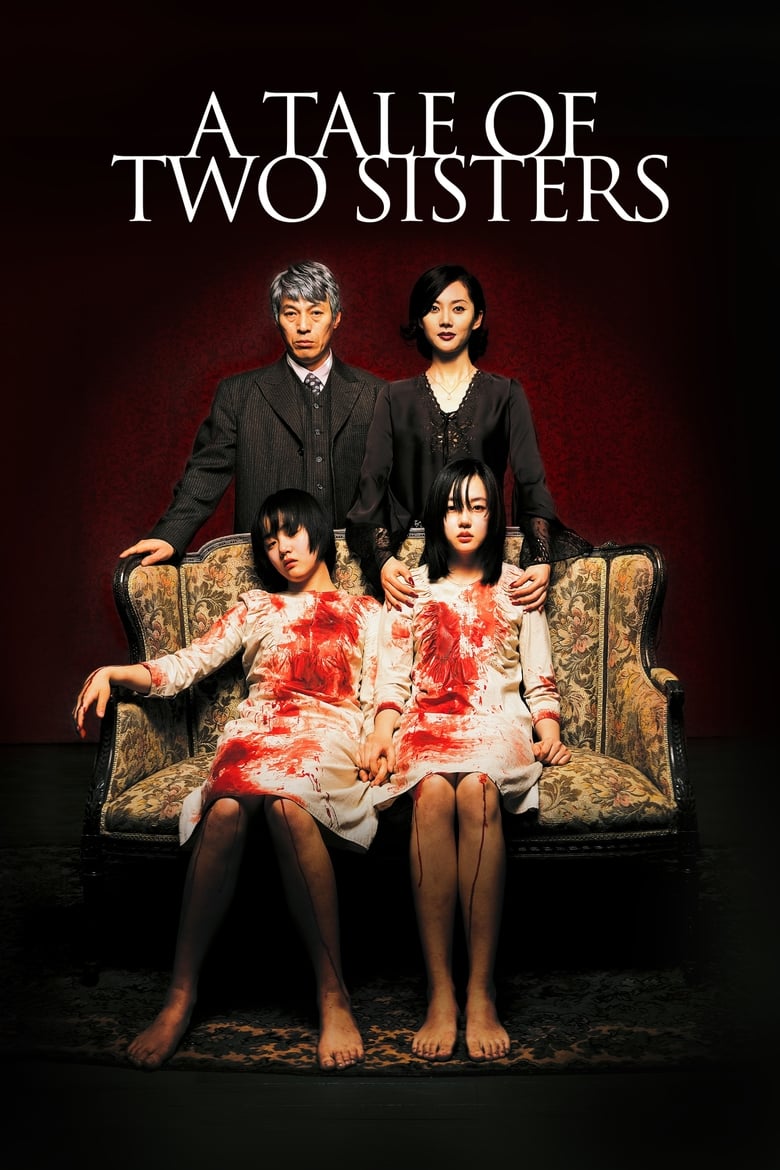
South Korean cinema in the early 2000s was producing work that would reshape international audiences' expectations of genre filmmaking, and A Tale of Two Sisters arrived in 2003 right in the thick of that wave. The film draws on the Korean folktale "Janghwa Hongryeon jeon", a story that has been adapted for the screen multiple times across Korean cinema history, but writer-director Kim Jee-woon strips the source down and rebuilds it as something genuinely unsettling: a psychological horror set almost entirely within the walls of a single country house, following two sisters who return home after a period of psychiatric treatment, only to find the domestic atmosphere warped by tension, grief, and a stepmother whose behaviour sits somewhere between coldly hostile and openly dangerous. It was the highest-grossing Korean horror film of that year and became one of the first Korean horror pictures to secure a wide North American theatrical release, which tells you something about the confidence the film projects, even if its reputation has since been complicated by the films that came after it from the same generation of filmmakers.

Kim Jee-woon had already shown range before this, moving between black comedy and action with a restless sort of energy, but A Tale of Two Sisters marked his most sustained and disciplined effort up to that point. He wrote the screenplay himself, keeping the story tight around the family unit and resisting the temptation to explain too much too early. The film was produced through a consortium of Korean production companies, Bom Film Productions among them, on a modest budget that the production team stretched into something that looks considerably more expensive than it was. Cinematographer Lee Mo-gae fills the frame with a palette that is cool and slightly washed out in the domestic interiors but rich and almost painterly in the scenes involving the surrounding countryside and lake, the kind of imagery that makes the house feel both beautiful and suffocating at once. Editor Ko Im-pyo works with a deliberately unhurried rhythm, holding shots a beat or two longer than comfort allows and letting cuts land with a quiet weight rather than a flourish, which suits the material well. The score, composed by Lee Byung-woo, leans on spare piano and strings, occasionally withdrawing into near-silence in a way that makes the moments of musical intrusion feel genuinely alarming.

The cast is anchored by Lim Soo-jung and Moon Geun-young as the sisters, Soo-mi and Su-yeon, with Lim carrying much of the film's emotional and narrative burden across a performance that has to operate on several registers simultaneously without tipping its hand. Moon, younger and largely reactive, brings a fragility to Su-yeon that keeps the audience's protective instincts running throughout. Yum Jung-ah plays the stepmother with a controlled, slightly too-bright poise that puts you on edge from her first scene, and Kim Kap-soo is quietly effective as the father, a man so retreated into himself that his absence within the family becomes its own kind of presence. If you have read our coverage of The Handmaiden (2016) or Memories of Murder (2003), you will have a sense of the broader tradition this film belongs to, that particular vein of Korean genre cinema that treats psychological unease and social dysfunction as two sides of the same coin. A Bittersweet Life (2005), Kim's follow-up, makes for an interesting companion piece if you want to see how his control over tone developed in the years immediately after this.

Few things in a thriller satisfy quite like being unable to guess what comes next, and A Tale of Two Sisters kept me wrong-footed almost the whole way through.

Kim Jee-woon's 2003 psychological chiller, a slow-burn about a young woman, her fragile sister, and the poisonous currents running between them, their stepmother and their father, is built to keep you off balance, and it manages it with real elegance. At nearly any point I would have bet on where it was heading, and nearly every time I would have lost.

It arrives, mind you, with an enormous amount to live up to. Korean cinema has produced so many extraordinary things that I could not help holding this up against the best of them, and by that measure it comes up a little short; it is not the equal of a Handmaiden or a Parasite, films operating on some higher plane altogether. But that is a punishing bar, and unfair to swing at most films. Judged on its own terms, this is a classy, controlled piece of work.

What it does best is mood. Kim draws a hushed, creeping dread out of a beautiful old house and a family with something plainly, badly wrong at its heart, trusting silence and suggestion where a weaker film would lunge for the jump-scare. Beneath that surface sits a set of twists that put me in mind of M. Night Shyamalan at his sharpest, the sort that quietly reframe everything you thought you had seen, and I will say no more than that, because this is a film best entered knowing as little as possible. To give its turns away would be a small crime.

If it stops just short of greatness, it is largely a question of pace. The middle sags, its deliberate slowness tipping here and there into a stall, and a firmer hand through those stretches, the kind of control Kim would bring to A Bittersweet Life a couple of years later, might have pushed the whole thing up a class. Even so, this is atmospheric, grown-up horror that lingers in the mind and rewards a second look once you know its secrets. It stumbles just enough to keep it out of the very top rank, but three and a half stars feels right for a chiller this assured, and I would happily steer any newcomer to Korean genre cinema straight toward it.

A Tale of Two Sisters sits in an interesting position within its director's career and within Korean genre cinema more broadly: accomplished enough to have earned its international reputation, but made at a moment just before Kim and his contemporaries would push into work that set an even higher standard. It is the kind of film that rewards patience and a willingness to trust a filmmaker who is clearly in command of his atmosphere, even when that atmosphere occasionally slows to something close to a standstill. For anyone working their way through the period when Korean cinema announced itself to the world, this is a worthwhile stop on the itinerary. Some films are best seen before you know too much about them, and this is one of them.


Rating: ★★★½ | Year: 2003 | Watched: 2026-08-18

View on Letterboxd →


Trailer

▶ Watch the official trailer for A Tale of Two Sisters (2003) on YouTube


Where to watch

Watch in the UK
Stream:
Shudder · Arrow Video Amazon Channel · Shudder Amazon Channel · ARROW
Rent: Apple TV Store · Amazon Video · Google Play Movies · YouTube
Buy: Apple TV Store · Amazon Video · Google Play Movies · YouTube
Physical: Amazon UK · Zavvi

Watch in the US
Stream:
AMC Plus Apple TV channel · AMC+
Physical: Amazon US

Affiliate disclosure: Movies With Macca may earn a small commission on purchases or subscriptions started via these links. It costs you nothing extra.

Film images and data courtesy of TMDB. This product uses the TMDB API but is not endorsed or certified by TMDB.