Yeelen (1987)

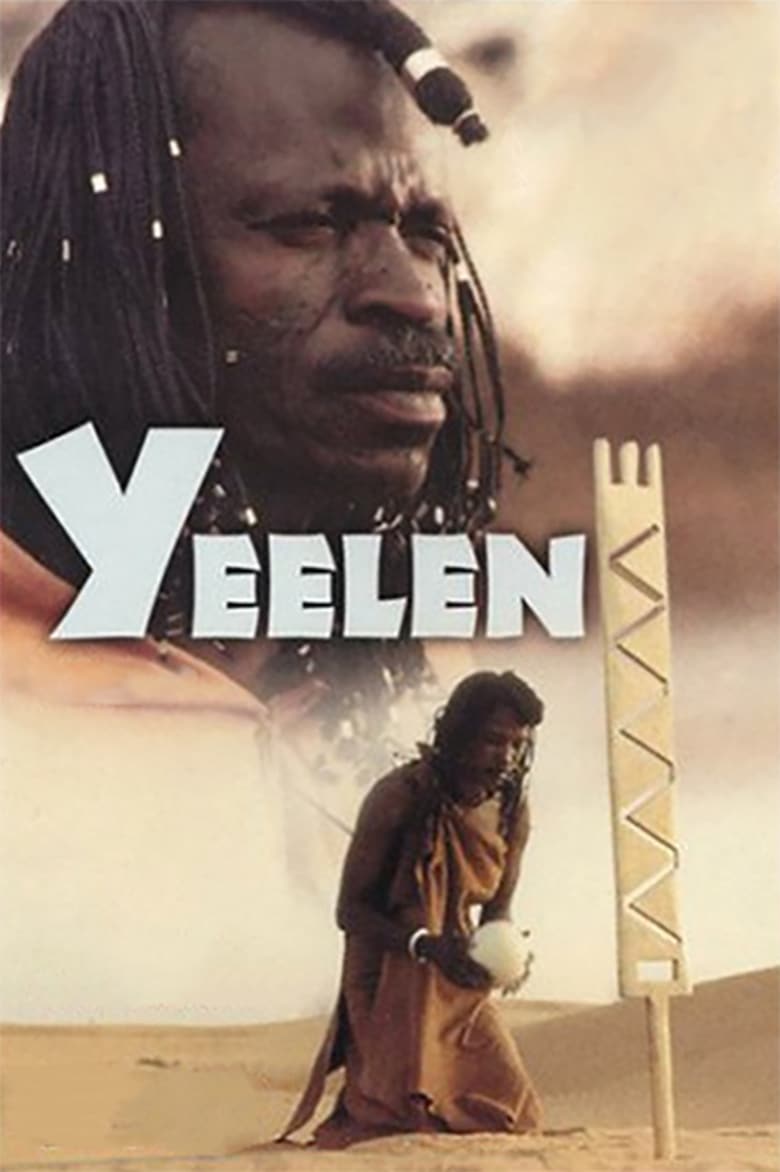
It's genuinely rare to sit down with a piece of cinema that treats its native folklore with this level of unapologetic, mystical fidelity. Souleymane Cissé's Yeelen doesn't just borrow from Bambara mythology and dress it up for outside consumption. It pulls you entirely into its cosmology and keeps you there, hitting the theme so faithfully that you feel the magic jumping off the screen as something real, something ancient, something that existed long before cameras did.
The story is raw and stripped back in the best possible way. A young sorcerer, Nianankoro, played brilliantly by Issiaka Kane, is fleeing his own father's deadly pursuit. That's the spine of it, a fable of power, inheritance and catastrophic consequence, and Cissé refuses to soften any of its edges or wink at the audience for reassurance. There's no hand-holding, no Western cinematic gloss applied to make the mythology more palatable. You accept the rules of this world or you don't, and the film has absolutely no interest in negotiating with you on that point. I found that quality genuinely refreshing. Too much world cinema hedges its bets, half-translating its own cultural logic for an imagined foreign viewer. Yeelen does nothing of the sort.
Visually, the film is an absolute triumph. The cinematography captures the stark, blinding beauty of the Malian landscape in a way that makes every single frame feel like a painted canvas. Cissé uses the harsh, unforgiving sunlight and the deep shadowy contrasts of the night to mirror the escalating magical duel between father and son. When the glowing, ethereal artefacts appear against those sweeping desert vistas, you understand immediately why this caused such a sensation at Cannes. It's a visually staggering piece of work that makes a compelling argument that you don't need massive budgets or elaborate effects to create genuine awe. You need a brilliant eye and a deep, abiding respect for the land you're filming. Cissé has both in abundance.
That said, I do have one genuinely frustrating gripe, and it comes down entirely to a technical limitation of the specific print I watched. The subtitles available to me were incredibly simplistic, almost rudimentary, and they completely failed to carry the poetic weight of the original dialogue. When you have a film this grand, where the spoken word is supposed to carry the heft of ancient proverbs and mystical incantations, reading clunky, literal translations on screen creates a jarring disconnect. The dialogue ends up feeling far less majestic than the breathtaking images surrounding it, and for a verbally rich narrative like this one, that's a real shame. It's a bit like hearing a symphony with one section of the orchestra playing slightly out of tune. The whole still works, but you're always aware of what you're missing.
It reminded me a little of my experience watching Wallay (2017), another West African film where the cultural texture is so specific and so carefully observed that you feel you're being granted genuine access to something, even when the translation only gets you part of the way there.
Despite that stumbling block, Yeelen remains a profoundly important and beautiful film. It stands entirely on its own terms, far removed from the usual tropes of global filmmaking, and it demands your patience in the best possible way. The payoff is a truly unique mythic vision that I suspect will sit with me for a long time. Three and a half stars, and I suspect a better print would push it higher.
Rating: ★★★½ | Year: 1987 | Watched: 2026-07-22
Where to watch
Watch in the US
Physical: Amazon US
Affiliate disclosure: Movies With Macca may earn a small commission on purchases or subscriptions started via these links. It costs you nothing extra.