Wasp (2003)

There's a moment in Wasp where you realise you're holding your breath, not because anything explosive is happening on screen, but because the tension of everyday poverty is so authentically rendered that you're bracing for something terrible to arrive at any second. Andrea Arnold's Academy Award-winning short film is almost uncomfortably real, and that discomfort is entirely the point.
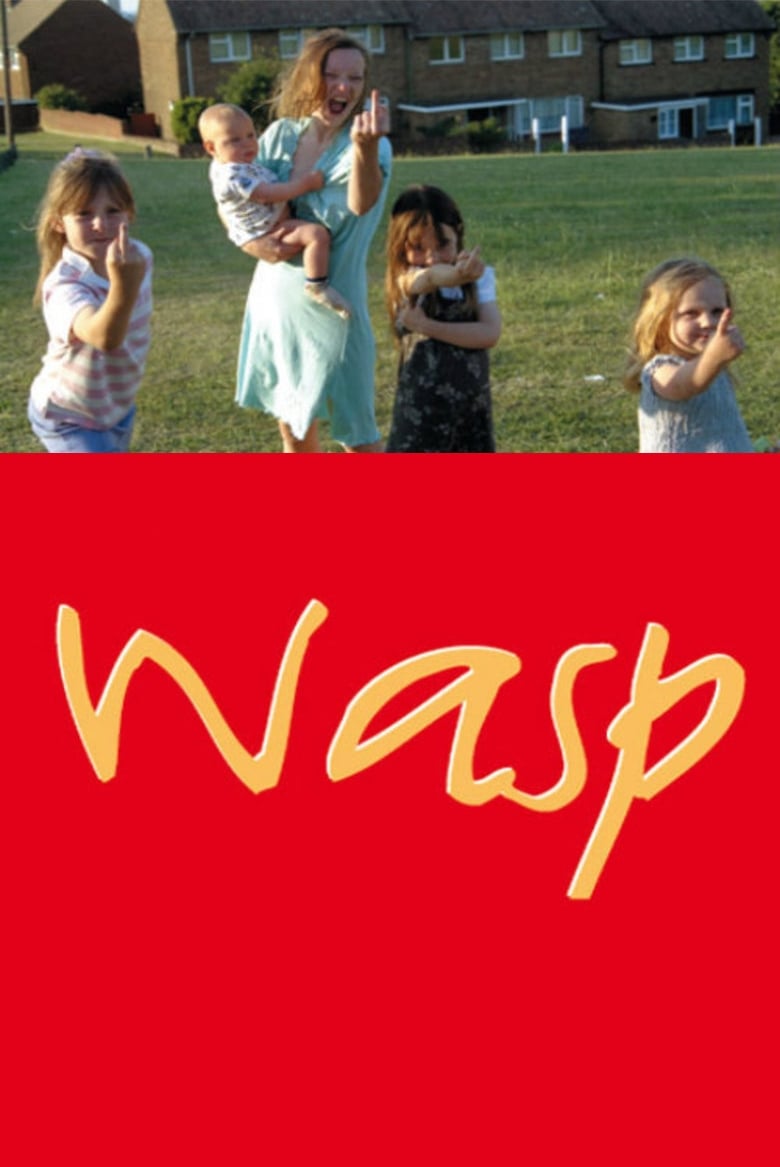
The premise is deceptively simple. Zoë is a struggling single mother of four in Dartford, barely keeping her head above water, when an old school crush pulls up and asks her out. In a panic, she lies, telling him she's just babysitting the kids. What follows is an excruciating, darkly funny, deeply uncomfortable evening in which she tries to hold a date together while her children wait outside a pub, hungry and unsupervised. It shouldn't work as a premise. It absolutely does.
As a father of two who grew up around areas not entirely unlike what Arnold depicts here, this hit close to home in ways I wasn't entirely prepared for. I've seen this kind of kitchen-sink reality firsthand, and Arnold captures it with an ultra-realistic lens that feels less like filmmaking and more like documentary footage that happened to wander into a narrative. There's a constant, suffocating sense of impending doom running through the entire runtime that keeps you completely hooked, even as you're wincing.
Natalie Press in the lead is absolutely fantastic. She conveys the desperate, exhausting juggling act of poverty-stricken motherhood without a single ounce of melodrama, which is a genuinely difficult thing to pull off. The whole cast anchors the film's heavy social commentary in raw, lived-in emotion, and it's also a real treat to spot a young Danny Dyer bringing his familiar rough-around-the-edges charm to proceedings. The acting across the board is really good, full stop.
I'll be honest though: I spent a lot of the runtime shaking my head at Zoë's choices. I truly cannot imagine being that reckless with young children, regardless of the circumstances. But Arnold is smart enough to use that frustration deliberately. She makes you desperately want to reach into the screen and intervene on behalf of the kids, and that impulse is what keeps you locked in. You're not watching passively. You're involved whether you like it or not.
Where the film stumbles is in its technical execution and its ending. The titular wasp sequence, which should land as a genuinely horrifying moment, is badly let down by some remarkably poor early-2000s CGI. It's distracting in a way that actively pulls you out of the immersion Arnold has worked so hard to build. And honestly, it was completely avoidable. Keeping the incident just off-camera and relying on the actors' reactions would have been far more effective and far more in keeping with the film's otherwise grounded aesthetic. The reliance on clunky visual effects here is a real head-scratcher.
The ending, too, feels a bit abrupt. The story builds tension masterfully, but when the screen cuts to black, the narrative threads feel slightly too loose. It leaves you wanting just a little more resolution, not in a satisfying, lingering way, but in a "wait, is that it?" kind of way. These are minor wobbles, but they're worth naming.
Despite those gripes, Wasp is a cracking piece of British filmmaking that punches well above its short runtime. Arnold has a fierce, undeniable talent for capturing working-class struggle without ever tipping into exploitation or sentimentality. If you've seen her feature Fish Tank, you'll recognise that same unflinching eye here in embryonic form, and if you haven't seen it, this is a brilliant place to start before you do.
Three and a half stars. The dated effects and the slightly unsatisfying finish hold it back from being a clean four, but the sheer authenticity and the quality of the performances more than earn their place. It stays with you, and that's what matters.
Rating: ★★★½ | Year: 2003 | Watched: 2026-07-09