You Will Die at Twenty (2019)

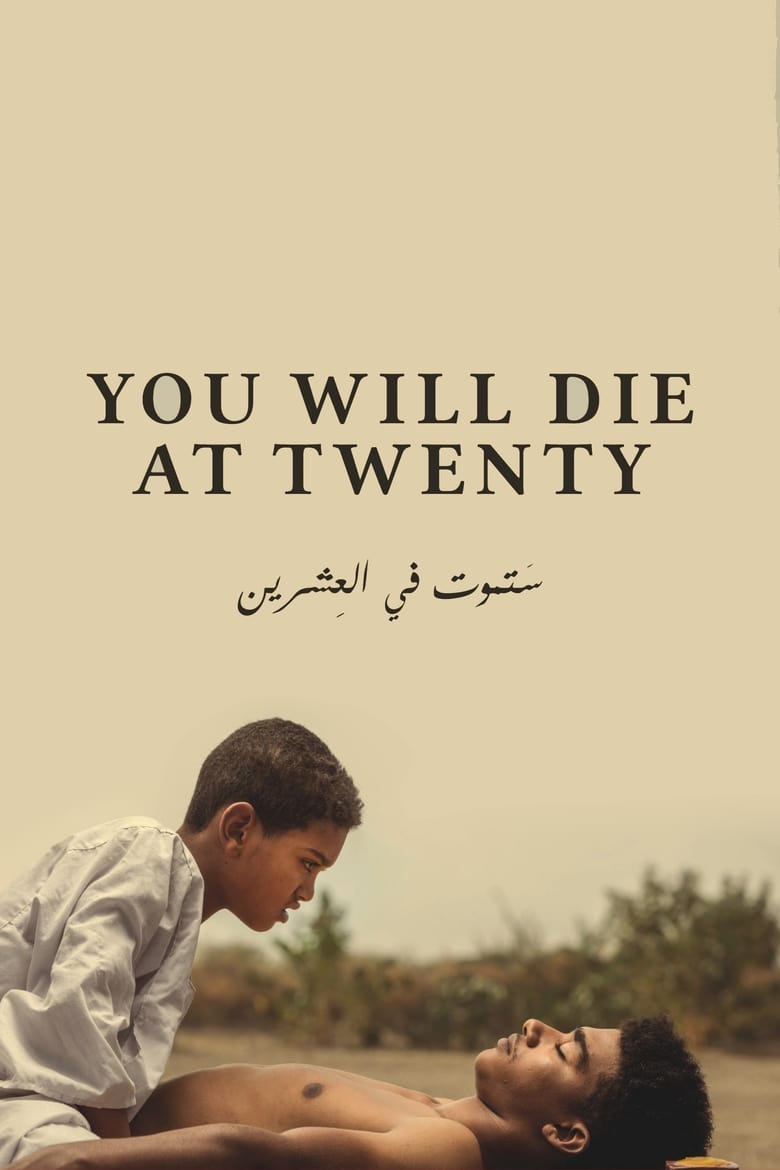
What does it do to a person, being told before you can even speak that your death is already written? That question sits at the heart of Amjad Abu Alala's Sudanese debut, and it never lets go. From the moment a Sufi sheikh delivers his prophecy over a newborn child, You Will Die at Twenty locks you into something genuinely haunting. I wasn't prepared for how hard it would hit.
The premise is almost unbearably cruel in its simplicity. A boy, Mumazil, enters the world and is immediately sentenced by a religious prophecy: he will not survive his twentieth birthday. What follows is not so much a childhood as a prolonged, communal act of grief. His mother wraps herself in mourning before there is anything yet to mourn. His father, unable to bear the weight of it, eventually leaves. The village treats Mumazil as a walking ghost, a tragedy in slow motion. Talal Afifi, who plays Mumazil as a young man, carries all of this with a quiet, devastated stillness that is extraordinary to watch. He has grown up not fearing death but expecting it, and there is a terrible difference between those two things.
The film shifts gear beautifully when a man arrives back in the village from years spent living abroad. He is worldly, warm, a little reckless, and he sees Mumazil not as a prophecy but as a young man with a life still ahead of him. Through this friendship, Mumazil gets his first taste of foreign films, of alcohol, of the idea that the future is not a fixed point on a map but something you move through. It's a brilliant piece of dramatic construction. The outside world doesn't crash in loudly. It seeps in quietly, and watching Mumazil begin to question everything he has been told is quietly thrilling.
This is where the film earns its status as a parable. Abu Alala isn't making a film that is anti-religious in any reductive sense. He is asking something more careful and more unsettling: what happens when faith becomes a cage? When the act of believing something so completely robs a person of the very life they are supposedly living? Mumazil's tragedy isn't the prophecy itself. It's the way everyone around him chose to treat it as settled fact, and in doing so, made it real in all the ways that mattered before it could ever be proven true or false. It reminded me, in its themes of fate and community expectation, of what I found so striking about Mustang, another film about young lives being quietly suffocated by the rules of the world they were born into.
Visually, the film is something else entirely. The cinematography is gorgeous, full of warm, vivid colour and compositions that feel almost dreamlike, sun-drenched and languid and tinged with melancholy. It gives the whole picture a strange double quality, like watching something precious and doomed at the same time. There is a lushness to Sudan as it is presented here that feels both celebratory and elegiac, and that tension runs through every frame. For another film that uses landscape and light to do heavy emotional lifting, I'd point you towards Utama, which operates in a similar register.
I'll say nothing about the ending except that Abu Alala has the good sense and the confidence to leave it open. You are not handed a resolution. You are handed a question, and asked to sit with it. That kind of restraint is harder to pull off than it sounds, and here it works perfectly. The film's final images stayed with me for days.
Four stars. You Will Die at Twenty is a gorgeous, philosophical and deeply moving piece of work, and one of the finest debut features I've seen in years. Seek it out.
Rating: ★★★★ | Year: 2019 | Watched: 2026-06-24
Where to watch
Watch in the UK
Rent: Apple TV Store · Amazon Video · BFI Player
Buy: Apple TV Store · Amazon Video
Physical: Amazon UK · Zavvi
Watch in the US
Rent: Amazon Video · Apple TV Store · Google Play Movies · YouTube
Buy: Amazon Video · Apple TV Store · Google Play Movies · YouTube
Physical: Amazon US
Affiliate disclosure: Movies With Macca may earn a small commission on purchases or subscriptions started via these links. It costs you nothing extra.