Toxic (2024)

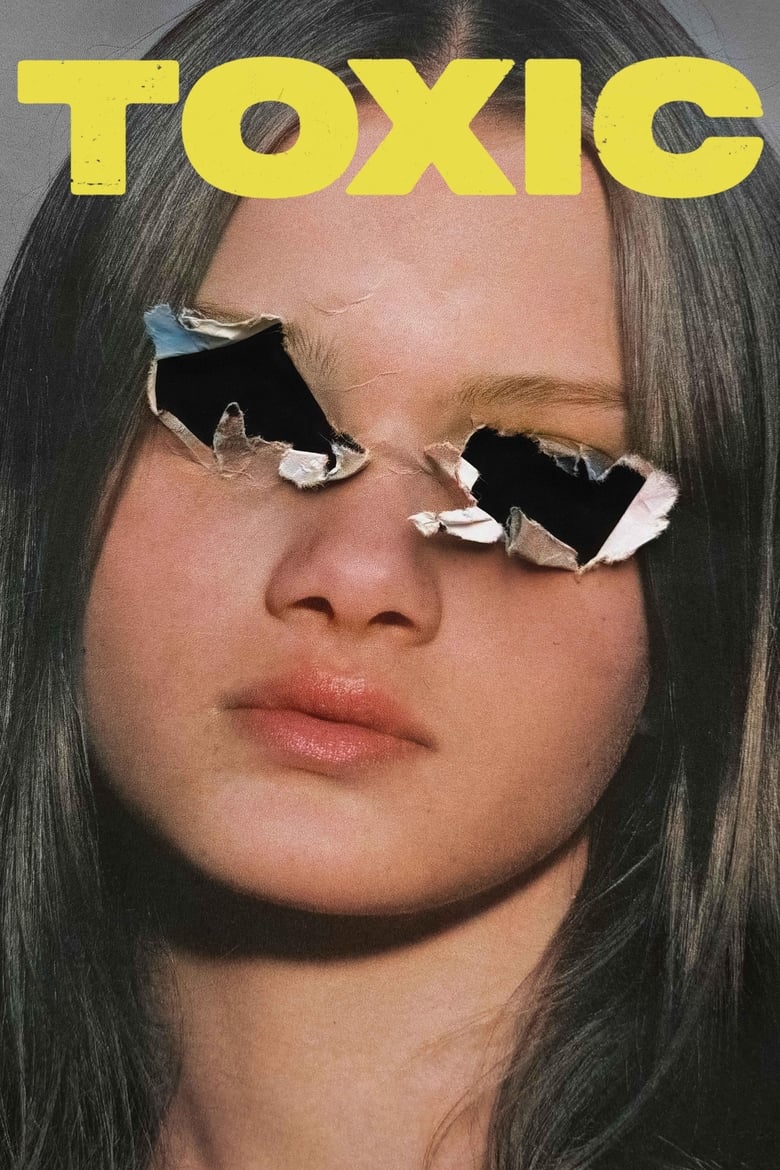
As the father of a twelve-year-old girl, I'm not sure I could have picked a more personally confronting watch than Saulė Bliuvaitė's Toxic. From its opening frames, it had me sitting forward in my seat with that particular kind of unease you can't quite shake, the sort that doesn't dissolve when the credits roll. It stays with you on the drive home, follows you upstairs, and is still there the next morning over a cup of tea. That's not a comfortable experience. But then, it's not trying to be.
What Bliuvaitė is doing here is more considered than simply pointing a camera at the wreckage of eating disorders and asking you to feel bad about it. She frames these destructive, self-punishing habits not as vanity, not as shallowness, but as a form of escape for girls who have precious little else to escape to. The social pressure to conform to a specific, unattainable physical ideal is brutal enough on its own, but the film grounds it firmly in economic reality. These are young women from low-income backgrounds, trapped in a Lithuania that offers them almost nothing in the way of opportunity or affirmation. The body becomes the one thing they feel they can control, and Bliuvaitė treats that contradiction with real empathy.
Visually, the picture commits hard to its bleakness, and it earns that commitment. Rural Lithuania here is rendered in practically every conceivable shade of grey, from the cramped apartments to the institutional corridors to the flat, featureless sky above it all. The cinematography isn't just miserable for the sake of it, though. It's doing genuine work, externalising the stagnation of these characters, making you feel as hemmed in as they do. It's a cracking aesthetic choice, and it pays off. I will admit, however, that staring at it for the better part of two hours does start to press down on you in a way that isn't always easy to separate from simple exhaustion.
Where Toxic really earns its keep is in the performances. The young cast is extraordinary. There's a raw, unvarnished authenticity to the way these girls inhabit their roles, a naturalness that never tips into performance. They feel like actual, breathing people rather than cautionary symbols, and their interactions carry genuine weight. You believe in their friendships, their rivalries, their small cruelties and their smaller kindnesses. That specificity is what elevates the whole thing above issue-of-the-week territory.
But here's where my mixed feelings come in. The film's greatest strength and its most significant flaw are essentially the same thing. Much like Requiem for a Dream, which I suspect sits somewhere in Bliuvaitė's influences, the tone is relentless. There is almost no breathing room, no levity, no flicker of hope allowed in. For a stretch, that unrelenting focus feels purposeful and powerful. But by the final act, it tips over into something closer to a punishing endurance test. The singular, grinding attention to the mechanics of bulimia starts to feel less like portraiture and more like a closed loop, and the film suffers for it.
I've seen Lithuanian cinema tackle bleak subject matter before. Having reviewed Ashes in the Snow, I know that part of the world's filmmakers are not shy about sitting in darkness. But the best of those films find some crack of light, some texture of hope or ambiguity, to keep the audience from feeling entirely sealed in. Toxic doesn't always manage that, and it's the poorer for it.
Three and a half stars.
That said, this is a genuinely accomplished and deeply empathetic piece of work. Saulė Bliuvaitė has made something visually arresting, powerfully performed, and vitally necessary on a subject that doesn't get nearly enough serious attention. It's an important film, and one that I think parents of young girls especially should be aware of, even if sitting through it is a real ask. Just make sure you've got something light queued up afterwards. You'll need it.
Rating: ★★★½ | Year: 2024 | Watched: 2026-07-17
Where to watch
Watch in the UK
Stream: MUBI · MUBI Amazon Channel
Physical: Amazon UK · Zavvi
Watch in the US
Stream: MUBI · MUBI Amazon Channel
Physical: Amazon US
Affiliate disclosure: Movies With Macca may earn a small commission on purchases or subscriptions started via these links. It costs you nothing extra.